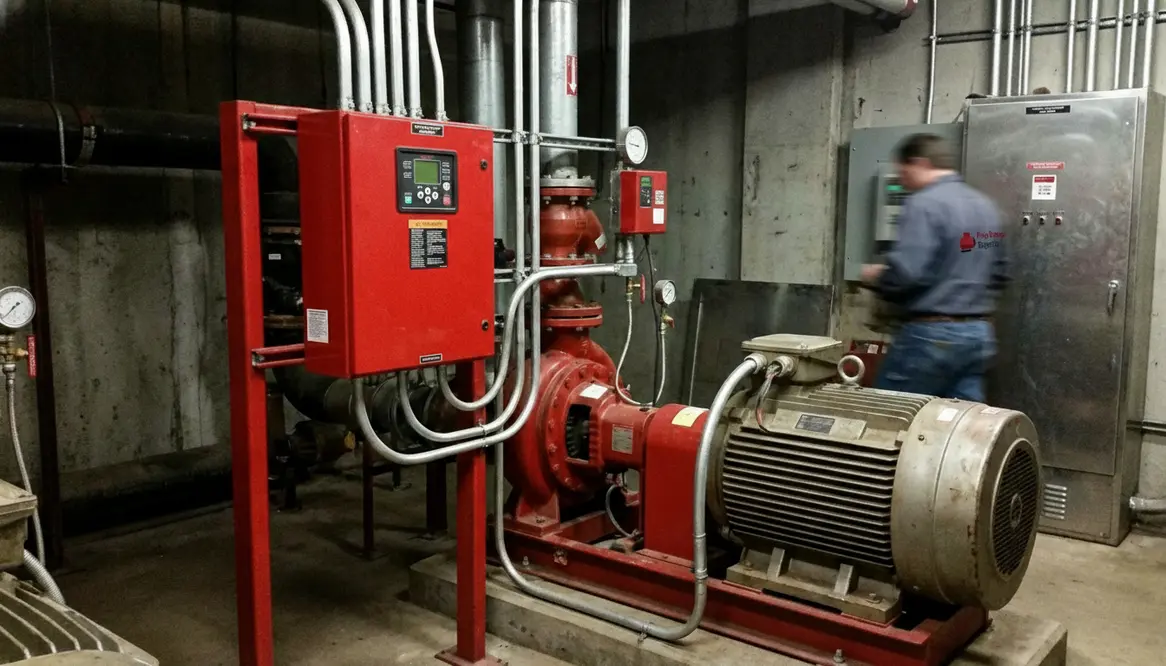
NFPA 72 Fire Pump Monitoring Requirements Guide
I have spent enough time around pump rooms to know this truth. When a fire pump speaks, the entire building should listen. That is exactly where NFPA 72 fire pump monitoring requirements step in. These guidelines ensure that every critical signal from a fire pump is transmitted, received, and acted on without delay. In commercial and industrial facilities, where downtime can cost millions and safety is non negotiable, proper signal integration is not just smart. It is essential. So let me walk you through how this all comes together, with a steady pace and just enough wit to keep things interesting. If you want to see how Australia handles things, you can read about their AS 4428 standard for fire alarms.
What Does Fire Pump Monitoring Integration Actually Mean?
At its core, integration connects your fire pump controller to the fire alarm system. However, this is not just about wiring things together and calling it a day. It is about making sure signals move clearly between systems, like a well rehearsed orchestra instead of a garage band on a bad night.
For large commercial properties, integration ensures that key events such as pump running, power failure, and trouble conditions are instantly visible at a central monitoring point. Because of this, facility teams can respond fast, and in fire protection, fast beats perfect every time.
Moreover, modern systems often tie into building management systems. That means your pump is not just shouting into the void. It is part of a larger conversation about safety, performance, and uptime.
NFPA 72 Fire Pump Monitoring Requirements Explained Simply
I like to think of these requirements as the rules that keep everyone honest. According to NFPA 72, specific signals must be monitored and transmitted to a supervising station. These include:
- Pump running signal so you know the system is active
- Loss of power because electricity has a funny way of disappearing at the worst times
- Controller trouble which often signals deeper issues
- Phase reversal or phase loss in electric driven pumps
Additionally, these signals must be distinct. You cannot lump them together and hope someone figures it out later. That would be like labeling every movie in your collection as action and wondering why nobody can find The Godfather.
Therefore, proper configuration is critical. Each signal tells a story, and your monitoring system needs to understand every word. NFPA 72 fire pump monitoring requirements are the framework that keeps that story clear from the pump room to the supervising station.
How I Design Reliable Signal Pathways for Large Facilities
Start With Reliability
When I approach a commercial or industrial project, I focus on reliability first. Everything else comes second. Because if the signal does not get through, nothing else matters.
First, I ensure dedicated circuits are in place. Shared pathways might save money upfront, but they often create confusion later. Then, I verify compatibility between the fire pump controller and the fire alarm panel. Not all systems speak the same language, and translation errors can be costly.
Build In Redundancy
Next, I look at redundancy. In major facilities, a single point of failure is simply unacceptable. So, backup communication paths and power supplies become part of the design.
Finally, I test everything. And then I test it again. Because the only bad surprise is the one you discover during an actual emergency. NFPA 72 fire pump monitoring requirements provide a clear target for what those tests should verify.
Common Integration Mistakes That Still Happen
You would think by now we would have eliminated the usual suspects. Yet, here we are.
One common issue is improper signal labeling. When alarms come in अस्पष्ट, operators waste precious time figuring out what is happening. Another frequent mistake is ignoring supervisory signals. These are early warnings, not background noise.
Then there is the classic case of incomplete documentation. Without clear records, troubleshooting becomes a guessing game. And trust me, guessing during a fire event is not a strategy anyone wants.
Also, some facilities skip routine testing. That is like owning a sports car and never checking the brakes. It might look impressive, but it will not end well.
Signal Types and Their Purpose in Real World Operations
Let me break this down in a way that sticks. Each signal serves a specific role, and together they create a complete picture of system health.
Column A
- Pump running confirms activation
- Power loss highlights electrical issues
- Controller trouble flags internal faults
Column B
- Phase issues protect motor operation
- Supervisory alerts warn of abnormal conditions
- Communication faults indicate system disconnects
When these signals are properly integrated, operators gain clarity. And clarity, especially during an emergency, is worth its weight in gold. NFPA 72 fire pump monitoring requirements are designed so that each of these signals is visible and understood when it matters most.
Why NFPA 72 Fire Pump Monitoring Requirements Matter for Big Buildings
In high value properties, every second counts. These requirements ensure that signals do not just exist. They perform. Because a delayed or missing signal can turn a manageable incident into a full blown disaster.
Additionally, compliance is not just about passing inspections. It is about protecting assets, operations, and lives. When systems work as intended, disruptions stay minimal and recovery stays manageable.
And let us be honest. Insurance providers tend to look a lot more kindly on facilities that take monitoring seriously. Nobody enjoys those premium conversations. When NFPA 72 fire pump monitoring requirements are fully met, those conversations usually become a lot shorter and less painful.
FAQ
Conclusion
If you manage a commercial or industrial facility, now is the time to take a closer look at your fire pump monitoring setup. I encourage you to ensure your integration meets every expectation and performs without hesitation. Because when the moment comes, there is no room for uncertainty. Visit https://firepumps.org to explore solutions built for serious properties, and let your system speak clearly when it matters most.