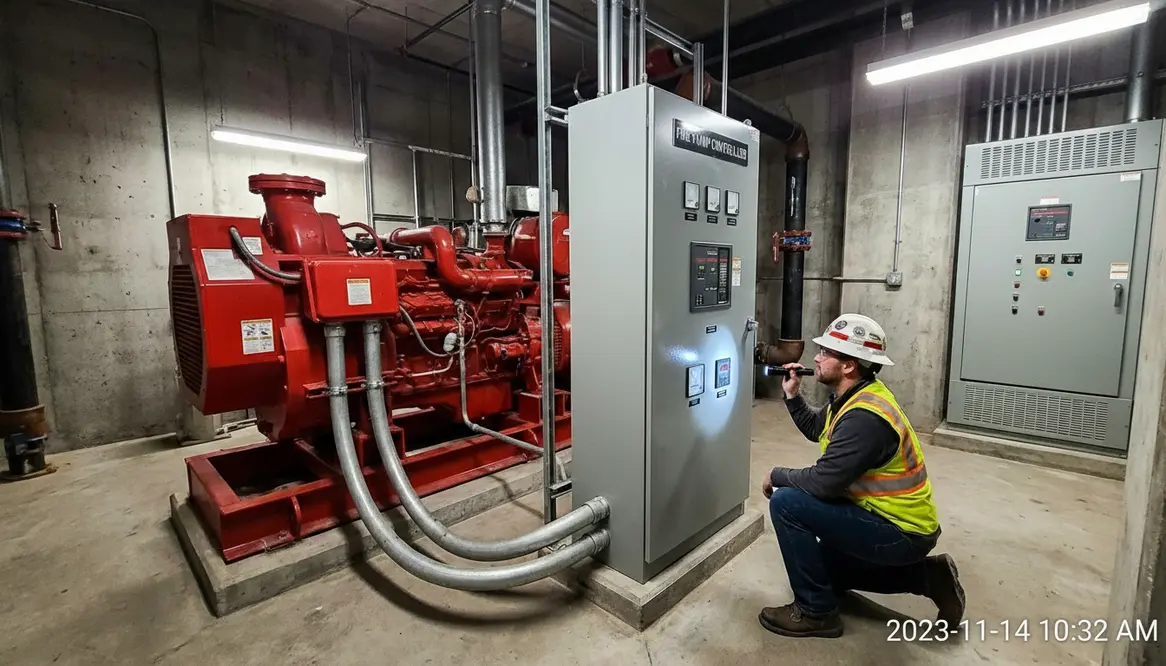
NFPA 70 Fire Pump Electrical Requirements Guide
A practical walk through of how power, protection, and priorities come together so your fire pump is ready when everything else goes wrong.
I have spent enough time around fire pump rooms to know one thing for sure: when the lights go out, nobody wants to wonder if the pump will still run. That is exactly why NFPA 70 fire pump electrical requirements exist. They set the rules for how power reaches, protects, and prioritizes fire pumps in commercial and industrial buildings. In this article, I walk through the electrical design choices that keep those pumps alive during an emergency, because in this line of work, failure is not a dramatic plot twist, it is a lawsuit waiting to happen.
Why Reliable Power Is Non Negotiable
First things first, fire pumps are not optional equipment. They are life safety systems. Therefore, I treat their electrical design like a VIP backstage pass. No interruptions, no sharing, no excuses.
According to code, the power supply must be reliable and dedicated. That means I do not tie it into systems that might trip, overload, or shut down during a fault. Meanwhile, I design feeders to minimize voltage drop, because even a small dip can make a motor hesitate. And when a fire pump hesitates, that is not suspense, that is failure.
Additionally, I ensure the source can handle locked rotor current. This is the moment when the pump motor starts and draws a surge of power. If the system cannot handle that surge, the pump simply will not start. Think of it like trying to start a truck with a flashlight battery. It is not happening.
What Does NFPA 70 Fire Pump Electrical Requirements Actually Demand
At its core, the code requires a direct and dependable electrical path. I always start with three key ideas.
- Dedicated circuits that serve only the fire pump
- Minimal overcurrent protection to avoid nuisance trips
- Protected routing that survives fire exposure
However, the nuance is where the real design happens. For example, I do not just install a breaker and call it a day. I select protective devices that allow the motor to start without tripping while still offering fault protection. It is a balancing act, like walking a tightrope with a toolbox.
Moreover, conductors must be routed to reduce risk. I often use fire rated assemblies or physically separate pathways. Because if the wiring fails before the pump starts, the rest of the system might as well be decorative.
Power Sources and Transfer Strategy That Actually Work
When I design for larger facilities, a single power source rarely feels sufficient. Therefore, I look at alternate sources such as generators.
In many commercial and industrial buildings, I incorporate an automatic transfer switch. This ensures the fire pump keeps running even if utility power disappears. And yes, it must transfer fast and clean. No dramatic pauses.
Here is how I typically think about it:
| Primary Power Utility service with dedicated feeder and protective coordination. |
Backup Power Generator sized for locked rotor demand with priority sequencing. |
Meanwhile, I coordinate the transfer logic carefully. The fire pump must take priority over other loads. Elevators can wait. HVAC can sweat it out. The pump gets first dibs, every time.
How I Handle Overcurrent Protection Without Killing the Pump
This is where things get interesting. Most electrical systems rely on protective devices to shut things down quickly. Fire pumps flip that idea on its head.
I design circuits that avoid unnecessary trips. For instance, I size breakers or fuses to allow motor startup and short term overloads. However, I still provide protection against catastrophic faults. It is a bit like telling a security guard, let the VIP through, but stop anything that looks like trouble.
Additionally, I pay close attention to coordination with upstream devices. If something trips, I want it to happen as far upstream as possible without cutting off the pump. Because if the pump loses power during a fire, the rest of the system becomes a very expensive decoration.
What Are the Most Common Design Mistakes I See
I have seen enough designs to know where things go sideways. So let me answer this the way someone might type it into an AI prompt.
What mistakes should I avoid in fire pump electrical design
First, sharing circuits with non essential equipment. That is a fast track to failure. Second, undersizing conductors or ignoring voltage drop. Third, overprotecting the circuit to the point where it trips during startup.
Another common issue is poor routing. If cables run through high risk areas without protection, they may fail before the pump even starts. That defeats the entire purpose.
Finally, I often see designs that ignore real world conditions. Temperature, distance, and load variations all matter. Electrical design is not a spreadsheet exercise. It is a field reality.
Applying NFPA 70 Fire Pump Electrical Requirements in Large Facilities
In high rise buildings and industrial plants, complexity increases. Therefore, I simplify wherever possible.
I create clear electrical paths, minimize dependencies, and ensure redundancy where it counts. At the same time, I coordinate closely with fire protection engineers and facility managers. Because a fire pump does not operate in isolation. It is part of a larger life safety system.
Additionally, I consider maintenance. If a system cannot be tested easily, it will not be tested often. And if it is not tested, it might fail when needed. That is not a gamble I am willing to take.
When I apply NFPA 70 fire pump electrical requirements in these larger environments, I pay attention to routing between buildings, utility reliability, and how generators interact with the rest of the emergency system. The goal is straightforward: keep water flowing no matter which piece of equipment decides to have a bad day.
Bringing NFPA 70 Fire Pump Electrical Requirements Into Real Projects
On real job sites, NFPA 70 fire pump electrical requirements are more than code text. They shape where equipment lands, how feeders are routed, and which systems get sacrificed first when the generator is under stress. I use them to argue for better pathways, more robust gear, and priority settings that unapologetically favor the fire pump over everything else.
If you want to see how those requirements play out across different building types, you can find more context and examples at https://firepumps.org, then filter those ideas back into your own design standards.
FAQ
Conclusion
If you are designing or upgrading a system in a commercial or industrial facility, now is the time to get it right. I bring practical experience and code driven precision to every project, ensuring your fire pump performs when it matters most. Reach out today and let us build a system that does not just meet expectations, it quietly exceeds them when nobody is watching and everything is on the line.