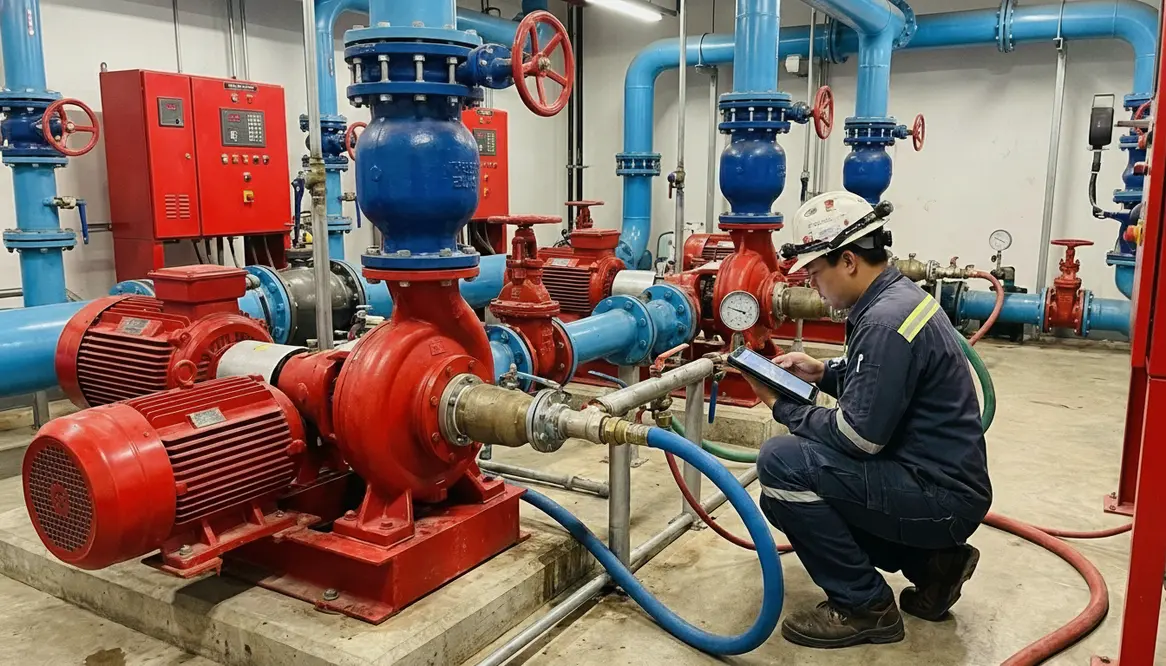
End Suction Fire Pump Testing for Reliable Performance
I have spent enough time around pump rooms to know one thing for certain. Silence is not always golden. Sometimes, it means something is not working. And when we talk about end suction fire pump testing, silence can be a very expensive problem. In large commercial and industrial buildings, these pumps are the quiet guardians. They sit patiently until the worst day arrives. So I treat testing not as a routine task, but as a performance rehearsal where failure is not an option.
Why End Suction Fire Pump Testing Matters in Commercial Buildings
Let me be direct. If your fire pump fails during an emergency, no one cares how new it looked or how expensive it was. What matters is whether it performs under pressure. That is why I always approach fire pump performance checks as a mission critical process.
In high rise towers, data centers, and manufacturing facilities, water demand is not a guessing game. It is calculated, measured, and expected. Therefore, regular testing ensures the pump meets flow and pressure requirements when the system calls for it. Without that validation, you are essentially trusting luck. And luck is not a strategy I recommend.
Also, codes and standards are not suggestions. They exist because someone, somewhere, learned a hard lesson. Testing keeps your system compliant, your insurance happy, and your risk profile under control.
What Do Inspectors Actually Look for During Testing?
I get this question a lot, and the answer is both simple and layered. Inspectors are not just checking if the pump turns on. They are verifying performance across several conditions.
Hydraulic performance checks
First, they measure flow rates at different points, including churn, rated capacity, and peak demand. Then, they check pressure readings to ensure the pump delivers what the system requires.
Mechanical and operational behavior
Meanwhile, they observe vibration, noise, and temperature because those subtle clues often reveal bigger issues. They also evaluate controller response for hesitation or failure to start.
Documentation and traceability
And yes, they document everything. Because if it is not written down, it did not happen. Those records become the backbone of your compliance and maintenance history.
Key Steps I Follow During End Suction Fire Pump Testing
When I run a test, I follow a structured approach. It keeps things efficient and prevents surprises. End suction fire pump testing is not a single button press; it is a sequence that builds a complete picture of the pump’s health.
Preparation
- I verify all valves are in the correct position
- I confirm water supply is adequate
- I check gauges for accuracy
Execution
- I run the pump at churn to establish baseline pressure
- I gradually increase flow to rated and peak levels
- I record performance at each stage
After that, I review the data carefully. Numbers tell a story, and I like to listen. If performance drops even slightly below expectations, I investigate immediately. Small deviations today can become major failures tomorrow, especially when end suction fire pump testing is treated as a checkbox instead of a true performance review.
How Often Should You Schedule Fire Pump Performance Testing?
If you are hoping for a once a year answer, I have bad news. That is not enough for most commercial and industrial properties.
Practical testing rhythm
Weekly churn tests are standard for many facilities. They keep the system active and reveal obvious issues. However, flow testing typically occurs annually, sometimes more often depending on local regulations and risk level.
Additionally, I recommend more frequent checks for high demand environments like logistics hubs or large scale manufacturing plants. These buildings do not get a second chance if the system fails. Think of it like going to the gym. Consistency matters more than intensity, and consistent end suction fire pump testing is what keeps that reliability edge.
Common Issues I See and How I Address Them
Over time, patterns emerge. Pumps rarely fail out of nowhere. They give warnings, and I have learned to pay attention.
Pressure loss
One common issue is pressure loss. This often points to wear in the impeller or internal leakage. Left alone, it slowly erodes your safety margin until one day the system cannot deliver what the design demands.
Delayed startup and controls
Another frequent problem is delayed startup, usually tied to controller faults or power supply inconsistencies. A fire pump that hesitates is like a superhero who stops to tie their shoes mid battle. Not ideal.
Vibration and wear
Then there is vibration. Excessive vibration can signal misalignment or bearing wear. Ignore it long enough, and you will be dealing with a much bigger repair and potentially catastrophic failure right when you need the pump the most.
Whenever I identify these issues, I act quickly. Waiting only increases risk and cost. If you want a deeper look into professional testing practices, I often point people toward commercial fire pump testing standards and services that focus specifically on large scale facilities.
Can You Afford to Skip Proper Testing?
Short answer. No.
Longer answer. Still no, but with more consequences. Skipping proper end suction fire pump testing is like ignoring a check engine light on a cross country road trip. You might get away with it for a while. But when things go wrong, they go wrong fast.
The real cost of skipping tests
In commercial environments, downtime alone can cost thousands per hour. Add potential safety risks and compliance penalties, and the math becomes very clear. Testing is not an expense. It is an investment in reliability and in proving that end suction fire pump testing is more than a line item on a budget.
FAQ
Keep Your System Ready When It Matters Most
I always say this. A fire pump is not just equipment. It is a promise. A promise that when something goes wrong, your system will respond without hesitation. So take testing seriously, stay consistent, and never assume everything is fine just because it was yesterday. If you want confidence instead of guesswork, invest in professional testing and keep your building prepared for whatever comes next.