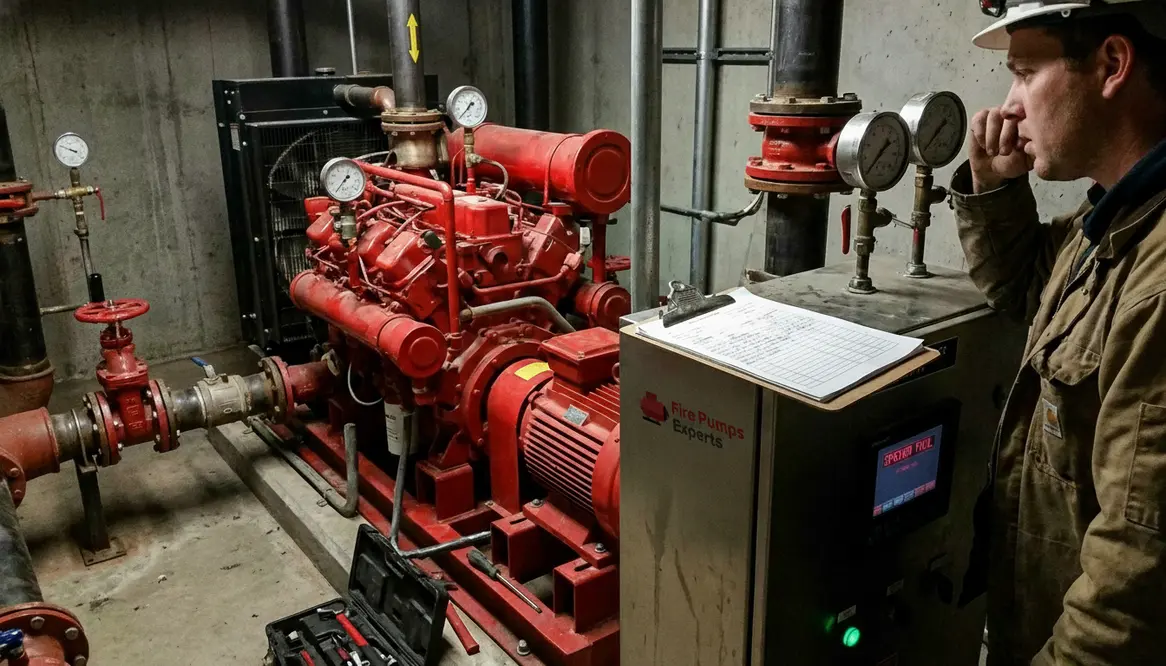
Fire Pump Test Failed: What Happens Next and Fixes
What you do in the minutes, days, and weeks after a fire pump test failed often matters more than the failure itself.
I have seen it happen more times than I can count. A routine inspection rolls around, the gauges are checked, the motor hums to life… and then something slips. Pressure drops. Flow stalls. And just like that, a fire pump test failed. In commercial and industrial buildings, that moment carries weight. Not drama for the sake of it, but real consequence. Because when a fire system falters on test day, it is quietly telling you what might happen on the worst day. So let me walk you through what comes next, calmly and clearly, with just enough honesty to keep us all awake.
Think of a failed test as a smoke alarm for your fire protection system. It is not there to scare you. It is there to get your attention while there is still time to fix things on your terms, not during an emergency.
What Happens Right After a Fire Pump Test Failed?
First, no one panics. Or at least, no one should. A failed test is not the end of the world, but it is a firm tap on the shoulder.
Immediately, I document the failure. Every reading, every sound, every irregular twitch of the system gets recorded. Then, I notify the responsible parties, usually facility management and compliance officers. After that, depending on local codes, I may need to report the impairment to authorities or insurers.
Interim safety mode
Meanwhile, the building does not get a free pass. If the system cannot perform, I treat it as impaired. That means interim safety measures. Fire watch protocols might step in, and operations teams adjust accordingly. It is a bit like your smoke alarm going silent. You do not ignore it and hope for the best.
Who gets the call?
Facility management, safety officers, sometimes insurers, and depending on the severity and local rules, the fire department or AHJ. The point is simple: no one should be surprised that the fire pump is not performing as required.
Common Reasons Fire Pumps Fail Testing
Now here is where things get interesting. A failed test is rarely random. There is always a cause, and usually it has been quietly building over time.
I often see these culprits:
- Mechanical wear such as worn impellers or failing bearings. Like an aging athlete, the pump just cannot perform at peak anymore.
- Electrical issues including voltage drops or controller faults. Even the strongest pump is useless without steady power.
- Obstructed flow caused by clogged pipes or partially closed valves. Think of trying to drink a milkshake through a blocked straw.
- Improper maintenance which, frankly, is the repeat offender. Skipped inspections tend to show up right when you wish they would not.
However, identifying the cause is only step one. Fixing it properly is where the real work begins.
Fire Pump Test Failed: What I Fix First and Why
When I approach a failed system, I prioritize safety and performance. Not aesthetics, not convenience. Safety first, always.
Step-by-step triage
- I start with the pump curve performance. Does the system meet required flow and pressure?
- If not, I dig into mechanical components.
- After that, I evaluate the controller and power supply.
- Then, I check the suction and discharge paths for restrictions.
Why those things first?
These are the pieces that actually move water, control it, and keep it moving. Shiny paint and quiet rooms are nice, but if flow and pressure are not there when a sprinkler head opens, none of that matters.
|
Priority Focus |
Why It Matters |
Meanwhile, I keep compliance in view. Commercial properties are not just fixing a machine. They are protecting occupants, assets, and liability exposure. No pressure, right? Well, actually, yes. A lot of pressure.
How Long Does It Take to Get Back in Compliance?
The honest answer is it depends, but I will not leave you hanging with that.
Fast fixes vs. long hauls
If the issue is minor, such as a calibration error or a small obstruction, I can often resolve it within days. However, if the failure involves major components like the pump assembly or controller replacement, timelines stretch into weeks.
Additionally, once repairs are complete, I do not just flip a switch and call it done. The system must pass a full retest under proper conditions. Only then do I consider it back in service.
And yes, paperwork follows. Because in this world, if it is not documented, it did not happen.
Preventing Future Failures Without Losing Sleep
Here is the part I enjoy the most. Prevention. Because nothing beats the quiet confidence of a system that just works.
- I stick to a disciplined maintenance schedule. Weekly churn tests, monthly inspections, and annual flow tests are not suggestions. They are the backbone of reliability.
- Moreover, I rely on experienced professionals. Partnering with specialists like commercial fire pump testing and maintenance experts ensures that systems in large facilities stay sharp and compliant.
- And yes, I pay attention to small warning signs. Odd noises, slight pressure dips, or delayed starts. These are whispers before the system starts shouting.
The cost of ignoring the whispers
Ignoring them is a bit like ignoring a check engine light. Sure, you might get away with it. Until you very much do not. When the report reads “fire pump test failed” for the second or third year in a row, that is not bad luck. That is neglected maintenance sending you a bill.
Why This Matters for Large Facilities
In commercial and industrial environments, the stakes are simply higher. We are not talking about a single structure. We are talking about operations, people, and significant investments.
A failed fire pump test can affect insurance compliance, regulatory standing, and operational continuity. Consequently, addressing failures quickly is not just smart. It is essential.
I have seen facilities treat these systems as background equipment. Out of sight, out of mind. But when something goes wrong, that background suddenly takes center stage. And not in a good way.
When an inspection ends with “fire pump test failed,” it is your early warning that those background systems deserve front-row attention before a real incident forces the issue.
FAQ: Quick Answers You Can Use
Final Thoughts and Next Steps
When a fire pump test failed, I treat it as a clear signal, not a setback. It is a chance to correct, strengthen, and prevent something far worse. If you manage a commercial or industrial facility, do not wait for the next test to tell you the same story twice. Take action now, bring in qualified experts, and make sure your system stands ready when it matters most.