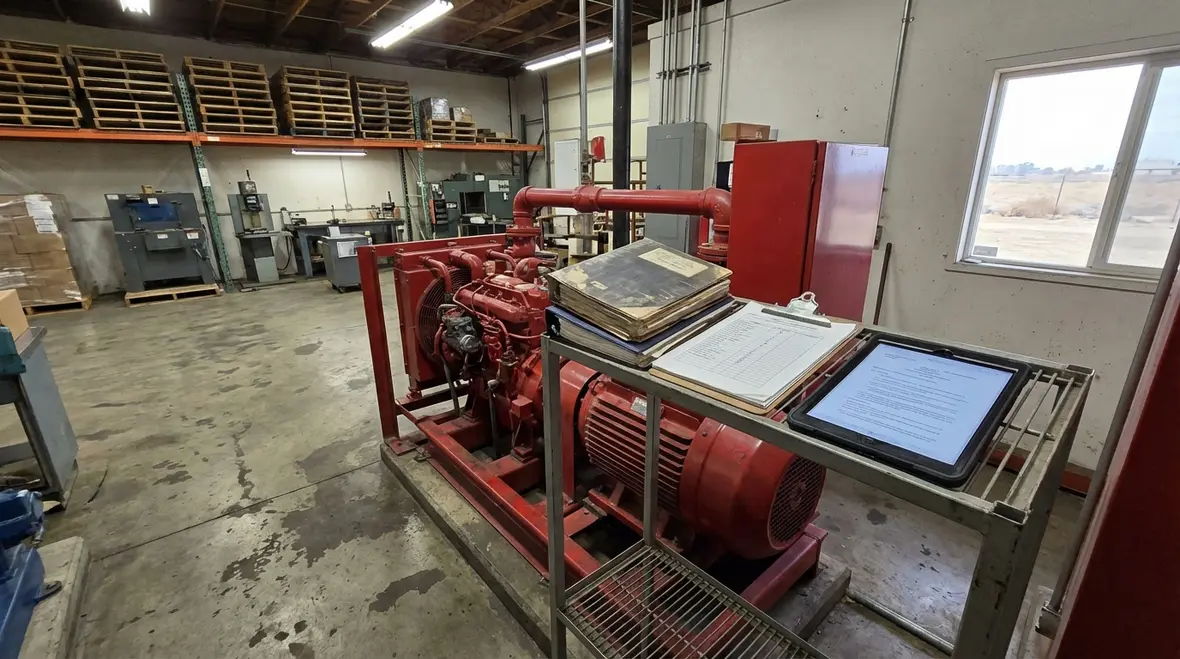
Fire Pump Documentation for Warehouses in Bakersfield
If you’ve ever found yourself swimming in paperwork about fire safety without the faintest clue where to start—congratulations, you’re in good company. Especially when it comes to fire pump system documentation for warehouses in Bakersfield, the stakes are a bit higher than just filing your lunch receipts correctly. Commercial and industrial facilities don’t get to just wing it when safety is involved. The problem is, most folks treat documentation like it’s an ancient scroll written in invisible ink. But not today. You’ll stay awake, informed, and maybe even entertained.
Much like Gandalf in the Mines of Moria, your fire pump system is the silent protector of your warehouse—a guardian that ensures when fire strikes, water follows. That guardian, however, needs a paper trail… and that’s where we come in.
A Quick Reality Check
If an inspector, attorney, or insurer walked in tomorrow and asked, “Can you prove your fire pump can handle a warehouse fire?” what would you hand them?
A mystery folder from 2006 is not the answer. Organized, updated warehouse fire pump documentation for Bakersfield is.
Why Documentation Is More Than Just a Paper Chase
At face value, documentation might feel like paperwork just for the sake of paperwork—a tribute to the gods of bureaucracy, if you will. But in reality, it’s your legal, logistical, and operational lifeline.
When it comes to fire pump systems, documented proof is your first line of defense against liability. We’re talking signed inspection records, specifications, hydraulic calculations, and certification reports. These records don’t just sit in binders collecting dust—they speak when lawyers, inspectors, or insurance companies call.
Take a moment here. Imagine someone walking into your warehouse and asking, “Show proof that your fire pump can tackle a full-blown blaze.” Will you pull out a manila folder with papers dating back to the Bush administration? Or will you have organized, up-to-date documentation that says, “We’re good to go”? The latter—always the latter.
What’s Included in Warehouse Fire Pump Documentation for Bakersfield?
You’d think it would be just a user manual and a few signatures. Nope, not in the commercial world. Proper warehouse fire pump documentation for Bakersfield includes more components than a Marvel Avengers movie—each playing its part.
- Approved Plans & Drawings: Layout diagrams, site plans, and equipment schematics. Also: yes, they’re legally required.
- Equipment Data Sheets: Manufacturer info, pump curves, voltage requirements—basically, all the nerdy stuff inspectors drool over.
- Commissioning Records: Proof that the system was tested under operating conditions. Kind of like a driver’s license test—but for your building.
- Annual Testing Logs: Details of who checked what, when, and what was fixed if anything went wrong.
- Inspection Checklists: If something needed fixing, when it was repaired and by whom. Sort of like your car’s maintenance history—but far less optional.
- Maintenance Contracts: The names and credentials of companies servicing your pumps. No, your cousin Vinny doesn’t count if he’s not licensed.
You need this documentation not just to look pretty in a binder—but to actually do something. Regulators in Bakersfield and across Kern County aren’t known for sending handwritten thank-you notes, but they do appreciate a fire system that’s been properly documented and consistently up to code.
Navigating California & Bakersfield’s Fire Code Maze
California has more regulations than a Netflix dating show has red flags—and Bakersfield is no exception. The local enforcement authorities like the Bakersfield Fire Department and capacity from Kern County Environmental Health demand that industrial fire systems follow California Fire Code (CFC), NFPA standards, and for good measure—common sense.
So, when we say “meet documentation requirements,” what we mean is:
- Keep records for 5 years minimum (yes, even if your scanner’s on the fritz)
- Ensure each fire pump’s performance is tested yearly (because no, “it worked fine last year” doesn’t hold in court)
- Maintain digital and hard copies onsite (and no, that doesn’t mean zipped in your Dropbox account labeled “Old Stuff”)
Staying compliant doesn’t just save you fines—it saves lives, property, and a whole lot of explaining to stakeholders.
Real-World Benefits of Keeping Fire Pump Docs In Line
Permit a quick story: A warehouse in southwest Bakersfield went through a surprise inspection last year. They had the latest fire pump tech installed but couldn’t produce half the documentation required. Not only did they face shutdown threats, but their insurance carrier paused coverage faster than you could say “mildly flammable.”
Now, compare that to another facility in the eastern industrial corridor. They performed quarterly self-audits using well-organized documentation that was accessible both online and onsite. During inspection week, they flew through the process, renewed their permits, and even got a gold star from the inspector. (Okay, not a literal star, but you get the feel-good vibe.)
This isn’t just red-tape theater—it affects bottom lines. Good documentation:
- Qualifies you faster for insurance discounts
- Reduces response times during emergencies
- Helps meet OSHA and EPA compliance
- Builds trust for third-party audits or buyers
The truth? Good documentation keeps surprises pleasant and fines nonexistent.
The Conversation You Don’t Want to Have with Your Insurer
Insurers are like mysterious date partners. They love you when you’re low-risk—but ghost you the moment you turn unpredictable.
So imagine a fire breaks out (we’re speaking hypothetically here), and you claim, “Everything was in order.” The insurance company simply asks, “Can we see your documentation?” If you fumble anything here, their love cools fast. No proof? No payout. And good luck calling their hotline to plead your case—press 5 for heartbreak.
Fortunately, when your warehouse has its fire pump paperwork airtight, that claims process becomes almost (dare I say it?) enjoyable. Documentation is your receipt, your credentials, your “I told you so” backup plan.
Winners vs. Losers: Documentation Showdown
| Documented Warehouse | Undocumented Warehouse |
|---|---|
| Fast permit renewals | Weeks of back-and-forth emails |
| Lower insurance rates | Higher premiums or denial |
| Passes inspections easily | Constantly risks shutdown |
| Operational trust with partners | Raises eyebrows during audits |
Pick your adventure wisely.
So Where Do You Even Start?
Right now, if you’re mentally picturing a disorganized stack of handwritten service notes under someone’s desk, it’s okay. We’ve all lived that Excel spreadsheet nightmare. But modern documentation doesn’t require scrolls or parchment anymore.
You can start small:
- Audit your current pump documentation
- Digitize physical records (cloud backups are your new best friend)
- Set calendar reminders for inspections and logs
- Work with licensed professionals who provide full documentation bundles
Also, partnering up with organizations like firepumps.org ensures you’re not just compliant—you’re ahead of the game. They specialize in working exclusively with commercial and industrial properties, so your warehouse doesn’t get the cookie-cutter approach meant for small residential outfits.
How Often Should Fire Pump Documentation Be Reviewed?
If your answer is “whenever we feel like it,” there’s a sarcastic smirk heading your way. At least annually, folks. Best practices recommend quarterly internal check-ins and full reviews after any system update or post-incident debriefs—even if it was a small false alarm triggered by a rogue fog machine during an employee celebration. (Yes, it happened. Don’t ask.)
Leveling Up: Going Beyond the Bare Minimum
If you want your warehouse fire pump documentation for Bakersfield to do more than just pass inspections, treat it like a living system:
- Create a central index page listing every document, test, and report.
- Note who is responsible for each piece of documentation and when it was last updated.
- Include quick-reference summaries so managers don’t have to wade through 90 pages to find test dates.
It’s like turning a messy junk drawer into a labeled toolbox. Same contents, completely different experience when the heat is on.
FAQ: Quick Answers That Make You Look Smart
Smart Next Steps for Bakersfield Warehouses
If you’re serious about tightening up your warehouse fire pump documentation for Bakersfield, start by pairing solid paperwork with equally solid servicing. Resources like the guide to fire pump servicing from Kord Fire Protection can help align your testing and maintenance routines with what your records should show, so your real-world system performance and your documentation tell the same story.
Final Thoughts: Make Fire Safety Boring in the Best Possible Way
Your fire pump system is the unsung hero of your warehouse. Give it some love—the kind that looks like smart decisions, timely inspections, and meticulous records. Fire pump system documentation for warehouses in Bakersfield isn’t a chore. It’s your shield against loss, chaos, and awkward insurer conversations you’d rather never have.
Reach out to firepumps.org today for smarter documentation strategies designed for major properties and commercial sites. The goal is simple: create calm when the heat rises—on paper and in real life.