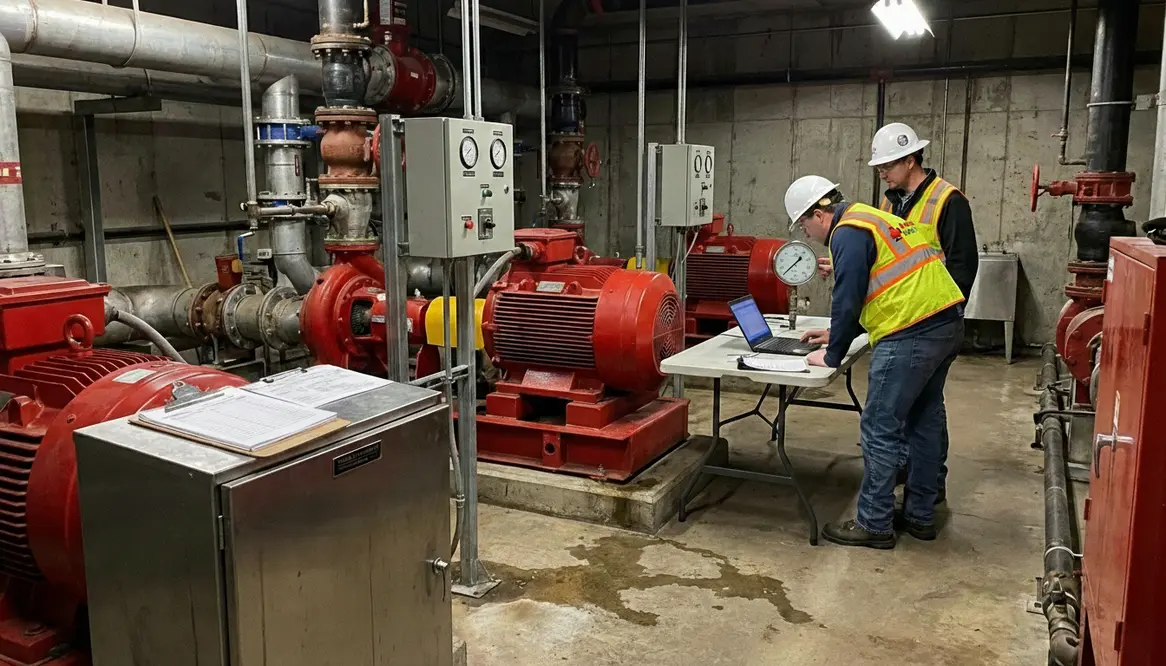
Fire Pump Acceptance Testing Explained (Without the Snooze Button)
Let’s face it—“fire pump acceptance testing procedures” doesn’t exactly scream heart-pounding excitement… unless you’re really into building systems or find joy in the hum of diesel engines. But if you’re responsible for a commercial or industrial property, this topic just went from “snooze” to “crucial.” Because when the sprinkler system hits the fan—and yes, that’s totally a thing—you’ll thank yourself for knowing exactly what’s behind those intimidating red machines humming away in your building’s mechanical room.
As someone who’s walked the long hallways of major facilities, from pristine data centers to 60-story skyscrapers, I’ve seen fire pump rooms that range from spotless command centers to places that… well, let’s just say Indiana Jones wouldn’t go in without backup. And while the journey through fire pump acceptance test procedures may not win awards for drama, the consequences of skipping or flubbing them? Those could make the next Netflix docuseries: “When Sprinklers Fail.”
So pull up a metaphorical chair, friend. I’ll walk you through the how, the why, and the quietly thrilling world of fire pump testing—with enough suspense, clarity, and pop culture analogies to keep even the most sleep-deprived facility manager awake.
What’s the Point of a Fire Pump Acceptance Test Anyway?
Imagine installing a brand-new fire pump without testing it first. That’s like buying a parachute and deciding, “Eh, I’ll check if it opens on the way down.” In other words, dangerous and certifiably bonkers.
Fire pump acceptance testing exists to ensure the device was not only installed correctly but that it performs under real-world demand. This isn’t just some box-checking ceremony. It’s proof for insurers, building stakeholders, and (most importantly) municipal fire officials that your system won’t skip leg day when pressure builds—literally.
Each test follows specific protocol. These usually include:
- Testing suction and discharge pressures
- Simulating full load and performance curve delivery
- Verifying alarms, signals, and transfer switches for jockey pumps
- Testing run duration, RPMs, and pressure relief mechanisms
And like every Bond villain has a weak spot (usually an overconfidence issue), every fire pump system has potential performance potholes. That’s why we test. Thoroughly.
How Commercial and Industrial Facilities Should Prepare for Testing
This isn’t a “show up and wing it” kind of situation. If you manage a large facility, trust me: preparation makes the difference between a quick success and a testing event that spirals into eternal overtime.
Here’s what you should do before anyone touches the Start button:
- Coordinate with your AHJ (Authority Having Jurisdiction). Every city has its own fire department MVP who needs to be on-site—or at least notified.
- Verify water flow availability from your local utility provider. No water means no test. Yep… it’s that simple.
- Confirm that drains, ventilation, and power systems are functioning. Some tests generate steam, water, and enough vibration to make your mezzanine nervous.
- Assemble your emergency crew: contractor, commissioning agent, facility manager, and a donut-bringing intern. Not required—just appreciated.
And finally, keep in mind this is no time to test those motion-detection lights in the pump room. You want full visibility, not an impromptu horror movie.
The Fire Pump Acceptance Test Procedures in Action: Two Key Phases
Deep breath—here’s where the real fun begins. This is usually a one-day event (if all goes well), and involves two primary zones of focus. Let’s call them the “How Much Water?” and “How Fast & Furious?” phases. Yes, Vin Diesel would approve.
Phase 1: No-Flow (Churn) Test
This initial measurement makes sure the pump can chill without overdoing it. We check RPMs and pressures without flowing any water. Think of it like putting your foot on the gas while still in park—you're checking throttle response without taking off.
Phase 2: Flow Tests at Incremental Points
Now we crank things up. The pump is connected to a flow meter or discharge manifold, and water is drawn at:
- 100% rated capacity
- 150% overload capacity
- Peak curve points based on your specs
This is where facilities usually find surprise issues: Maybe a valve’s half-closed. Maybe someone mislabeled the gauges. Or maybe—plot twist—the pump wasn’t bolted to the floor properly. True story. Whole system moved six inches.
Common Mistakes That Sabotage Your Test
You’d think after years of installing these systems, we’d have it down to a science. And we do. But humans are still involved, and humans come with things like Mondays and caffeine withdrawals.
Here’s what commonly goes wrong during fire pump acceptance test procedures:
- Incorrect controller settings: If your diesel controller isn’t set properly, you’re not hitting 100% RPMs. That messes with every data point.
- Poorly calibrated sensors: You can’t measure performance with a sticky analog gauge from 1994. Upgrade your equipment, folks.
- Jockey pump interference: These small auxiliary pumps sometimes try to “help” your test readings. But they’re not the hero today. Disable them temporarily.
- Air in the pipes: Yep, not just a plumbing issue. Air leads to cavitation, and cavitation leads to early death… for pumps. Not people. Let’s not get dramatic.
Want to look like the wizard behind the curtain? Make sure this checklist is squared away before test day.
Electrical vs. Diesel Fire Pumps in Major Facilities
Different buildings lean on different drivers, and your fire pump acceptance testing procedures need to account for what’s spinning that shaft.
| Electric Fire Pumps | Diesel Fire Pumps |
|---|---|
|
Less maintenance, faster startup. Requires stable, dedicated power. No on-site emissions (unless someone microwaves fish). |
Works during blackouts—big plus. Needs regular fuel tests. Requires ventilation and engine cooling. |
Bigger buildings tend to use diesel redundancy, especially in data centers, hospitals, and aerospace manufacturing hangars. When you get your acceptance testing done, the pressure calculations account for these load types. Don’t assume a one-size-fits-all approach. The HVAC crew tried that once. They now operate purely in duct tape and regret.
How Frequently You Need to Revisit Performance
The initial acceptance test is the beginning, not the finish line. Think of it like adopting a pet: now you’re committed. NFPA 25 requires monthly churn tests and annual flow tests. Skipping one is like telling your dentist you floss daily when your teeth are actively staging a rebellion.
And for commercial and industrial giants like you? Be proactive. Use sensors and cloud-connected reporting to monitor pump efficiency. You don’t want to wait until your fire protection system pings you at 3 a.m. with “Hey… we’ve got a pressure drop here. Good luck!”
If you want a deeper technical overview of how fire pumps are expected to behave in large buildings, Kord Fire Protection has an excellent guide on how fire pumps maintain pressure in large buildings, which pairs nicely with your own on-site fire pump acceptance testing procedures.
FAQs: Fire Pump Acceptance Testing Quick Answers
Below are some of the questions that always seem to pop up right before (or during) fire pump acceptance testing procedures.
Ready to Accept the Test? Let Us Help.
When the alarms sound and lives are on the line, your building’s fire pump has one job—show up like a hero. At FirePumps.org, we partner with commercial and industrial properties to ensure flawless commissioning and ongoing performance. Your system deserves more than “good enough.” Put our deep experience to work, and let’s make that acceptance test a victory lap, not a guessing game. Contact us today, and keep the confidence flowing.