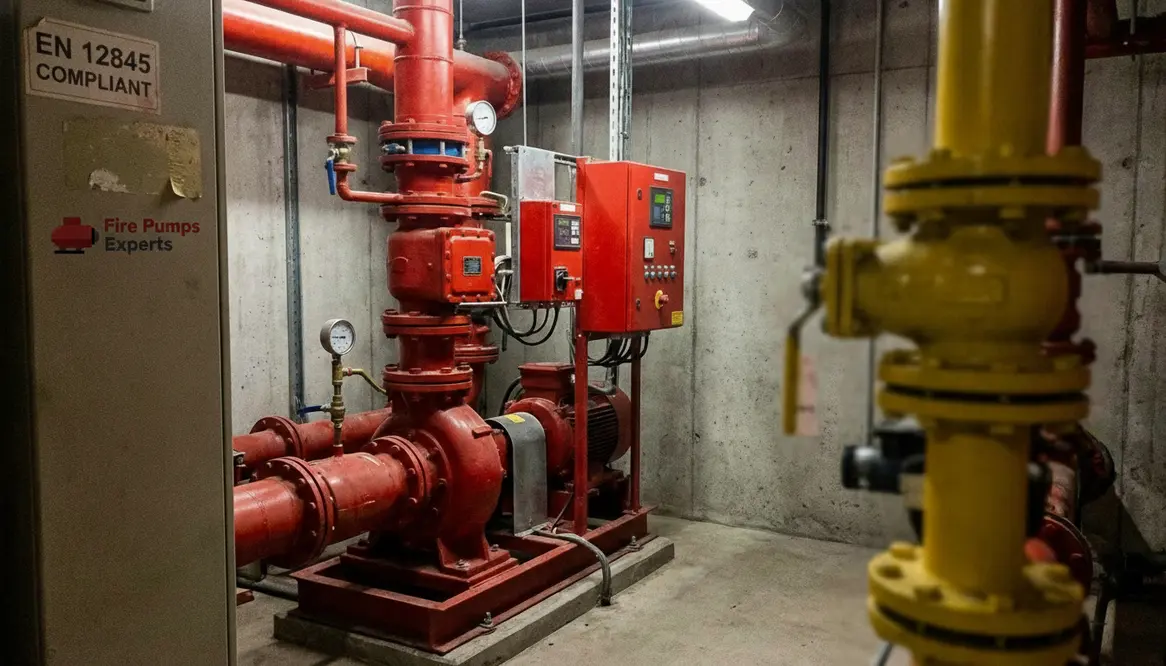
EN 12845 Fire Pump Requirements Guide
A practical walkthrough of EN 12845 fire pump rules, focused on keeping real buildings protected when it actually counts.
EN 12845 Fire Pump Requirements Explained
When I talk about EN 12845 requirements, I’m talking about the rulebook that helps commercial and industrial buildings keep a fire pump ready when things get ugly. And yes, that pump matters more than the coffee machine on Monday morning. This standard sets the bar for water supply, pump performance, testing, and reliability in sprinkler systems for major properties. In this article, I’ll walk through the key fire pump rules, what they mean in real life, and why they matter for large buildings that cannot afford guesswork.
What EN 12845 fire pump rules mean for your building
EN 12845 focuses on automatic sprinkler systems in commercial and industrial facilities, so I always treat it as a life safety standard first and a technical document second. The goal is simple. A fire pump must deliver the right water flow and pressure when the sprinkler system calls for help. If the building loses normal water supply or demand rises too fast, the pump steps in like the backup singer who suddenly gets the headline role.
In practice, the standard expects the fire pump system to support the hazard level of the building, the size of the protected area, and the sprinkler design. Therefore, I look at the full water supply setup, not just the pump itself. That includes the tank, suction line, valves, controls, and power source. A strong pump with weak support is still a weak system. Nature does not care about your brand brochure.
How EN 12845 requirements shape pump selection
When I choose a pump setup under EN 12845 requirements, I start with the building use and fire risk. A warehouse, factory, and high value commercial site all need different water demand levels. So, the pump must match the system design, not just “work in theory.” That sounds obvious, yet many systems fail because someone sized the pump like they were ordering fries.
The standard supports dependable operation, so I check these points first:
- The pump must supply the required pressure and flow for the sprinkler system
- The water source must remain reliable during fire conditions
- The system must allow quick start and stable running
- The installation must support regular testing and maintenance
- The control setup must reduce the chance of failure during activation
Because commercial and industrial sites often have large loads and complex layouts, I also pay close attention to pipe losses and pump location. A pump that sits too far from the source or works against poor suction conditions can lose performance fast. In other words, the machine may be brave, but the pipework may be the real villain.
EN 12845 fire pump requirements for water supply and power
The standard expects a dependable water supply, and that point deserves respect. A fire pump is only as useful as the water behind it. Therefore, I always confirm that the tank or supply source can support the required duration and demand. In many major buildings, this means planning for a dedicated supply that does not depend on normal service lines alone.
Power is just as important. EN 12845 allows pump arrangements that suit the risk and building needs, but the system must still start when needed. So, I review the motor type, backup power path, and starting method. If the pump cannot start fast and keep running, it is basically expensive gym equipment.
Fire pump setup checklist for commercial and industrial properties
Here is the practical view I use when I assess a site:
- Confirm the fire risk category for the building
- Check sprinkler demand and hydraulic calculations
- Verify water source size and duration
- Inspect pump duty and standby needs
- Review electrical or diesel backup arrangements
- Test valve positions, suction paths, and controls
- Plan regular inspection, start tests, and performance checks
And yes, each step matters. Miss one, and the rest of the system starts to wobble like a hero in the final scene of an action film who suddenly remembers he never read the manual.
Quick answers for EN 12845 compliance
Below is a simple two column view of the questions I hear most often from facility teams.
Question
What does the pump do? It keeps sprinkler water flow and pressure available during a fire.
Do all sites need the same pump? No. The pump must match the building risk and sprinkler design.
Why does water supply matter? Because a pump cannot protect a building without enough water behind it.
Short answer
Is testing required? Yes. Regular testing proves the system works when needed.
Does backup power matter? Absolutely. The pump must still start during an emergency.
Why EN 12845 compliance needs ongoing attention
I never treat fire pump compliance as a one time job. Buildings change. Tenants change. Storage loads change. And with those changes, the fire risk can shift fast. That is why I keep checking the system after installation, not just during the first shiny day when everyone smiles for the photo.
For commercial and industrial properties, ongoing review protects people, assets, and business continuity. It also helps avoid costly downtime and surprise repair work. If you manage a major property, now is the time to review your fire pump setup, compare it with EN 12845 requirements, and fix gaps before they become emergencies. I recommend speaking with a fire protection expert who works with large buildings and knows how to keep your system ready for the real thing.
Frequently asked questions
Putting EN 12845 fire pump rules to work
Fire pumps rarely get headlines, but they decide whether a sprinkler system can actually perform when a fire starts. Treating EN 12845 requirements as a living checklist instead of a one time box-ticking exercise keeps your building ready for real incidents, not just paper audits.
If you are responsible for a large commercial or industrial site, walk through your water supply, pump selection, power, testing regime, and maintenance with someone who understands both the standard and your building. Whether that is an in-house specialist or an external team, the goal stays the same: a system that works at 3 a.m. on a bad day, not just during a daytime inspection.
For deeper technical references, design examples, and independent fire pump guidance, resources such as https://firepumps.org can support your planning and review process alongside your local codes and site-specific engineering work.