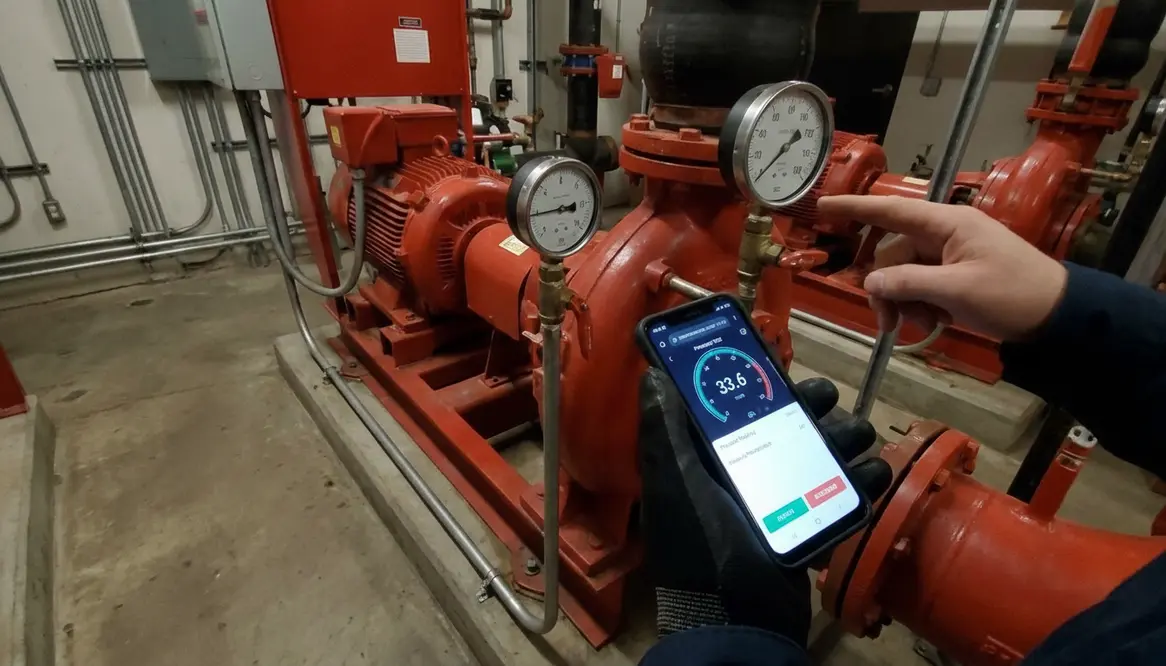
Fire Pump Churn Test No-Load Readiness
When I talk about fire pump churn test, I am talking about one of those quiet little checks that can save a building from a very loud disaster. It is the no load test that shows whether a fire pump can run smoothly, hold pressure, and stay ready for the day nobody wants to think about. In a commercial or industrial site, that matters a great deal. After all, a fire pump is not a movie hero. It does not need drama. It needs steady performance, calm pressure, and zero nonsense.
What a fire pump churn test does
I use this test to see how the pump behaves when it runs without moving water through the system. That tells me a lot about heat buildup, pressure levels, vibration, and overall health. Since commercial properties and large buildings depend on strong fire protection, I treat this as a key part of regular care. If the pump struggles at no load, it will not magically improve when the real emergency shows up. Machines, sadly, do not do inspirational character arcs.
During the test, I watch for smooth operation, proper pressure, and unusual noise. I also check for signs that the pump is working too hard or not hard enough. In short, I want proof that the system can stay ready without falling apart like a cheap folding chair at a family barbecue.
How I perform the test step by step
First, I make sure the system is set up for safe testing and that the pump can run under controlled conditions. Then I start the pump and let it churn while I monitor gauges, temperature, and vibration. Because this is a no flow check, I focus on how the pump behaves at the point where it has the least excuse to act up. That is where weak parts often reveal themselves.
Next, I look at the suction and discharge readings. Then I compare them with expected values for the unit and site setup. If I see pressure that rises too high, I pay attention fast. If I see unstable readings, I dig deeper. A good test does not just say “it works.” It explains how well it works, and whether the pump is aging like a sitcom star or surviving like one.
What I check during the test
Pressure: I confirm the pump reaches and holds the right level.
Temperature: I watch for heat that can point to stress or poor cooling.
Noise: I listen for grinding, knocking, or other signs of trouble.
Vibration: I check for shaking that can mean worn parts or bad alignment.
Leak signs: I inspect seals, joints, and nearby parts for water loss.
If your fire pump churn test feels calm and consistent, that is the whole point. If it does not, the data will usually tell you why.
Why commercial buildings need this test
In a commercial or industrial setting, I cannot treat fire protection like an afterthought. These buildings often hold people, equipment, inventory, and expensive systems that all depend on fast water delivery during a fire event. So, the churn test helps me confirm that the pump will not fail under simple running conditions.
It also helps me catch problems early. A small seal issue today can turn into a major failure later. Likewise, a pressure issue can point to deeper system trouble. Therefore, regular testing supports safety, cuts down surprise repairs, and helps extend the life of the equipment. That is good for compliance, good for planning, and good for anyone who enjoys not dealing with emergency repairs at 2 a.m.
How I read the results and what they mean
If the pump runs smoothly and the numbers stay in range, I usually know the system is in good shape. However, if pressure climbs too high, the pump may be pushing against a problem. If temperature rises too quickly, I may be looking at poor cooling or extra wear. If vibration shows up, I start checking alignment, bearings, and support points.
At this stage, I also compare the findings with past records. That helps me spot slow changes before they become major issues. So, the test is not only about one moment in time. It is part of a larger story about system health, maintenance trends, and long term reliability.
Simple reading guide
If the pump sounds calm, runs steady, and holds pressure, I take that as a healthy sign. If it sounds like it has opinions, I investigate right away. That may sound cheeky, but equipment gives clues if I know how to listen. In a good fire pump churn test, the pump should behave like it is doing its job, not auditioning for a horror movie.
Where I find trusted fire pump support
When I need a reliable reference for system care, I look at trusted fire pump maintenance resources to support best practices and service planning. For local search relevance, I also note this los angeles fire pump service reference. Both help me stay focused on commercial and industrial facilities, where dependable protection is not optional.
In practice, I use this kind of support to keep testing on schedule, review service needs, and make sure large properties stay ready. And that, in the real world, is the point. A fire pump churn test is only as useful as the follow-through, so references and records matter.
FAQ
Conclusion
If you manage a commercial or industrial property, I recommend making the fire pump churn test part of your regular safety plan. It gives you early warning, better confidence, and fewer unpleasant surprises. So, do not wait for trouble to introduce itself. Review your testing schedule, check your records, and keep your fire pump ready to perform when it matters most. Quiet preparation saves loud regrets. And when you repeat the fire pump churn test over time, the trend is often the real hero story: it tells you what is changing before the alarm ever has to.
Pro tip from the field: a properly run no-load check is where a fire pump churn test earns its keep.