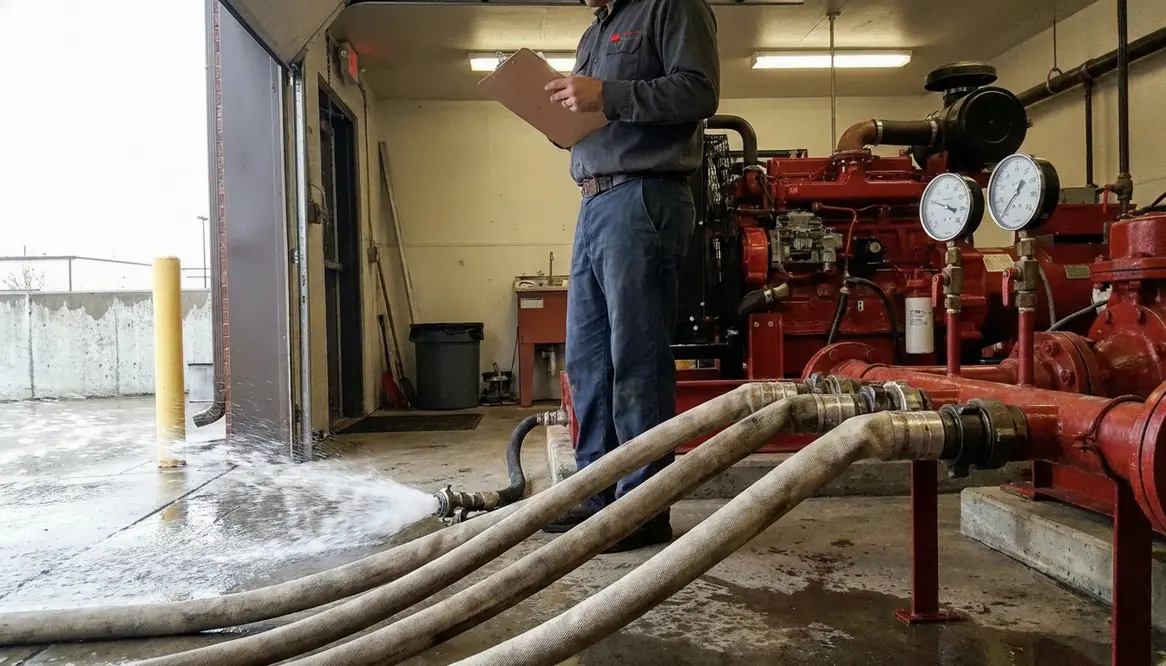
Fire Pump Flow Test Procedure for Commercial Sites
When I talk about a fire pump flow test procedure, I am talking about one of the most important checks for commercial and industrial fire protection systems. I use this process to confirm that the pump can deliver the pressure and water flow a large property may need when it matters most. In plain terms, I do not want guesswork standing between a building and a working system. So, I test. I measure. I verify. That is how I keep big facilities ready, calm, and compliant, while avoiding the kind of surprise nobody wants before lunch.
For commercial towers, warehouses, plants, and major properties, this test is not just a box to tick. It helps me spot weak suction, worn parts, bad readings, and supply issues before they grow into expensive problems. And yes, the pump room may not be glamorous, but it is still where the plot twist gets revealed.
What I check before the fire pump flow test procedure
Before I start the fire pump flow test procedure, I make sure the system is safe and ready. First, I confirm that the fire pump, controllers, gauges, valves, and water supply are in normal condition. Then I review the building records, past test results, and the acceptance point for the pump. This gives me a clear baseline, which matters because I want facts, not friendly rumors from a gauge that “seems fine.”
I also notify the right people before testing begins. Large facilities run on schedules, and I respect that. So, I plan the test to reduce disruption while still getting real results. I also check for signs of leaks, loose fittings, damaged pressure parts, or unusual noise. If I find a problem here, I address it before I move forward. That saves time later, and it keeps the test honest.
How I run the fire pump flow test procedure
I begin the fire pump flow test procedure by starting the pump and letting it reach normal operation. After that, I record the suction pressure, discharge pressure, speed, and engine or motor data. Then I open the test lines or use the approved flow arrangement so I can measure performance at different flow levels. This is where the real story comes out.
I usually test at three points: no flow, rated flow, and peak or overload flow, depending on the system and local code. At each point, I compare the results against the expected pump curve. If the pump performs well at one point but slips at another, I dig deeper. Sometimes the issue is supply pressure. Sometimes it is wear. And sometimes a valve has decided to act like it missed its calling in a soap opera.
The key is consistency. I watch for smooth pressure drops, stable flow, and a pump response that matches design. If readings bounce around too much, I do not ignore it. Instead, I check for cavitation, air in the line, blocked strainers, or a weak water source. A pump can sound confident and still be underperforming, much like a movie sequel nobody asked for.
What results mean for a commercial site
Once I have the test data, I compare it to the required performance standard for the property. For commercial and industrial sites, this matters because the pump must support high demand across large fire systems. A warehouse, hospital, high rise, or plant cannot afford a weak result hidden behind a clean nameplate.
Here is how I read the numbers:
After that, I document everything. I include the readings, test setup, any notes on defects, and the final judgment on performance. This record helps with compliance, maintenance planning, and future repairs. It also gives property teams a clear path forward, which I find much better than the classic “let’s circle back” approach.
Why I pair testing with maintenance and planning
I never treat flow testing as a one time task. Instead, I use it as part of a larger maintenance plan. A fire pump can pass today and drift tomorrow if wear, water issues, or control problems show up later. That is why I use the test results to guide service, repairs, and follow up checks.
If I see poor performance, I inspect the pump casing, impeller, suction piping, pressure relief parts, and controller settings. Then I decide whether the site needs repair, cleaning, adjustment, or a deeper review. For major properties, this kind of follow through protects the whole building, not just the pump room. It also helps owners manage risk with less drama, and honestly, the world has enough drama already.
I also recommend using a trusted service resource when a facility needs support or planning help. For example, a useful internal reference is Kord Fire pump service support. For a local focus, I also suggest reviewing los angeles fire pump solutions when comparing service options for large commercial properties.
FAQ
Next step for your building
If I were managing a commercial tower, plant, or large facility, I would not wait for a problem to expose weak performance. I would schedule a proper fire pump flow test procedure, review the results, and act on anything that looks off. That simple step can protect people, property, and uptime. If your site needs a clear check of pump performance, now is the time to plan it and keep your system ready.