EN 12845 Fire Pump Requirements Explained Guide
EN 12845 fire pump requirements explained is one of those topics that sounds dry at first, but in real life it can decide whether a commercial building stays safe when the sprinkler system wakes up in an emergency. I work with the rule the way a pilot works with a checklist: carefully, calmly, and without assuming the machine will “probably be fine.” Under EN 12845 requirements, the fire pump must support the sprinkler system with steady pressure and flow, so the system can do its job in a warehouse, office tower, plant, or other major property. That is the heart of it. Everything else builds on that promise.
What EN 12845 means for commercial and industrial buildings
EN 12845 sets the design and setup rules for automatic sprinkler systems in commercial and industrial facilities. It focuses on reliability, water supply, pump performance, and backup support. In simple terms, I see it as the rulebook that keeps the system from acting like a drama queen when heat and smoke show up. For a major building, the standard expects the fire pump to deliver enough water at the needed pressure for the full hazard level of the site. That means the pump cannot just look good on paper. It must perform in the real world, under real load, with real risk.
EN 12845 requirements for pump capacity and pressure
The pump must match the sprinkler demand for the building type and fire hazard class. In practice, that means I first look at the water flow needed, then I check the pressure loss across the system, and then I confirm the pump can hold the demand for the required duration. The pump must not drop off when the system needs it most. It should deliver a stable curve, because a nervous pump is about as useful as a keyboard in a rainstorm.
Here is the part many people miss: the pump is not chosen in isolation. Instead, it works with the tank, mains, valves, and sprinkler design. If one piece is weak, the whole setup suffers. Therefore, correct sizing matters more than guesswork, and guesswork has no place in a commercial fire protection plan.
How I check pump setup, power, and backup supply
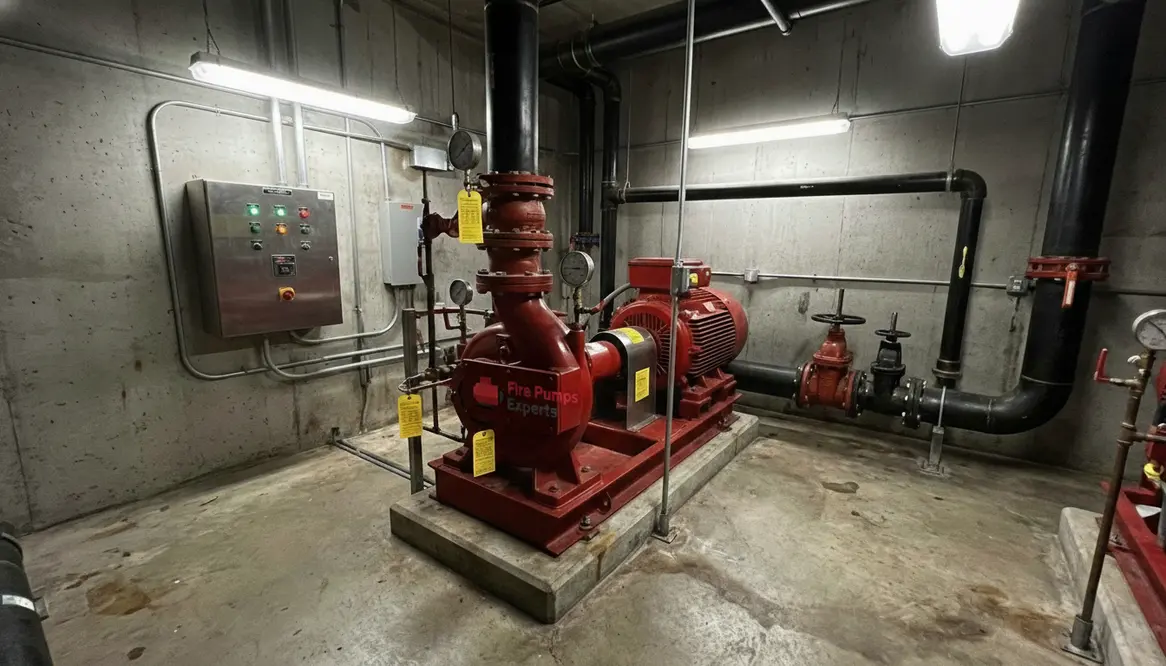
When I review a pump room, I focus on the full chain of support. First, I check the pump driver, which may be electric or diesel. Next, I look at the power source, controls, suction arrangement, and start method. Then I confirm the backup plan. Because when the main supply fails, the system cannot shrug and say, “Well, that was awkward.”
The pump must start automatically when pressure drops. Also, the control gear must be simple, dependable, and protected from damage. For diesel sets, I check fuel supply, cooling, ventilation, and battery readiness. For electric sets, I check the supply security and the normal and emergency feed. This matters a lot in large buildings where one weak point can turn a small event into a very expensive fire story.
Fire pump room rules I follow on site
I treat the pump room like the engine room of the whole fire system. It needs enough space for access, service, and repair. It also needs heat control, drainage, clear labels, and safe access paths. If the room turns into a storage closet for forgotten boxes and broken chairs, then the system loses both access and trust. That may sound funny, but I have seen stranger things in plant rooms.
Also, I make sure the installation supports regular testing. If people cannot test the pump easily, they will delay tests. If they delay tests, small faults grow quietly. And if faults grow quietly, they usually make noise at the worst possible time. That is not the kind of surprise anyone wants.
Dual column view of key EN 12845 checks
Below, I use a simple side by side view to show the main items I review for EN 12845 compliance in commercial and industrial facilities. These practical checks help confirm that EN 12845 requirements are not just words in a document, but active safeguards in the building.
Left column
- Pump flow and pressure match the design demand
- Automatic start works without delay
- Water supply supports the full run time
- Power or fuel backup stays ready
- Room access stays clear and safe
Right column
- Suction conditions avoid air issues and loss of prime
- Control panel shows clear status and fault signals
- Test routines happen on a set schedule
- Pipes, valves, and fittings stay in good condition
- Records prove the system has been checked and maintained
Testing, maintenance, and proof of compliance
A pump can meet design on day one and still fail later if no one tests it. That is why I place strong weight on routine checks, flow tests, and service logs. EN 12845 requirements depend on proof, not hope. So I look for evidence that the pump has been started, observed, measured, and maintained on a regular plan.
In the real world, this is where the system earns its keep. Test results show whether the pressure stays strong, whether the driver responds well, and whether the supply still supports the load. Maintenance also helps spot wear, leaks, vibration, and control faults before they become costly problems. In commercial and industrial buildings, that kind of care protects property, staff, and business continuity. And yes, the building still has to keep running on Monday. Fire does not care about your schedule, but your pump should.
If you need a deeper technical reference on sprinkler pumps and system behavior beyond the core EN 12845 requirements, a useful resource is https://firepumps.org, which offers additional background on fire pump applications and support systems.
FAQ: EN 12845 fire pump requirements
Conclusion
If you manage a commercial or industrial property, I recommend treating EN 12845 fire pump requirements as a core safety task, not a box to tick and forget. The right pump, the right room, the right backup, and the right testing routine all work together. So, if you want confidence in your sprinkler system, now is the time to review your setup, check your records, and speak with a fire protection specialist who understands major buildings from the inside out.