EN 12845 Fire Pump Requirements Guide
EN 12845 Fire Pump Requirements Explained
When I talk about EN 12845 requirements, I am talking about the rules that help commercial and industrial buildings keep water flowing when a fire breaks out. That matters because a sprinkler system is only as strong as the pump behind it. No pump, no pressure. And no pressure, well, that is the kind of surprise nobody wants on a Monday morning. In this article, I will break down what the standard expects, how it affects major properties, and why good design keeps people, stock, and operations safe.
What EN 12845 Expects From A Fire Pump System
I always start with the same idea: the pump must do its job under real fire conditions, not just look good on paper. The standard asks for a reliable water supply, enough pressure, and enough flow to support the sprinkler demand for the building type. So, I look at the hazard level, water source, and system layout first. Then I check whether the pump can keep up when the sprinklers open and the system needs steady output.
In practice, EN 12845 requirements focus on performance, reliability, and backup. That means the pump should not rely on hope, luck, or a heroic electrician holding a flashlight. It needs a proper power source, a sound installation, and controls that work without drama. Also, the system must match the risk class of the site, because a warehouse full of high value stock has very different needs from a light industrial unit.
How I Check Pump Size, Supply, And Pressure
The sizing process starts with the sprinkler demand. I match the pump to the flow and pressure needed at the worst point in the system. Then I check the water source. If the tank, reservoir, or town main cannot support the demand, the whole setup loses trust fast. Water supply is not the place for wishful thinking.
The pump must also cope with pressure losses across valves, pipes, and fittings. As a result, I look at the full route from source to sprinkler head. If the design ignores friction loss, the system may pass a drawing review and still fail in the field. That is the fire safety version of showing up to a race in flip flops.
EN 12845 Requirements In Practice For Commercial And Industrial Sites
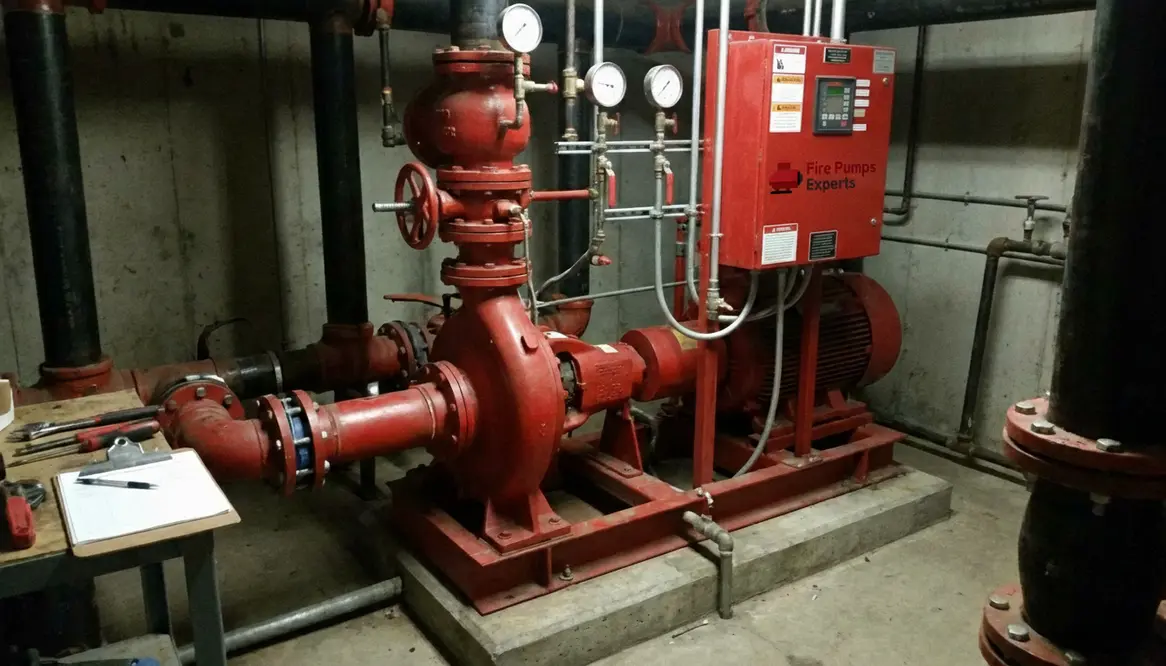
Here is where the standard becomes real for major buildings. Commercial and industrial sites often have large floor areas, high storage loads, and long pipe runs. Therefore, I treat the pump room, tank, and controls as core assets, not side notes. A weak setup can interrupt business, damage stock, and slow recovery after a fire event.
Key Design Priorities On Real Sites
- Water source security so the pump always has enough supply
- Redundancy where the site needs extra protection against failure
- Control reliability so the pump starts when the system asks for it
- Maintenance access so testing and checks do not turn into a full scavenger hunt
- Site suitability so the pump room protects equipment from heat, frost, and damage
Also, I always remind clients that the pump is only one part of the wider protection plan. Sprinklers, valves, tanks, alarms, and maintenance all work together. If one part slips, the whole system feels it. It is a bit like a band. If the drummer misses the beat, everyone notices.
Quick View Of What Matters Most
Design focus
Flow and pressure
Keep sprinklers operating at the needed level
Water storage
Provide stable supply during a fire event
Why it matters
Backup support
Reduce the risk of a single point of failure
Routine testing
Confirm the pump still performs as expected
Space and access
Allow safe inspection, repair, and monitoring
Testing, Maintenance, And Proof Of Performance
I never trust a fire pump that only performs in theory. So, I check testing records and maintenance plans with care. Regular flow tests, visual inspections, and control checks help prove the system still meets the design. Over time, wear can change performance, especially in large sites where pumps run in harsh conditions.
In addition, I look for clear logbooks and service history. Good records show the team has tested the pump, fixed faults, and watched for pressure drop or starting issues. That matters because the best time to find a problem is during maintenance, not during a fire. The standard expects dependable operation, and dependable operation comes from consistent care. Well-documented work also helps show that the installation still aligns with EN 12845 requirements, not just what someone remembers from the original project.
Where To Get Help With EN 12845 Compliant Fire Pump Design
If I need deeper support, I turn to specialists who work with commercial and industrial fire systems every day. For example, fire pump solutions for commercial and industrial buildings can help with planning, sizing, and system support for major properties. That kind of guidance matters because the details shape the outcome. And in fire protection, details are not decoration. They are the difference between control and chaos.
Good advice also keeps projects aligned with EN 12845 requirements when buildings change use, expand, or add new storage layouts. When that happens, the original pump selection can drift away from what the site actually needs, and a fresh design review can prevent nasty surprises the first time the sprinklers really have to work.
FAQ: EN 12845 Fire Pump Basics
Conclusion
If I had to sum it up, I would say this: EN 12845 requirements protect more than equipment. They protect business continuity, people, and peace of mind. So, if you manage a commercial or industrial property, take the pump seriously and review your design, testing, and maintenance with care. If you want support, now is the right time to speak with a specialist and make sure your fire pump system is ready before trouble knocks.