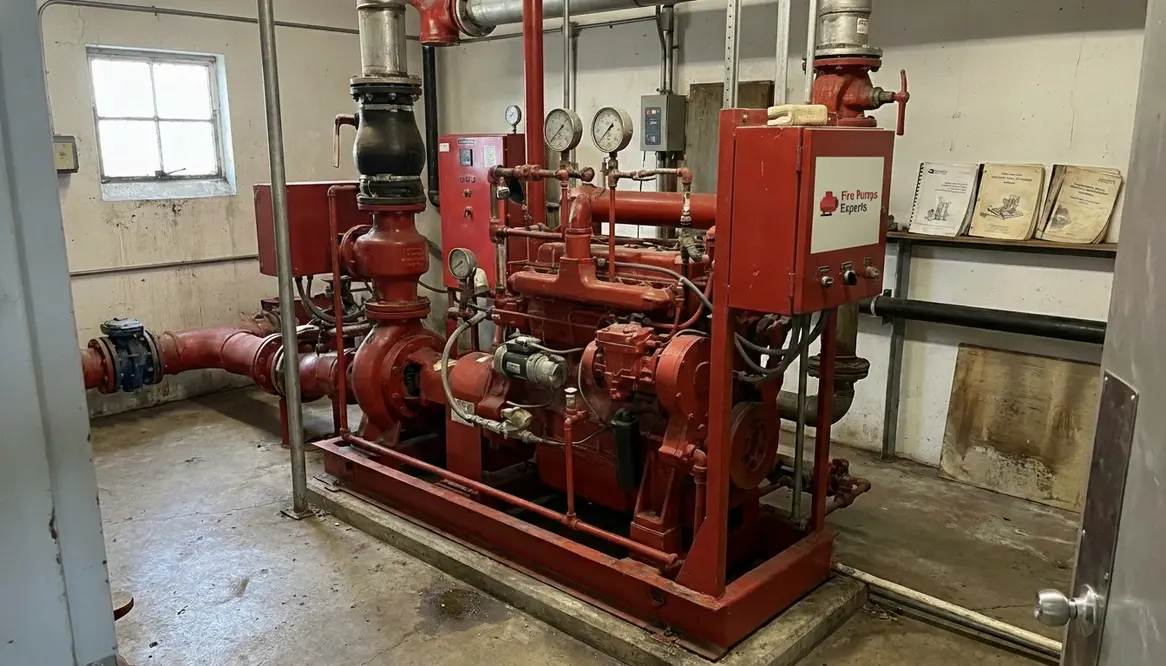
EN 12845 Fire Pump Requirements Guide
EN 12845 fire pump requirements sit at the heart of a reliable sprinkler system. If the pump fails, the rest of the system may as well be holding a flashlight and hoping for the best. That is why this standard matters so much for factories, warehouses, office towers, and other major properties. In this guide, the focus is on what the standard expects, how fire pumps fit into the full sprinkler design, and why proper testing and maintenance keep your protection ready when it counts.
What EN 12845 fire pump requirements mean for your building
EN 12845 sets the rules for automatic sprinkler systems in commercial and industrial facilities. In simple terms, the fire pump must deliver enough water, at the right pressure, for the right amount of time. That sounds obvious, but the details matter. The system has to support the sprinkler demand plus any extra water need built into the design. So, the pump is not there for decoration. It is there to perform under stress, and it must do so without drama.
In practice, there are three core points. First, the pump must match the system demand. Second, it must draw from a reliable water source. Third, it must start and run in a controlled way during a fire event. Because of that, a fire pump under EN 12845 is not a one size fits all item. It needs to fit the hazard, the building size, and the fire protection design.
Connecting EN 12845 requirements to real risk
On paper, EN 12845 requirements read like a neat list of flow rates, pressures, and safety factors. On a real site, those numbers translate into whether a fire stays small and controlled or turns into an event that fills boardrooms with silence. Storage height, combustible loading, and building layout all feed into how hard the pump has to work. Once those are clear, the design can lock in a pump that does not just meet the letter of the standard but actually supports the fire strategy for the building.
Fire pump sizing and water supply made simple
Here is where many projects get serious very fast. The pump size is not picked by gut feel or by the old office tradition of “that should be fine.” Instead, the design must follow the sprinkler risk category and the required flow and pressure. A warehouse with high storage needs a very different setup from a standard office block. Likewise, an industrial plant can demand far more water than a simple commercial property.
The water supply also plays a huge role. A strong pump means little if the tank or supply source cannot keep up. So the water storage, incoming supply, and pump curve all have to work together. If one part slips, the whole chain weakens. Think of it like a band: if the drummer misses the beat, even the guitarist starts to sweat.
Key checks for pump sizing and supply
- Confirm the hazard and risk category before touching pump selection.
- Match the duty point of the pump to the worst credible sprinkler demand.
- Verify that tanks and mains can sustain flow for the full required duration.
- Allow for pressure losses in pipework, fittings, and elevation.
- Ensure suction conditions stay within limits so the pump does not starve.
Core equipment and layout in a clean two-column view
Below is a simple way to view the main parts expected in an EN 12845 fire pump setup for large properties. Seeing them side by side makes it easier to remember that every component has a job and every job affects the result.
Component
Fire pump unit
Jockey pump
Water tank or supply
Controller
Valves and pipework
Test arrangement
What I check
Flow, pressure, and duty point against the design curve
Ability to keep system pressure stable without nuisance starts
Enough capacity, reliability, and protection against contamination
Automatic start, fault signals, and power changeover where needed
Correct sizing, layout, and access for operation and maintenance
Safe, documented way to prove performance without flooding the site
This straightforward layout keeps the focus on the system as a whole, not on scattered parts sitting in a room like extras in a movie. When every piece earns its place, EN 12845 fire pump requirements become much easier to meet and maintain.
How EN 12845 fire pump testing and maintenance work
Testing is where theory meets reality. A fire pump may look ready, sound ready, and even have a very confident nameplate, but the test tells the truth. Under EN 12845, the system needs routine checks, function tests, and performance tests. These confirm that the pump starts properly, reaches the required pressure, and holds stable operation.
Maintenance matters just as much. The priority is spotting wear, leaks, battery issues, controller faults, valve positions, and anything that could block a clean start. It also means making sure staff know the system well enough to avoid accidental tampering. A simple closed valve has a bad habit of turning into a major problem. Human error, as ever, stays creative.
Routine activities that keep the pump ready
- Visual checks on the pump room, valves, gauges, and leaks.
- Regular test starts to prove automatic operation from the controller.
- Full performance tests against the original design duty.
- Verification of power supplies, including batteries and changeover.
- Careful logging of results so trends and issues are easy to spot.
For commercial and industrial sites, this process should not feel like a nuisance. It should feel like insurance with a pulse. Regular checks reduce surprise failures, support compliance, and help prove the system will work when a real fire breaks out.
What I check during EN 12845 compliance reviews
When a site review is on the table, the checks do not stop at the pump room door. The pump, controls, water, and records all share the spotlight.
Step-by-step focus during a review
- First, confirm that the pump matches the hazard and water demand.
- Second, check that the supply can support the required run time.
- Third, review controls, alarms, and any backup features.
- Then, inspect accessibility, ventilation, and room conditions.
- Finally, confirm the inspection records are current and clear.
That last part often gets ignored, which is a shame because good records can save time, money, and a great deal of awkward conversation during audits. The standard expects evidence, not wishful thinking.
Why commercial and industrial facilities need expert support
Large properties carry real fire risk. Storage height, process heat, electrical loads, and busy operations all raise the stakes. Because of that, EN 12845 fire pump requirements deserve proper design and review from the start. Sites can lose valuable time because the pump set was chosen too late or sized too loosely. On the other hand, a well planned system gives confidence and keeps business risk under control.
If you manage a warehouse, plant, distribution site, or major building, you need more than a basic box of equipment. You need a fire pump setup that fits the building, supports the sprinkler design, and stays dependable under pressure. Proper guidance at design stage, during commissioning, and throughout the life of the system keeps EN 12845 requirements from becoming an afterthought and turns them into a solid line of defense.
For deeper technical reading and reference material on fire pumps in general, resources such as https://firepumps.org can complement the specific obligations set by EN 12845.
FAQ: EN 12845 fire pump requirements in practice
These quick answers focus on how the standard plays out on real sites, from basic obligations through to the risks of getting the pump choice wrong.
Conclusion
If you want your sprinkler system to do its job, you need the fire pump to meet EN 12845 from day one. Commercial and industrial property teams should review sizing, supply, testing, and maintenance with care, and treat EN 12845 fire pump requirements as a design foundation rather than a late-stage checkbox.
If you are planning a new system or checking an existing one, take action now. A solid fire pump setup protects people, assets, and operations, and it keeps your building ready for the moment nobody wants, but everyone must prepare for.