EN 12845 Fire Pump Requirements Guide
EN 12845 Fire Pump Requirements Explained
When I talk about fire safety in large commercial and industrial buildings, EN 12845 requirements always sit near the top of the list. They shape how sprinkler systems perform when the heat turns ugly and the pressure drops fast. In plain terms, this standard tells me how to choose, install, and keep a fire pump ready for the moment nobody wants but everybody plans for. And yes, this is the part where boring engineering saves the day like a quiet hero in a black suit.
For major property owners, the goal is not just compliance. It is reliable water delivery when every second counts. So, I will break down what matters, why it matters, and how it affects commercial and industrial sites that cannot afford guesswork.
What EN 12845 Fire Pump Requirements Mean for My Building
At the core, EN 12845 requirements make sure the sprinkler system gets enough water at the right pressure for long enough to control a fire. I see this standard as a practical rulebook for real sites, not a theory paper that gathers dust on a shelf. It applies to buildings where risk, size, and business impact make fire protection a serious investment.
The standard expects the fire pump to support the sprinkler demand under the worst expected conditions. That means I must think about flow, pressure, water source, and pump reliability together. If one piece slips, the whole system can wobble. And in fire protection, wobbling is not a charming personality trait.
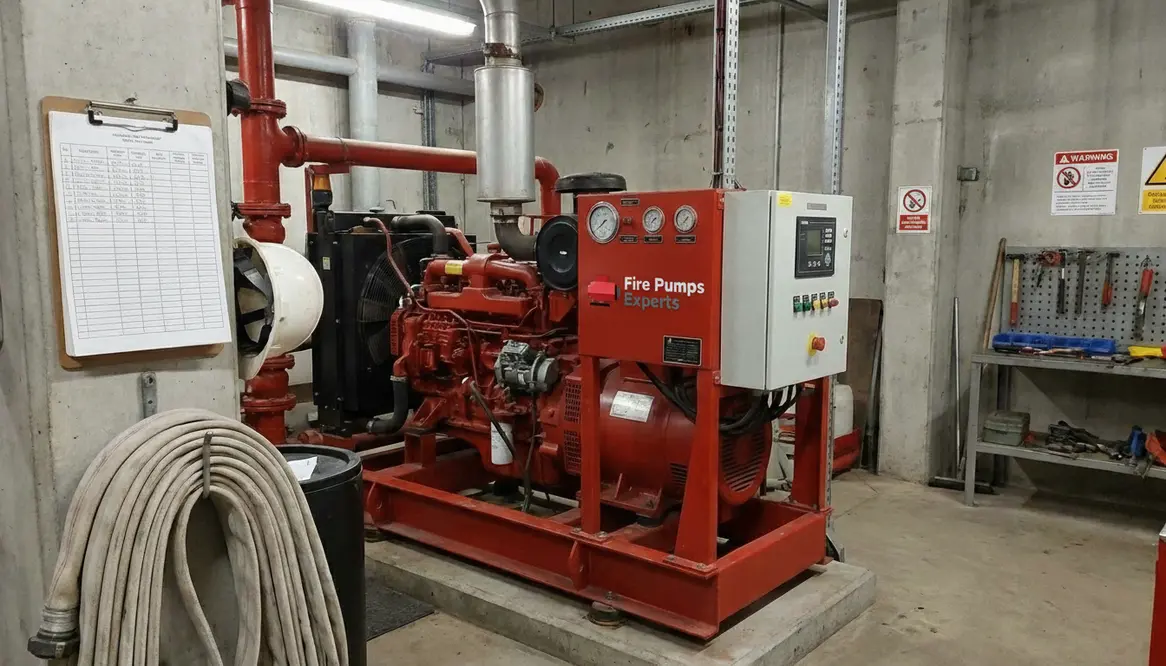
Dual view of the main EN 12845 fire pump checks
What I must verify
Fire pumps must match system demand, start fast, and run with stable output.
Why it matters
A weak pump can leave sprinklers underfed, which puts people, stock, and property at risk.
Fire Pump Setup I Need to Get Right
I always start with the water supply. EN 12845 expects the pump to work with a dependable source, such as a tank or approved supply that can support the required duration. That matters because a fire does not care if the mains water pressure had a bad day. It will keep burning anyway.
Next, I look at the pump type and arrangement. In many commercial and industrial settings, the system may need a duty pump, a standby pump, or a jockey pump to hold pressure and reduce unnecessary starts. The jockey pump handles small pressure drops, while the main fire pump steps in when demand rises. This setup helps protect the system and lowers wear, which is a nice bonus because pumps, like people, enjoy not being overworked.
I also check the power supply. EN 12845 requires a level of reliability that suits the site risk. If the pump uses electric power, I need a secure supply. If the site uses diesel backup, I need fuel, ventilation, and starting reliability. In both cases, I want the pump ready without drama. Think less action movie, more calm control room.
EN 12845 requirements for pump performance and testing
Performance is where the standard becomes very concrete. The pump must deliver the needed flow at the required pressure, and it must do this under test conditions that prove it can handle the real thing. I cannot rely on hope, charm, or a well written spreadsheet alone.
EN 12845 also pushes me to think about testing. Regular checks confirm that the pump starts, runs, and performs as intended. This includes automatic start tests, discharge tests, and monitoring for faults. Since fire pumps sit idle for long stretches, testing is not optional in spirit or practice. A pump that only works in theory belongs in a philosophy class, not a plant room.
Key pump performance points
- The pump must meet the full sprinkler demand
- The system must maintain pressure during operation
- Automatic starting must work without delay
- Testing must confirm real world reliability
How I apply EN 12845 in commercial and industrial sites
In large warehouses, factories, logistics hubs, and major property buildings, I treat fire pump design as part of the building’s business continuity plan. A fire can shut down operations, damage stock, and trigger long recovery times. So, the fire pump is not just a compliance item. It is part of keeping the business alive when things go sideways.
EN 12845 requirements also help me match the system to the actual risk profile of the site. A high rack storage facility may need a very different setup from a processing plant or a mixed use commercial tower. Therefore, I look at hazard class, water duration, pump duty, and backup arrangements as one connected picture. That is where a proper design review matters most.
For property owners who want expert support, I recommend reviewing EN 12845 fire pump requirements guidance to better understand how compliant systems should be planned for commercial and industrial environments.
When I know the system is truly compliant
I know the system is in good shape when the pump selection fits the demand, the water supply can support the required run time, the power backup is dependable, and testing shows consistent results. However, compliance does not end at installation. I also need maintenance records, routine inspections, and fault correction that happens fast, not “after we finish ten other things.” Fire safety likes urgency.
Most of all, I want the system to stay ready for years, not just on handover day when everyone smiles for the photo and the hard hats look brand new. Real compliance lives in the maintenance schedule, the logs, and the discipline of keeping standards intact.
FAQ
Conclusion
If I want a fire pump system that does its job when it matters most, I cannot treat EN 12845 requirements as a side note. I need to design for performance, test for reliability, and maintain the system with discipline. For commercial and industrial buildings, that approach protects people, assets, and operations. If you are planning a new system or reviewing an existing one, now is the right time to act, before a fire forces the lesson.