EN 12845 Fire Pump Requirements Guide
EN 12845 Fire Pump Requirements Explained
If you run a commercial building, an industrial site, or a major property, I can tell you this much: EN 12845 requirements are not the kind of detail you want to “sort out later.” They shape how a fire pump supports sprinkler systems, how water reaches the hazard fast, and how your building stays within a trusted fire protection standard. In plain terms, these rules help make sure the pump shows up ready for duty, not acting like a lazy extra in a disaster movie.
In this guide, I will walk through the core points in a clear, practical way. I will keep it focused on real buildings, real risk, and real compliance, because that is where EN 12845 fire pump requirements matter most.
What EN 12845 means for fire pump design
EN 12845 sets the baseline for automatic sprinkler systems in commercial and industrial facilities. For me, the fire pump sits at the heart of that setup. It must deliver enough water, at enough pressure, for long enough to support the sprinkler demand during a fire. That sounds simple, but the details matter.
First, the pump must match the system design. So, I look at the hazard class, water supply, flow demand, and pressure needs together. Then I check whether the pump can keep performance steady when the sprinkler system opens. A weak pump is like a backup dancer who forgets the routine. Nobody needs that when flames are involved.
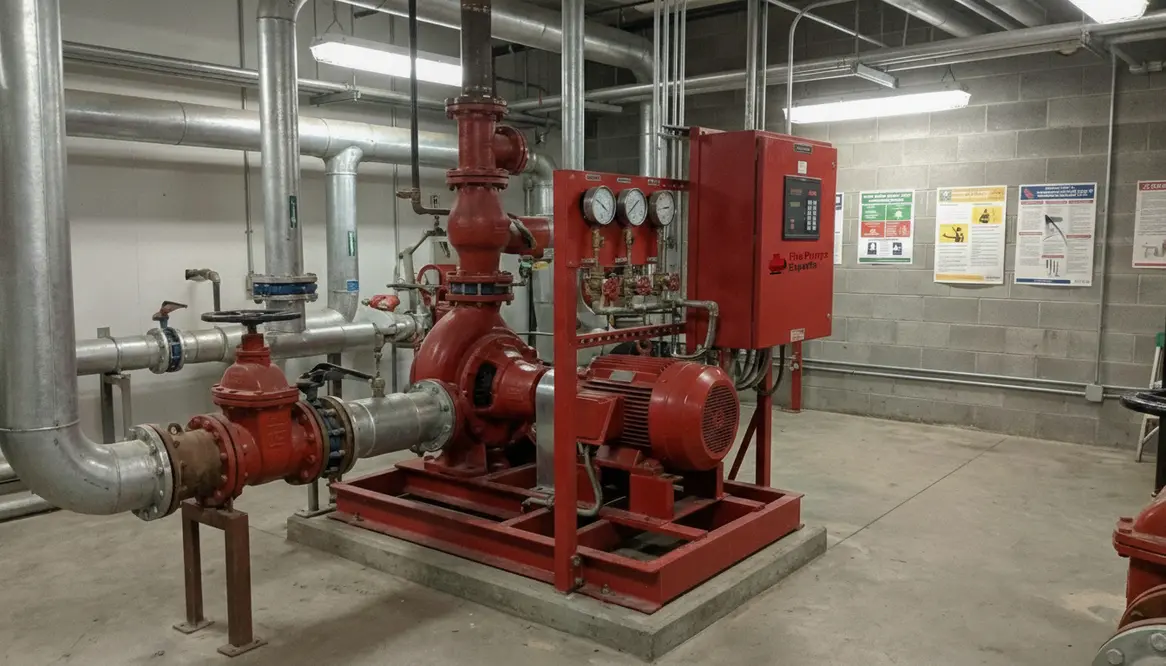
Also, EN 12845 requires careful attention to the pump arrangement. The system must include reliable start methods, proper control gear, and a water source that can support the required run time. Because of that, design is never just about buying a pump. It is about building a full working response.
EN 12845 requirements for pump performance and water supply
When I review EN 12845 requirements, I focus on two big items: performance and supply. The pump must deliver the correct flow at the correct pressure, and the water source must last for the required duration. If either one fails, the whole setup loses value fast.
Here is what matters most:
Dual column overview
Pump performance
The pump must meet the system duty point. It should not just work in a lab or on paper. It must perform under real demand, with proper pressure and flow across the sprinkler network.
Water source
The supply must be dependable, adequate, and protected from interruption. In many commercial and industrial settings, that means tanks, mains, or combined arrangements that support the fire load without drama.
Run time
The system must keep delivering water for the duration required by the hazard category. That is where many site owners get a reminder that fire protection is a marathon, not a sprint.
Moreover, the pump and water supply need to work together. A strong pump with a weak source is still a problem. Likewise, a solid source with poor pump output will not save the day. So, I always treat them as one system, not separate boxes on a checklist.
How I check installation, controls, and power
Installation can make or break the whole system. Even the best fire pump can struggle if the layout is wrong, the controls are sloppy, or the power supply is not secure. So, I always look beyond the equipment label and into the site conditions.
For electric pumps, the power supply must stay reliable and protected. For diesel pumps, fuel supply, ventilation, and starting arrangements must support dependable operation. In both cases, the control panel should allow automatic start and clear status monitoring. Because when a fire starts, nobody wants to play detective with blinking lights.
Then I check access. Staff must reach the pump room safely for testing, service, and emergency response. The room should stay dry, secure, and suitable for the equipment. Temperature control also matters, since pumps and controls do not enjoy extreme conditions any more than the rest of us do on a Monday morning.
In addition, the pump connection to the sprinkler system must support the required pressure with minimal loss. That means short, efficient pipe runs where possible, proper valves, and smart layout choices. Good design saves trouble later, and in fire protection, later can be very expensive.
EN 12845 requirements in testing and maintenance
Compliance does not end once the pump is installed. In fact, that is where the real relationship begins. EN 12845 requirements expect regular testing and maintenance so the system stays ready for use.
I treat testing as proof, not paperwork. The pump should be started, checked, and observed under planned conditions. Flow, pressure, alarms, and control behavior all need attention. Any weak result needs action fast, because “we meant to fix it” is not a fire protection strategy. It is just regret with a coat of paint.
Maintenance should cover pumps, controllers, fuel systems, valves, batteries, and water supply components. Also, records matter. Good logs show patterns, support audits, and help catch small issues before they turn into full-scale failures. If you want more technical guidance, I recommend reviewing a trusted EN 12845 fire pump requirements guide for commercial and industrial sites.
Finally, I always remind clients that testing must fit the site. Large buildings and industrial properties often operate around busy schedules, so planning helps avoid disruption. Still, compliance must stay firm. Safety does not care about convenience, and frankly, neither does fire.
FAQ: quick answers on EN 12845 fire pump rules
Why I recommend acting now
If your site depends on sprinkler protection, I would not wait for a fault, a failed test, or a hard lesson. I would review the EN 12845 requirements, check the pump design, confirm the water supply, and verify the controls before trouble shows up. If you manage a commercial or industrial property, now is the time to tighten the system and protect what matters. Get the right review, fix the weak spots, and keep your fire pump ready for the moment it counts most.