EN 12845 Fire Pump Requirements Guide
EN 12845 Fire Pump Requirements Explained
When I talk about EN 12845 requirements, I’m talking about the rules that help commercial and industrial buildings keep fire sprinkler systems ready when trouble shows up. In plain terms, this standard tells me how a fire pump should perform, how it should be powered, and how it should support a building’s sprinkler network without drama. That matters a lot in warehouses, factories, logistics hubs, and major property buildings, because when a fire starts, nobody wants a pump that acts like it needs a coffee break.
In this article, I’ll walk through the main fire pump rules under EN 12845, what they mean in real life, and how I approach them for larger sites. I’ll keep it practical, because fire safety already brings enough stress without adding technical fog.
What EN 12845 fire pump requirements mean for commercial buildings
First, I see EN 12845 as a performance standard, not just a paperwork exercise. It sets the base for sprinkler systems in commercial and industrial buildings, so the fire pump can deliver the right pressure and flow when the system needs it most. As a result, the pump must support the demand of the full sprinkler design, not just “look capable” on a drawing.
In my experience, the standard pushes three big ideas. It requires enough water supply, enough pressure, and enough reliability. Therefore, the pump must work with the tank, the mains, and the sprinkler layout as one system. If one part falls short, the whole setup can lose its edge faster than a superhero without a cape.
EN 12845 requirements for pump selection and power
When I choose a pump setup, I look at the site risk, the water demand, and the building use. EN 12845 requires the pump to match the sprinkler system design, and that includes the correct duty point. So, if the building needs a certain flow at a certain pressure, the pump must hit that target with room to spare.
Here is the part that matters most in the real world:
Requirement
Correct duty and pressure for the sprinkler system
Reliable power source for the pump set
Automatic start when system pressure drops
Regular testing and maintenance access
What I check
I confirm the pump curve fits the full demand
I review electric and diesel backup options
I make sure the start logic works without delay
I confirm staff can test and inspect the plant safely
Also, EN 12845 expects strong reliability from the power supply. That is why many sites use a main pump with a standby arrangement. If the main power fails, the system still needs to protect the building. After all, fire does not politely wait for the grid to recover.
How I assess water supply, tank size, and pump duty
Water supply sits at the heart of EN 12845 requirements. I always check whether the site has enough stored water or a dependable supply source to support the fire pumps for the required duration. For larger properties, this often means careful tank sizing, because a pump with no water is just an expensive noise machine.
The standard also expects me to think about demand over time. The pump must support sprinkler operation for the full design period, not just during the first burst. Therefore, I review tank capacity, refill rates, and likely fire load. In industrial sites, where stock, machines, and packaging can all feed a fire, I treat water planning as serious business.
EN 12845 requirements for installation, testing, and control
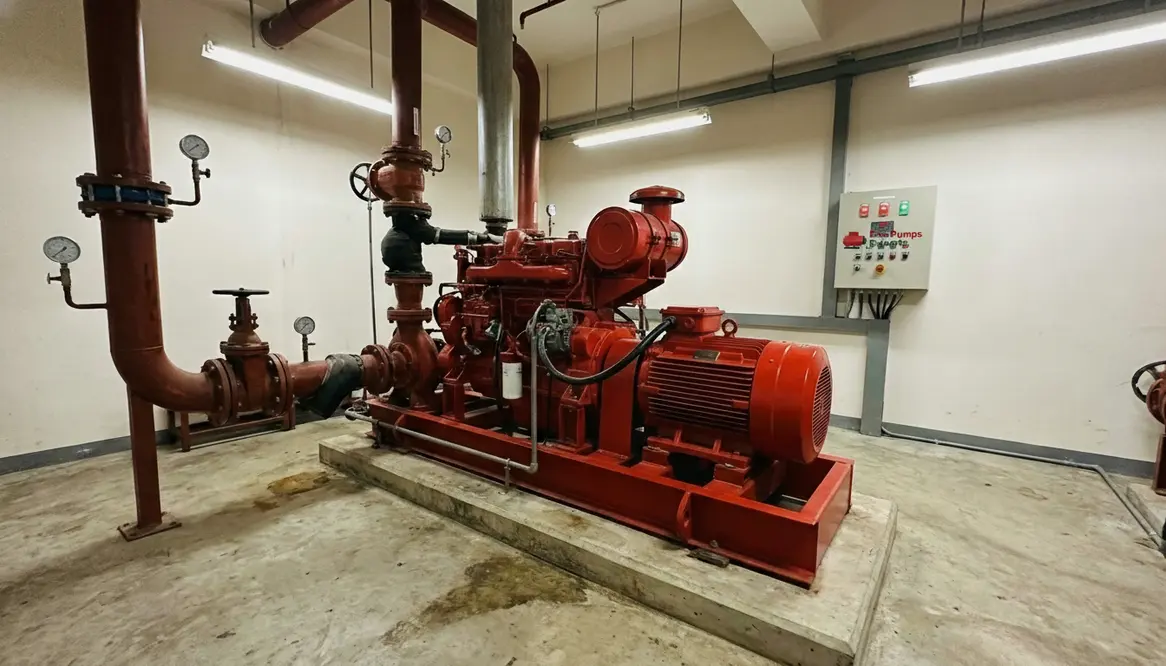
Installation quality can make or break the system. I want the pump room dry, accessible, and protected from damage. I also look for good ventilation, clear pipework layout, and control panels that staff can reach without turning the space into an obstacle course. Safety should feel calm, not like a scene from an action film.
Testing matters just as much. EN 12845 requires regular checks so the pump stays ready. I focus on start tests, pressure checks, fuel checks where diesel applies, and alarm signals. Also, maintenance must be easy to perform. If a technician cannot inspect or test the equipment cleanly, then the design needs work.
For sites that need a deeper standard review, I often point teams to this EN 12845 fire pump compliance guide as a useful next step for commercial and industrial fire protection planning. You can find more resources at https://firepumps.org.
How I keep compliance practical for large properties
I like to keep EN 12845 compliance grounded in real site use. A large warehouse has different risks than a plant room or a mixed use business tower, so I start with the building’s actual fire load and layout. Then I check whether the fire pump, water storage, and sprinkler zones all support that reality.
Next, I look at growth. If a business adds racking, production lines, or extra floors, the fire pump system may need a review. So, I advise owners to treat EN 12845 as a living plan, not a one time box tick. That way, the system stays fit for purpose as the building changes. Practical, steady, and yes, a little less exciting than a blockbuster sequel, but far more useful.
Across these decisions, EN 12845 requirements give me a framework to keep things consistent. I combine that framework with the building’s real world use, so the sprinklers and pumps are ready for the kind of fire the site might actually face, not just an idealized scenario.
FAQ: EN 12845 fire pump requirements
Conclusion
If you manage a commercial or industrial property, I suggest you take EN 12845 fire pump requirements seriously and review your setup before a problem forces the issue. A strong system protects people, stock, and the building itself. If you need help checking compliance, sizing a pump, or improving your sprinkler support, now is the time to act. Fire safety rewards preparation, not hope, and hope is not a pump strategy.