EN 12845 Fire Pump Requirements Guide
EN 12845 Fire Pump Requirements Explained
When I talk about fire protection in commercial and industrial facilities, I always come back to one hard truth: water only helps if it arrives fast enough and with enough pressure. That is where EN 12845 requirements step in. This standard sets the rules for sprinkler systems in major buildings, and the fire pump sits right at the heart of that setup. If the pump fails, the whole protection plan starts to look like a hero with no cape. So, let me walk you through what matters, why it matters, and how I make sense of it in real world projects.
What EN 12845 Fire Pump Requirements Mean for My Project
I see the standard as a practical guide, not just a pile of technical paper. EN 12845 fire pump requirements define how a pump must support sprinkler demand when the system needs water at the right pressure and flow. In plain terms, the pump must do its job without drama. It must match the hazard level, the building size, and the system design. For large warehouses, plants, and other major properties, that means I cannot guess or cut corners. I need a pump that can deliver stable supply under the worst expected fire demand.
Also, the standard does not treat the pump as a lone machine. It looks at the full chain, from water source to pump room to controls. That matters because even a strong pump becomes a weak link if the suction side is poor or the controls fail. I have seen a lot of systems look impressive on drawings and then lose their confidence the moment real pressure enters the room. The standard is there to stop that kind of unpleasant surprise.
How I Choose the Right Fire Pump Setup
First, I look at the facility risk. A cold storage site does not behave like a shopping center, and a manufacturing plant does not play by the same rules as a high rise. So, I size the pump based on the sprinkler demand, water supply conditions, and any system restrictions. Then I check whether the water source can support the flow without collapse. That step matters more than people think. A fire pump is only as good as the water it can pull in.
Next, I make sure the pump arrangement fits the standard. In many commercial and industrial sites, this includes a duty pump and a backup pump, along with a jockey pump to keep pressure steady. The jockey pump handles small pressure drops, while the main pump waits for the real event. That way, the larger pump does not cycle like it has nerves before a big presentation.
If you want a deeper reference for layouts and sizing logic, I like to map my checks against the material on https://firepumps.org and then align them with the project's own risk profile.
EN 12845 requirements in practice
I like to break the standard into simple checks. Here is the practical view I use on site:
Water supply
The source must hold enough water for the design duration and flow.
Pump capacity
The pump must meet the required pressure and discharge rate for the system.
Power and backup
The system needs reliable power, and in many cases a safe backup route.
Controls and alarms
The pump must start properly and send alerts when faults appear.
Room conditions
The pump room must stay accessible, protected, and ready for service.
These points may sound basic, but they save projects from expensive mistakes. Also, they keep the system usable when real conditions get messy, which is usually when fire safety gets tested for real.
What I check in a commercial pump room
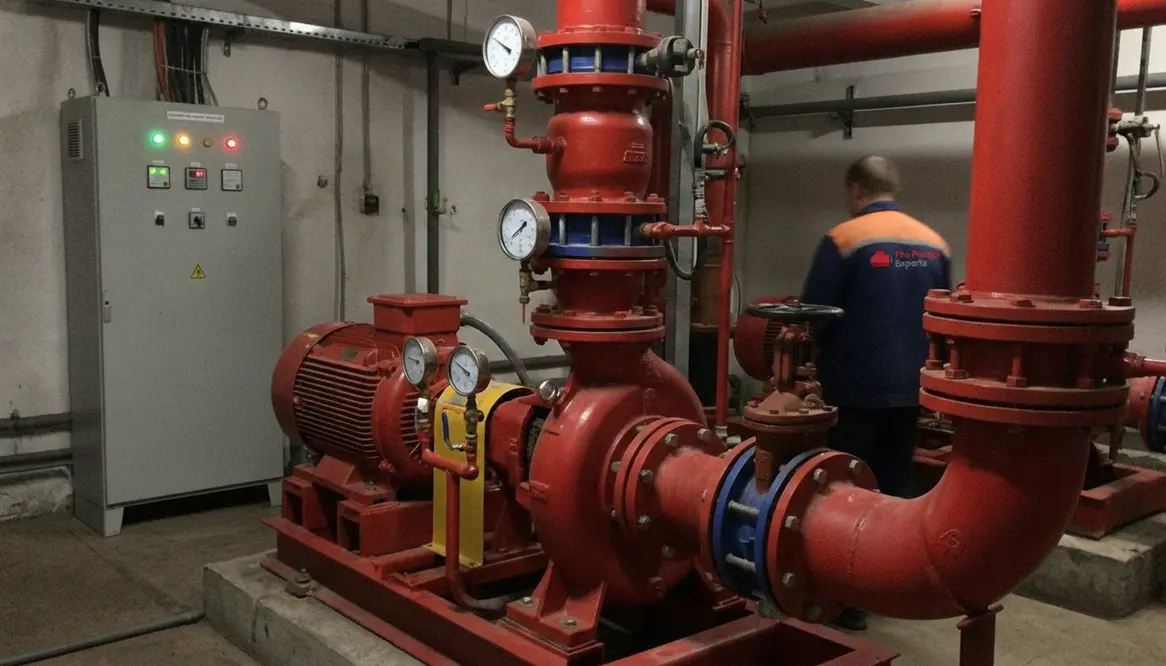
When I review a pump room for a major property, I focus on access, ventilation, heat, drainage, and service space. I need enough room around the pump for testing and repair. I also need the space to stay dry and secure. If the room floods, overheats, or traps staff during maintenance, the setup becomes far less dependable. And yes, a beautiful pump room that nobody can reach is about as useful as a submarine in a desert.
Power supply also matters. I check the electrical supply or diesel setup, depending on the design. Then I confirm that the controls start the pump automatically when pressure falls. I also make sure alarms, gauges, and test valves work as intended. Because if the system cannot tell you something is wrong, it will wait until the worst possible moment. Very theatrical, but not helpful.
Why testing and maintenance keep EN 12845 compliance alive
I do not treat compliance as a one time event. It lives or dies in testing. Regular checks confirm that the pump starts, holds pressure, and responds the way the design expects. I look at routine runs, flow tests, valves, fuel supply, batteries, and general wear. Over time, seals age, parts loosen, and settings drift. That is normal. What is not normal is ignoring it until a fire drill turns into a real emergency.
For industrial and commercial properties, maintenance also supports business continuity. A plant shutdown can cost far more than the pump service itself. So, I always see fire pump care as risk control and asset care at the same time. That is the sweet spot. Safe building, smoother operations, fewer headaches. A rare trio, like a solid sequel in a movie franchise.
In the background of all this, EN 12845 requirements sit quietly as the reference point. When inspections, tests, and upgrades keep lining up with that benchmark, I know the system is not just compliant on paper but ready for an actual alarm.
FAQ
Conclusion
If you want your sprinkler system to do its job when it matters most, I suggest treating EN 12845 requirements as the backbone of your fire pump design, not an afterthought. The right pump, the right water source, and the right maintenance plan all work together. So, if you manage a commercial or industrial facility, now is the time to review your setup, close the gaps, and make sure your protection system is ready before trouble arrives.
Look at the pump, the pipework, the power, and the people who maintain it, and ask a simple question: “Would this still perform on the worst night of the year?” If the honest answer is not a clear yes, then EN 12845 requirements give you a structured way to fix that before the sirens ever sound.