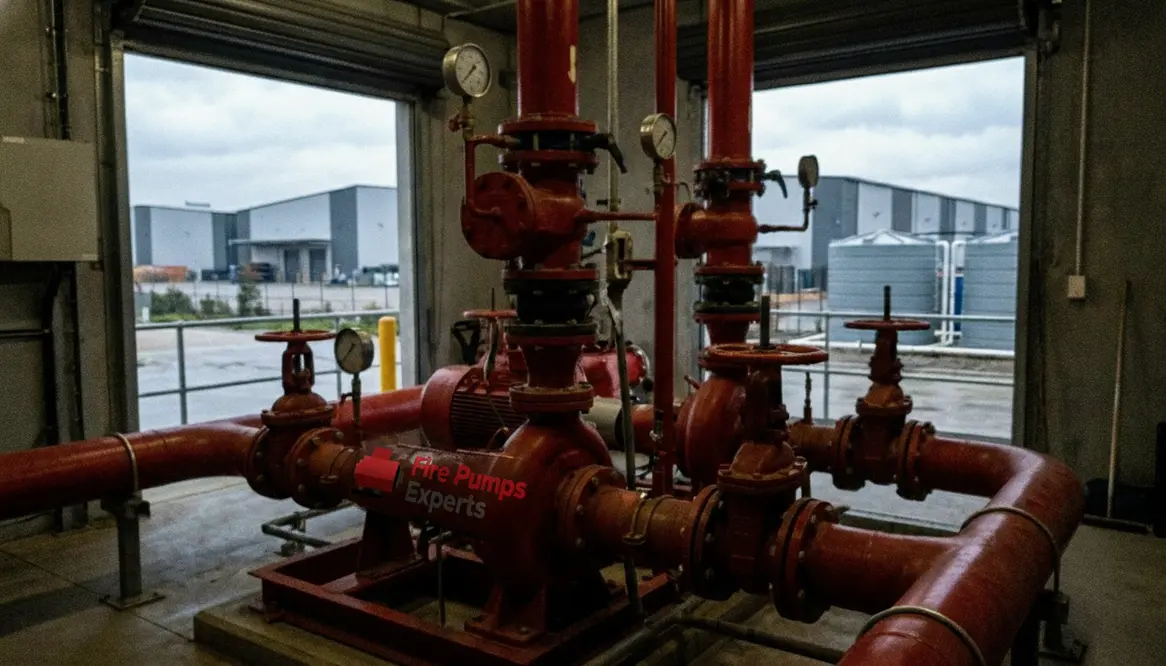
BS EN 12845 Fire Pump Guide for Multi Site Facilities
How one shared fire pump setup keeps multiple buildings honest, hydrated, and ready for the alarm to start singing.
BS EN 12845 Fire Pump Requirements for Multi Site Facilities may sound like a dry rulebook, but in real life it decides whether a sprinkler system stands ready when trouble walks in uninvited. I work with commercial and industrial properties, so I know this standard matters most when several buildings, yards, plant rooms, or warehouse blocks depend on one shared fire protection setup. In this guide, I break down the BS EN 12845 requirements in plain language, with a focus on how multi site facilities keep water supply, pump reliability, and system control in line. Think of it as the quiet hero of the site. Not glamorous, sure, but very hard to replace once the alarm starts singing.
Why multi site fire pump design feels different
When one shared system protects offices, warehouses, and plant buildings at the same time, small weaknesses multiply quickly. BS EN 12845 requirements give structure to that chaos: one language for water, pumps, and control across the full estate.
What I check first in a multi site fire pump setup
When I review a multi site facility, I start with the water source, the pump duty, and the layout of the protected areas. BS EN 12845 expects the fire pump arrangement to support the required sprinkler demand without hesitation. That means I look at the pump room, suction supply, stored water, and any shared infrastructure that serves more than one building.
I also check whether the site has one central pump set or several systems spread across different units. In many cases, a single failure point can place the whole estate at risk. That is where planning matters. A site may look neat on paper, yet if one main line feeds three large buildings and a fourth unit sits at the edge like a side character in a Marvel film, the hydraulic path still has to perform under pressure.
For multi site properties, I always confirm:
- the pump can meet the required flow and pressure
- the water supply remains reliable under fire conditions
- the pump room stays accessible for inspection and service
- the system supports the real demand from every protected area
BS EN 12845 requirements for pump performance and supply
BS EN 12845 requirements place strong focus on reliable pump performance. The pump must start when needed and deliver the correct output without delay. In a multi site facility, this becomes even more important because one pump often protects several high value assets at once. If the pump underperforms, the whole estate can feel the hit.
I always pay close attention to the duty and standby arrangement. Where a site needs higher resilience, the system often uses one working pump and one backup pump. That way, if one unit fails, the other can step in. It is a simple idea, but it saves a great deal of pain later. As I like to say, fire protection should not depend on hope and a prayer. That belongs in films, not in plant rooms.
Pump duty and backup
In shared systems, a failed pump can stall protection for every building. One duty pump with a fully rated standby pump often gives the best balance between BS EN 12845 requirements and real world resilience.
Water supply reality check
Industrial risks often mean higher densities and longer run times. I check tank capacity, refill strategy, and suction conditions very closely. The pump does not care about good intentions. It only cares about water, pressure, and proper design.
Also, the water supply must match the design demand for the building type and fire load. For industrial sites, that can mean higher risk, more storage, or longer pump run times. Therefore, I check the tank size, refill plan, suction conditions, and any local limits that could choke performance.
How I handle multi site layout and control
In a multi site environment, layout drives success. I look at how far the pump sits from each building, how the mains run across the estate, and whether each site can receive the water it needs without major loss. Long pipe runs can reduce pressure, so the design must account for that from the start.
Control also matters. If a facility uses one pump set for several buildings, I want clear zoning, strong supervision, and easy alarm signals. Staff should know which area has opened a valve, which pump has started, and where trouble may be forming. A smart layout keeps response time short and confusion low. And confusion, as we all know, is the unwanted guest that always arrives too early and leaves too late.
Zoning and control quick wins
- Label mains and isolation valves clearly for each building
- Route alarms so the right team knows exactly which zone has a problem
- Give facilities staff simple status views: pump running, power available, valves open
- Test signals under realistic scenarios, not just “button push” drills
Multi site fire pump checklist for commercial and industrial properties
This kind of table may look simple, but in the field it saves time. More importantly, it helps me spot weak points before they become expensive headlines.
| Area I review | What I want to confirm |
| Pump room | Safe access, enough space, and good service conditions |
| Water supply | Enough volume and dependable refill support |
| Pipe network | Correct size, short pressure loss, and strong support |
| Backup plan | Standby pump or other approved resilience measure |
| Monitoring | Clear alarms, visible status, and quick fault response |
Common gaps I see and how I fix them
One common gap is poor coordination between buildings that share a fire pump. The warehouse team may think the office block has priority, while the office team assumes the plant building controls the system. Meanwhile, the pump just sits there waiting for someone to give it clear instructions. So I make sure each site has a defined role in the system.
Another gap is weak maintenance access. A pump that you cannot inspect easily will not stay in good shape for long. I also see sites that forget about test records, valve positions, or alarm checks. Those small tasks matter because BS EN 12845 requirements depend on more than hardware. They depend on proof, routine, and control. In other words, the paperwork must pull its weight too.
Practical fixes I keep coming back to
- Map the full water path from tank to remote heads and fix any bottlenecks
- Standardise how each building reports faults and test results
- Schedule joint exercises so teams see how shared protection really behaves
- Store maintenance logs where everyone who needs them can reach them quickly
For commercial and industrial facilities, I often recommend a full review of the water path, pump room condition, and system test history. If the site has several buildings with different risk levels, I also compare each area against the design basis so nothing gets left behind. A site is only as strong as its weakest link, and fire protection has no patience for weak links.
Making BS EN 12845 requirements work on real multi site estates
On paper, BS EN 12845 requirements look straightforward: achieve the right flow, pressure, and duration; maintain redundancy; prove reliability. On a real estate with aging plant, tight yards, and changing tenants, the trick is to apply those rules without blocking operations or breaking budgets.
That is why I like to turn the standard into a simple narrative for each facility: where the water comes from, how the pumps behave, which buildings feel the benefit first, and where the margins are thinnest. Once everyone understands that story, decisions about upgrades, extra pumps, or improved controls become far easier to justify.
If you need more detailed technical background on fire pumps themselves, you can find solid reference material at https://firepumps.org, then relate that knowledge back to how your shared systems are arranged across the site.
FAQ
Conclusion
If you manage a commercial or industrial multi site facility, I would not leave BS EN 12845 requirements to guesswork. Review your pump capacity, water supply, layout, and backup plan before a fault turns into a costly surprise. If you need a practical check of your current setup, now is the right time to act. A solid fire pump system protects more than buildings. It protects downtime, assets, and peace of mind, which, frankly, is the best return on any safety investment.