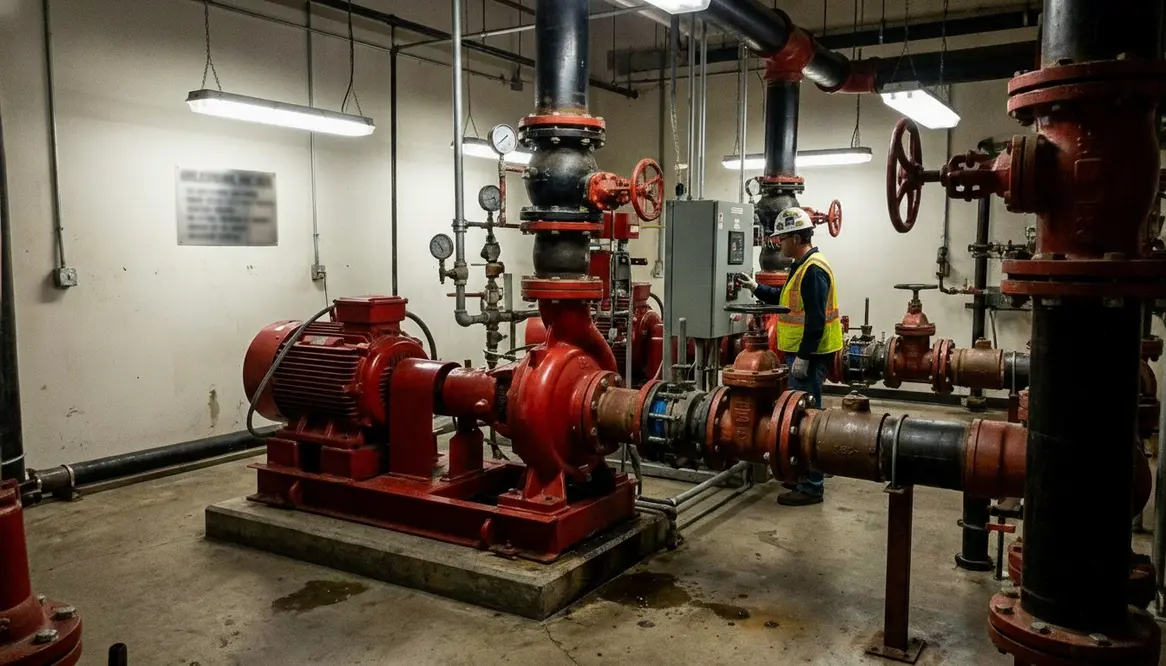
LPS 1131 Fire Pump Selection for Commercial Sites
LPS 1131 Fire Pump Selection Guide for Commercial and Industrial Buildings
When I look at LPS 1131 fire pump selection, I see more than a box to check on a design sheet. I see a safety decision that can protect a plant, a warehouse, a high rise, or any major property where a weak water supply could turn a small fire into a bad day with very expensive consequences. So, if you manage a commercial or industrial facility, this guide will help you choose the right pump with more confidence and fewer headaches. And yes, we will keep it practical, because nobody needs a fire pump lecture that sounds like a sleepy tax seminar.
Why this guide matters
A well chosen pump can turn a marginal water supply into a reliable life safety asset. A poor choice can leave sprinklers thirsty when the heat is on. This guide walks through how I approach LPS 1131 selection in real buildings, so the system performs when it is most needed.
What LPS 1131 Means for a Fire Pump Plan
LPS 1131 sets a high standard for fire pump performance, reliability, and system fit. I use it as a guide when I want a pump that can support a serious fire protection system in a large building or industrial site. It helps me focus on the full picture: water source, demand, pump type, control setup, and long term service. That matters because a fire pump should not only work on day one. It should work when the building is stressed, the pressure drops, and everyone is looking for results, not excuses.
In practice, I treat LPS 1131 selection as a risk check. First, I confirm the site type. Then I review the fire load, building size, and water supply. After that, I compare the pump options against the system demand. This keeps me from picking a pump that looks strong on paper but acts like a diva under pressure.
How LPS 1131 shapes decisions
I use LPS 1131 selection as a structured way to cut through marketing noise. It pushes me to check whether the pump, controls, and power supply all support the same safety objective, instead of just matching a catalog line to a design flow.
Where it fits best
LPS 1131 fire pump guidance is especially useful for large commercial and industrial properties where failure would mean long downtime, large loss, or serious safety impact.
Matching Pump Type to the Building
I start by asking what the property really needs. A warehouse with tall storage racks has different demands than a power plant, a logistics hub, or a multi tenant tower. So, I do not force one pump type into every site.
For most commercial and industrial facilities, I look at these pump options:
- Centrifugal pumps for steady, dependable service in many standard systems
- Split case pumps for higher flow needs in larger properties
- Vertical turbine pumps when the water source sits below grade or in a tank
- Inline pumps for compact layouts where space matters
Next, I match the pump curve to the demand. I want the pump to meet the design flow and pressure without working at the edge of its range all the time. A pump that runs too close to its limit can wear out faster, and that is not the kind of drama any facility manager wants.
Pump type focus
LPS 1131 selection does not force one pump style, but it pushes me to prove that the chosen pump type fits the water source, layout, and hazard category without compromises.
Common tradeoffs
Space, access routes, and noise limits can make inline or vertical turbine pumps more attractive, while high flow campus systems often point toward split case pumps with robust maintenance access.
Key Site Factors I Check First
I always check the water supply before I fall in love with a pump model. Water source strength shapes the whole selection. If the incoming supply drops too low, the system may need storage, boosting, or a different pump setup.
Water source capacity
I verify flow and pressure from the municipal line, tank, or reservoir. If the supply is weak or unstable, I plan for that from the start.
System demand
I review sprinkler demand, standpipe needs, and any special hazard areas. Then I make sure the pump can support the full fire protection load.
Building layout
I consider height, distance, and pipe losses. A tall building needs a different pressure strategy than a low spread out industrial site.
Electrical or diesel backup
I decide whether the site needs electric or diesel drive based on reliability, utility support, and risk profile. I prefer a setup that keeps working when the power company has a bad day.
Risk based view
By treating LPS 1131 selection as a structured risk review, I can justify why a diesel backup, extra storage, or redundancy makes sense for one facility and not for another.
Planning for change
I also consider how likely it is that the site will add storage, extra floors, or new hazard areas. That future view keeps the pump from becoming the weak link later.
Comparing Performance, Controls, and Reliability
Once I know the site needs, I move to performance. This is where the selection gets real. I compare the pump curve, churn point, and peak demand point. I also look at the controller and alarm features, because a strong pump with weak controls is like a muscle car with no steering wheel.
Hydraulic performance
What I check: Flow range, pressure rise, efficiency, suction limits, and reserve margin.
Why it matters: It shows whether the pump can serve the building without strain or drop in protection.
Controls and power
What I check: Controller type, test options, power source, and fault reporting.
Why it matters: It helps the system start fast, stay dependable, and support easier maintenance.
Build quality and service
What I check: Material quality, service access, and local support.
Why it matters: It reduces downtime and keeps the pump ready for real use.
Also, I think about maintenance from day one. If my team cannot inspect, test, and service the pump easily, the system will age like a milk carton left in the sun. So, I want clear access, solid parts support, and a setup that fits the facility’s maintenance plan.
How I Avoid Common Selection Mistakes
I see the same mistakes again and again. The first mistake is choosing a pump that fits the budget but not the demand. The second is ignoring suction limits. The third is forgetting future changes to the property. If the building expands, the pump must still support the fire system without a full redesign.
I also avoid over sizing without reason. Bigger does not always mean better. In fact, a pump that is too large can create poor performance at normal demand levels. So, I aim for balance. I want enough capacity for the hazard, but not so much that the system becomes clumsy and costly.
For a solid reference on commercial and industrial fire pump standards, I also review trusted LPS 1131 fire pump guidance for major facilities when I need to compare system choices with a broader safety plan.
Using LPS 1131 Selection in Real Projects
In real projects, I treat every LPS 1131 selection as a conversation between three things: the water supply, the building layout, and the fire protection strategy. The paperwork matters, but the way those three pieces work together matters more.
On a logistics site, that can mean choosing a pump that favors higher flow with moderate pressure and pairing it with large diameter mains. In a high rise, it can mean prioritizing pressure at the top floors and allowing for staged pumping or pressure reducing valves.
Commercial campuses sometimes push me toward redundant pumps or dual power sources. Industrial plants with process critical areas can justify even stronger redundancy under an LPS 1131 selection review, especially where downtime would mean more than repair cost.
When I need independent background or example setups, resources such as https://firepumps.org help frame how different pump arrangements have been used successfully across complex facilities.
FAQ
Conclusion
If I want a fire pump that truly supports a commercial or industrial property, I start with the system, not the sales pitch. I review the water supply, match the pump to the demand, and check controls, access, and reliability. That approach gives me a stronger, safer result.
If you need help with LPS 1131 fire pump selection for a major facility, now is the time to compare options and move toward a system that works when it counts. A thoughtful LPS 1131 selection process will leave you with a pump that fits the building, respects the risks, and stands a far better chance of running properly on the one day everyone is counting on it.