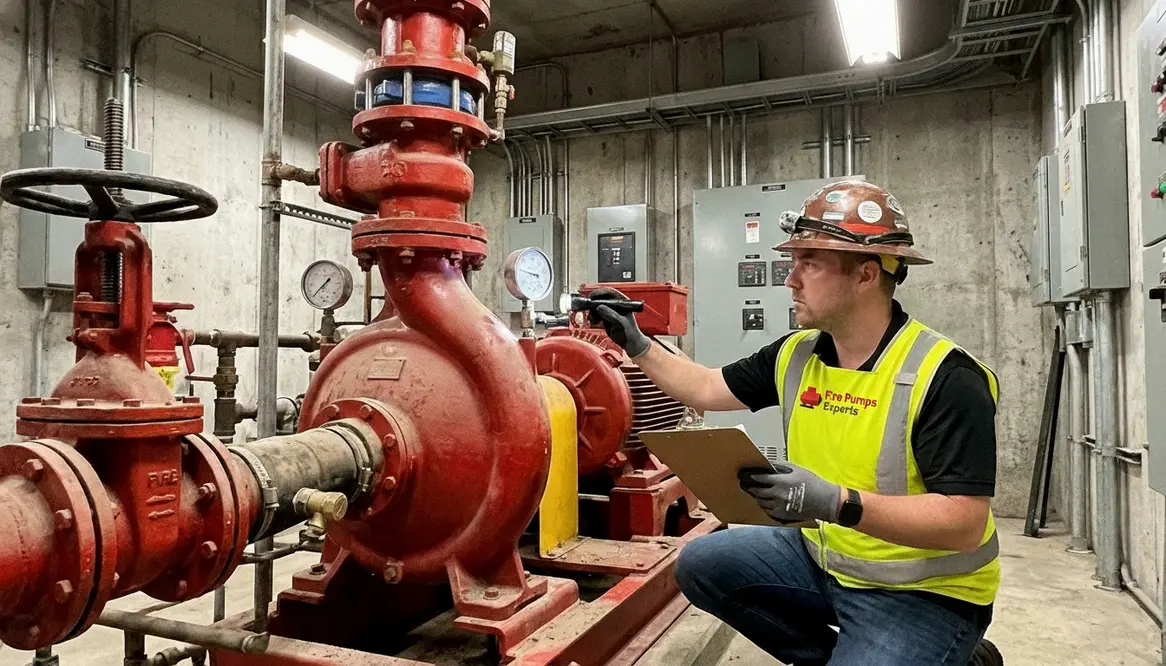
AS 1851 Fire Pump Inspection Checklist Guide
AS 1851 Fire Pump Inspection Checklist: What I Check in Commercial and Industrial Facilities
When I look at an AS 1851 inspection for a fire pump, I keep one rule in mind: if the pump fails, the whole fire system starts looking like a superhero with a flat tire. In commercial and industrial buildings, that is not funny when seconds matter. So I follow a clear checklist, check the right parts, and make sure the pump can do its job when a real fire turns up uninvited. This matters for major properties, plant rooms, warehouses, hospitals, high rise buildings, and other busy sites that depend on steady fire protection.
In this guide, I walk through the fire pump inspection process in plain language. I focus on what I check, why it matters, and how I keep the system ready for duty. Also, I keep it practical, because no one needs a fire safety essay that reads like tax law.
What I check first during an AS 1851 fire pump inspection
I start with the basics, because the basics often catch the biggest problems. First, I confirm the pump room is clean, dry, secure, and easy to access. Then I check for leaks, corrosion, damage, strange noise, and any signs that the pump or its fittings have been left to age like an old action movie sequel.
I also review the pump controller, power supply, gauges, valves, and fuel or water supply where needed. If the unit is diesel driven, I check fuel levels, battery condition, starter health, and signs of air in the lines. If it is electric, I check supply status, alarms, and control logic. Because every system has its own personality, I inspect it with care rather than hope.
Fire pump checklist for commercial and industrial sites
Here is the core checklist I use for major properties and large facilities:
- Check the pump room for access, safety, and cleanliness
- Inspect the pump body, pipework, fittings, and supports for leaks or damage
- Confirm pressure gauges show normal readings
- Test the controller and all key indicators
- Verify power, fuel, and water supply are ready
- Check valves, strainers, and non return devices
- Review batteries, chargers, and starter systems where fitted
- Look for vibration, unusual sound, or overheating during operation
- Confirm the pump starts correctly and reaches the right performance
- Record results and flag any fault for follow up
Moreover, I do not just glance and move on. I test, observe, and compare what I see against expected operation. That matters because a pump can look fine and still hide a problem that shows up only when load hits. In a large site, that is the kind of surprise nobody wants on a Monday morning.
How I test performance without wasting time
I want proof, not assumptions. So I run the pump and watch how it behaves under test conditions. I check start up time, pressure build up, and steady running performance. Then I listen for strain, which often shows up before failure does. A smooth running pump usually speaks in a calm tone; a tired pump sounds like it has opinions.
Next, I look at flow and pressure against the system needs. If the pump cannot meet demand, I note the fault and recommend action fast. I also check for priming issues and any sign that suction conditions are weak. Since industrial sites often run complex systems, I keep the test method clear and repeatable.
Whenever I complete an AS 1851 inspection, I cross check the performance data against previous records. That way, I can see whether the pump is holding steady, improving after repairs, or quietly slipping toward trouble.
Inspection focus and why it matters
Inspection focus
- Mechanical condition
- Controller and alarms
- Power or fuel supply
- Pressure and flow
- Start up reliability
Why it matters
- Reduces failure risk
- Supports fast response in a fire
- Keeps the system ready for code compliance
- Helps protect people, assets, and operations
- Gives clear evidence of system health
This simple split helps me stay focused. It also helps facility managers see that pump inspection is not just paperwork with a hard hat. It is real protection for buildings that cannot afford downtime.
Common faults I look for during an AS 1851 inspection
Over time, I keep seeing the same troublemakers. Loose fittings cause leaks. Weak batteries cause starting issues. Dirty strainers cut performance. Low fuel creates risk for diesel pumps. Worn seals and corrosion slowly eat away at reliability. And yes, small faults often grow up into expensive problems if nobody acts.
That is why I report issues clearly and early. I do not bury the message in jargon, because no one needs a mystery novel when they need a repair plan. Instead, I show what failed, what likely caused it, and what should happen next. As a result, owners and managers can make decisions before the problem becomes a full scale outage.
For sites that rely on strict compliance, I also line up the findings with the AS 1851 inspection requirements and highlight any gap that could raise questions during an audit or external review.
FAQ for fire pump inspection
Conclusion
If you manage a commercial or industrial property, I recommend treating fire pump care as a steady habit, not a last minute scramble. A proper AS 1851 inspection helps you catch faults early, protect people, and keep your fire system ready for the worst day you hope never comes. If you want a clear, professional check for your site, take the next step now and book a fire pump inspection before a small issue becomes a very expensive headline.