AS 1851 Fire Pump Testing Frequency Guide
AS 1851 Fire Pump Testing Frequency Explained
When I talk about AS 1851 testing, I am talking about the backbone of fire system care for commercial and industrial buildings. This standard sets the pace for inspection, testing, and maintenance, and yes, that includes fire pumps, the heavy lifters of your fire protection setup. If a fire pump fails, the whole system can wobble like a poorly stacked Jenga tower at the worst possible moment. So, knowing the testing frequency matters. It protects people, supports compliance, and keeps major properties ready when it counts.
AS 1851 testing is not just a checklist. For fire pumps, it is the methodical way I keep performance sharp, documentation neat, and risks tamed before they grow teeth. A solid testing rhythm turns a silent, sometimes forgotten machine into a reliable guardian that is ready when alarms start shouting and everyone else is thinking about exits, not equipment.
What AS 1851 testing means for fire pumps
I use AS 1851 testing to help make sure fire pumps stay reliable, record keeping stays clean, and faults get caught before they become expensive problems. In plain terms, the standard tells me how often to inspect, test, and service the pump and its related parts. That includes checks for start up, pressure, flow, alarms, fuel, power supply, and general condition. In a big building, that pump is not just a machine. It is a promise.
The goal is simple. I want the pump to work fast, work hard, and work when smoke fills the air and nerves start doing their own thing. The standard supports that goal by setting a planned maintenance rhythm instead of waiting for disaster to make the schedule. That approach saves time, avoids guesswork, and helps facilities managers sleep a little better.
Key outcomes of structured fire pump care
- Consistent, predictable testing frequency instead of guesswork
- Early fault detection before they become dramatic failures
- Clear evidence of compliance and due diligence
- Better planning for repairs, upgrades, and budgets
How often should fire pumps be tested?
Fire pump testing frequency depends on the task, the system type, and the site setup. However, the key idea stays the same. I do not treat testing as a once in a while job. I treat it as a regular duty.
Common fire pump test timing for commercial and industrial sites
Weekly checks: I look at the pump condition, control panel, fuel or power supply, and signs of leaks or damage.
Monthly or scheduled operational tests: I confirm the pump starts and runs as expected, while I note any odd sounds, pressure changes, or warning signs.
Routine service intervals: I review the full system, log results, and deal with faults before they spread like gossip in an office kitchen.
Here is the real point. I follow the testing cycle that matches the standard and the site risk. A high rise warehouse or a large industrial plant will often need tighter attention than a smaller site with less load. So, I always check the site plan and service history before I make assumptions. Assumptions belong in movies, not fire protection.
Matching AS 1851 testing to site risk
- High rise and dense storage sites usually demand tighter testing windows
- Critical infrastructure and manufacturing plants benefit from detailed performance trending
- Lower risk sites still need consistent AS 1851 testing, just scaled to their exposure
What I check during a fire pump inspection
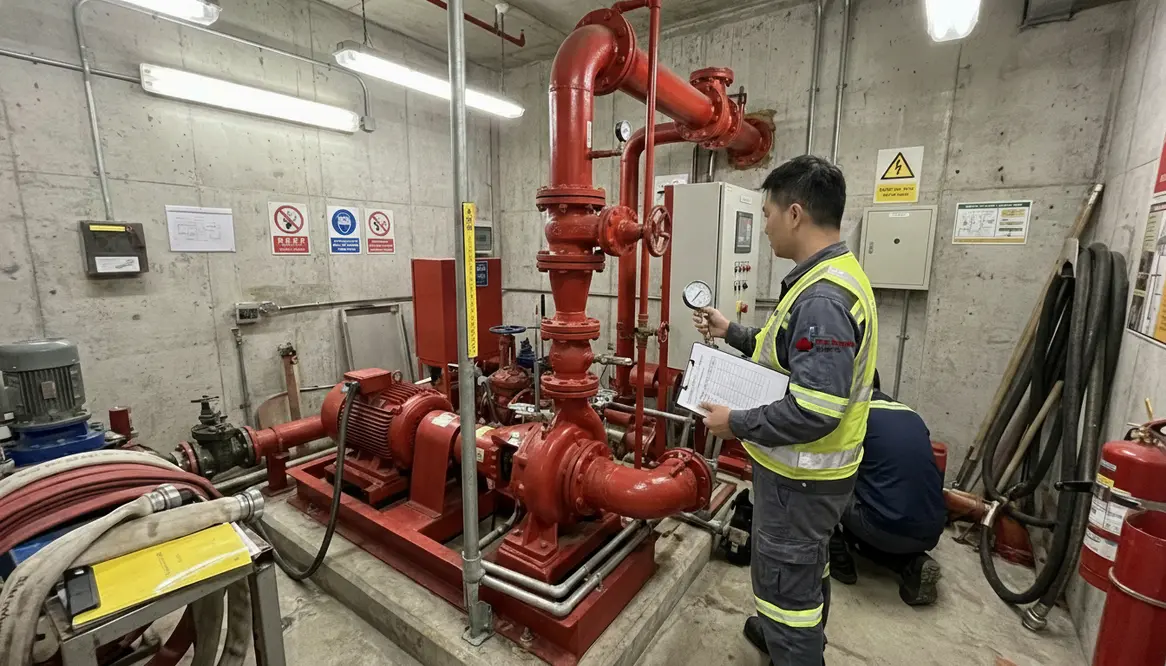
When I inspect a fire pump, I do not just glance at it and hope for the best. I work through the essentials. First, I check the pump room for access, cleanliness, heat, and clear space around the unit. Then I review the controller, gauges, valves, and power source. After that, I test operation and compare results with previous records.
I pay close attention to these points:
- Pump start up response
- Water pressure and flow
- Electrical supply or diesel fuel condition
- Battery health where needed
- Leaks, rust, vibration, or unusual noise
- Alarm signals and fault indicators li>Service records and past issues
Because fire pumps often sit quietly for long periods, small issues can hide in plain sight. A loose fitting today can turn into a big headache later. Therefore, I prefer early action. It is cheaper, cleaner, and far less dramatic than emergency repairs after hours, which nobody enjoys, not even the toughest site manager on the floor.
Why regular AS 1851 testing protects major properties
I have seen how regular testing protects commercial towers, warehouses, factories, and other major properties. It does more than tick a box. It reduces failure risk, supports legal compliance, and helps a building stay ready for real emergencies. It also gives owners and managers evidence that the system has received proper care, which matters during audits, insurance reviews, and safety checks.
On a large site, a fire pump can support sprinklers, hydrants, and hose reels. If that pump underperforms, the whole response chain weakens. That is why I treat testing as part of risk control, not just maintenance. In the world of fire safety, “we thought it was fine” is not a strong strategy. It sounds more like a plot twist nobody asked for.
Compliance, continuity, and AS 1851 testing
For facilities that need expert support, I recommend using a trusted resource like AS 1851 fire pump testing services for commercial buildings to keep the testing schedule on track and aligned with site needs.
Done properly, AS 1851 testing turns into a quiet insurance policy for business continuity. It is one of the few line items that only becomes famous when it has been ignored.
How I keep testing records clear and useful
Good records matter as much as good testing. I write down the date, the test result, the person who completed the work, the faults found, and the action taken. Then I keep those records easy to find. That way, the next inspection starts with facts, not wild memory and a hopeful shrug.
Clear records also help me spot trends. For example, if pressure keeps dipping or a pump keeps taking longer to start, I can see the pattern early. Then I can fix the issue before it grows teeth. This is where planned maintenance earns its keep. It gives me the full story, not just a snapshot.
In practice, I also compare each result with the previous one. That comparison tells me whether the system improves, stays steady, or drifts off course. As a result, I can make smarter decisions about repair, replacement, or deeper investigation.
Turning data into decisions
- Trends highlight where AS 1851 testing is warning me about future failures
- Patterns in alarms, pressures, or start times shape maintenance plans
- Solid records make audits and insurance questions far less stressful
FAQ
Final thoughts on keeping your pump ready
I take fire pump testing seriously because major properties cannot afford weak links. When I follow the right schedule, document each result, and act on faults fast, I help protect people, assets, and business continuity. If you manage a commercial or industrial site, now is the time to review your fire pump program and make sure it matches AS 1851 testing requirements. A solid schedule today can save a whole lot of trouble tomorrow.