AS NZS Fire Pump Testing and Maintenance Guide
AS/NZS Fire Pump Testing and Maintenance Overview
When I talk about AS/NZS testing for fire pumps, I am talking about the quiet work that keeps a building ready when things go sideways. In commercial and industrial sites, and in major property buildings, that readiness is not optional. It is the difference between a system that performs and a system that folds like a cheap lawn chair at a rock concert. So, in this guide, I will walk through how I approach fire pump testing and maintenance, why it matters, and what a strong program should always cover.
Why this guide matters
Fire pumps do not get applause when they work, but they get a lot of attention when they do not. This guide is about the practical habits, checks, and routines that keep them ready long before the alarm sounds.
What AS/NZS testing means for fire pumps
AS/NZS testing sets the standard for checking that fire pump systems work as they should. I use it to confirm that a pump starts, runs, and delivers the right pressure and flow when needed. That sounds simple, but the details matter. A pump can look fine on the outside and still fail under load, which is why I never trust appearances. Even a system with a shiny coat of paint can hide poor seals, weak batteries, air issues, or a tired motor that has been through one too many summer heatwaves.
For commercial and industrial facilities, this testing helps protect people, assets, and business continuity. It also supports compliance, which is a very unglamorous word for a very important idea. In plain terms, if the fire pump does not perform, the whole fire protection setup loses power fast.
Key outcomes of AS/NZS fire pump checks
- Confirms the pump starts automatically and manually when required
- Verifies pressure and flow meet the design expectations
- Checks that controllers, alarms, and indicators respond correctly
- Reveals hidden faults long before they appear in an emergency
How I test a fire pump on site
From first glance to full load
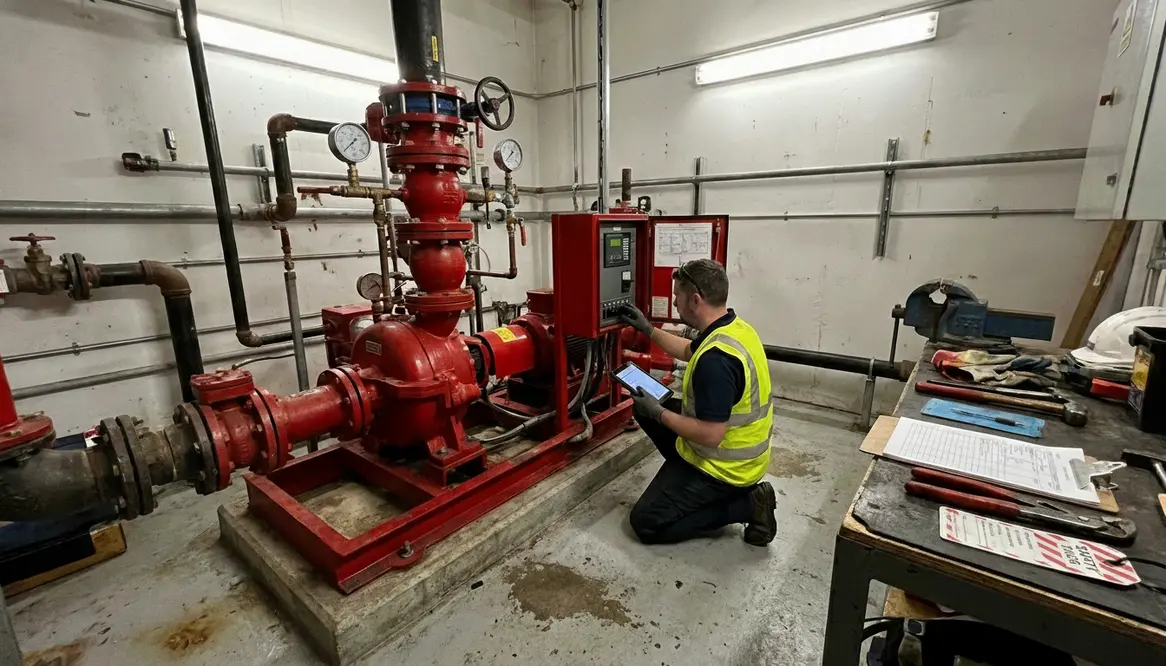
I always start with a visual inspection. I check the pump room, the controls, fuel supply, power source, valves, gauges, and signs of leaks or damage. Then I move to operational testing. This step confirms that the pump starts properly, reaches the required pressure, and holds steady under demand. I also listen for odd noise, vibration, or hesitation. Machines often whisper before they shout, and I prefer to catch the whisper.
Next, I review the test readings and compare them with the expected performance values. If numbers drift, I dig deeper. Sometimes I find a worn component. Other times I find a blocked line or a fault in the controller. Either way, I treat the result as a clue, not just a number on a page.
Core testing flow
| Stage | What I check |
| Visual review | Leaks, damage, labels, access, and room condition |
| Start test | Automatic and manual start functions |
| Performance test | Pressure, flow, speed, and stability |
| Control review | Alarms, batteries, switches, and panels |
| Report review | Results, faults, and follow up actions |
Fire pump maintenance that prevents drama later
Maintenance is where I help stop small issues from becoming expensive headlines. A fire pump system needs regular care because it sits in standby for long periods, then must perform at full strength without warning. That is a tough job. Frankly, it is the fire protection world’s version of being asked to run a marathon after napping in a basement.
Routine care that actually works
I focus on routine checks, cleaning, lubrication, battery care, alignment, and valve condition. I also look at pumps linked to diesel engines or electric motors, since each type has its own weak spots. Diesel systems need fuel checks and battery health checks. Electric systems need supply checks and controller attention. In both cases, I watch for wear, corrosion, overheating, and anything that suggests the pump is not ready for duty.
Records that save time and stress
Good maintenance also means keeping records. I log every inspection, fault, repair, and test result. That paper trail helps me spot trends before they turn into trouble. It also gives facility managers a clear record of what was done and when, which saves time when the pressure is on and everyone wants answers yesterday.
Common fire pump faults I look for in commercial sites
In my experience, the same problems keep showing up across commercial and industrial properties. I often find low battery voltage, air in the suction line, worn seals, blocked strainers, bad switches, and controller faults. Sometimes the issue is simple. Sometimes it is the sort of mess that feels like a scene from a detective show, except the suspect is a corroded terminal and nobody gets to wear a cool coat.
Room conditions that quietly sabotage pumps
I also watch for poor room conditions. Excess heat, dust, water ingress, and cramped access can all affect performance. If the pump room is neglected, the pump will often tell on it sooner or later. That is why I treat the room as part of the system, not just the box the system lives in.
How I build a reliable maintenance schedule
I build the schedule around risk, site size, and system type. A high rise, a warehouse, and a manufacturing site do not need the exact same approach. However, they all need regular checks, clear test intervals, and quick response when faults appear. I make sure the schedule includes daily, weekly, monthly, and annual tasks where needed, because fire pump care works best when it stays consistent.
A simple four-step service path
- Inspect the system, room, and controls
- Test performance, alarms, and starting methods
- Repair or adjust any faults found
- Retest and confirm that results match expectations
Planning intervals and responsibilities
I match task frequency to risk and system criticality. That means some checks are quick weekly tasks, while others link to annual AS/NZS testing, independent audits, or major shutdowns. I also make sure it is clear who does what so no task quietly disappears between departments.
Why AS/NZS testing matters for compliance and safety
AS/NZS testing protects more than equipment. It supports life safety, legal duty, and business continuity. For commercial and industrial facilities, that matters every day. A failed fire pump can shut down operations, trigger costly delays, and put people at risk. On the other hand, a well maintained system gives building owners and managers real confidence.
I see this as more than a technical task. It is part of responsible building care. When testing stays current and maintenance stays disciplined, the system has a far better chance of doing its job when it counts. AS/NZS testing is the framework I use to keep that discipline consistent, documented, and defensible if something serious ever happens.
AS/NZS testing and real-world risk
Behind the acronyms and procedures, AS/NZS testing is about simple outcomes: people get out, fire crews get water, and businesses open their doors again after an incident. That is why I give it the same attention I would give to any other critical piece of life safety infrastructure.
FAQ
Conclusion
If you manage a commercial or industrial facility, I would not leave fire pump health to chance. Regular AS/NZS testing and steady maintenance keep your system ready, your records clear, and your risk lower. I can help you stay ahead of faults before they become problems. So, if your fire pump has been getting less attention than it deserves, now is the time to act. Reach out, book a review, and keep your protection system ready for the moment it matters most.