AS/NZS Fire Pump Requirements for Sprinkler Systems
When I talk about fire protection for AS/NZS sprinkler systems, I start with one simple truth: the pump is the muscle behind the whole setup. Without it, the sprinkler system may look ready, but it cannot do the heavy lifting when pressure drops or demand rises. For commercial and industrial facilities, that matters a great deal. A warehouse, plant, or major property building does not get a second chance when fire breaks out. So, I look at fire pump requirements the way a good mechanic looks at an engine: with respect, a sharp eye, and no patience for weak parts.
In this guide, I break down the main fire pump requirements under AS/NZS rules, why they matter, and how they help keep sprinkler systems ready for real world action. And yes, I will keep it practical, because fire safety should protect people, assets, and business continuity, not turn into a maze that reads like it was written by a bored robot from a sci fi sequel.
What the fire pump must do in an AS/NZS sprinkler system
I like to think of the fire pump as the system’s backup singer. It stays quiet until the main act needs support, then it comes in strong and steady. In an AS/NZS sprinkler setup, the fire pump must supply the pressure and flow needed to let sprinklers perform as designed. If the supply from the water source cannot meet demand, the pump steps in and keeps the system alive.
This matters most in large commercial and industrial sites, where water demand can jump fast. A pump must match the sprinkler design, the building risk level, and the site water conditions. If the pump is too small, the system struggles. If it is oversized, it can create waste, excess cost, and control issues. So, I always recommend checking the pump selection early, not after the walls are up and the budget has started to sweat.
AS/NZS sprinkler pump requirements you need to check first
I focus on a few key items first, because these shape the whole design. They also keep the project from going off the rails like a movie plot with too many sequels.
- Flow rate must meet the sprinkler system demand under the worst expected condition.
- Pressure must stay high enough for the most remote or hardest to serve area.
- Duty and standby setup must support reliability, especially in critical sites.
- Water source must provide enough supply for the full required duration.
- Power supply must remain dependable, with backup where needed.
These points sound simple, yet they decide whether the system works as a team or falls apart like a poorly timed office karaoke night. I also make sure the pump room, suction line, valves, and controls all suit the site layout. Small misses in these areas can cause big trouble later.
How I match the pump to the site risk level
Not every building needs the same fire pump setup. A light commercial fit out does not face the same risk as a high bay warehouse or a chemical storage area. That is why I always start with the site’s hazard class, building use, and size. Then I compare that with the sprinkler design data and the water supply available on site.
For example, industrial sites often need stronger and more stable pump performance because fire loads can grow fast. Major property buildings may also need clear redundancy and better monitoring because downtime costs real money. In both cases, the goal stays the same: keep the sprinkler system ready to deliver water when it matters most.
In high consequence facilities, a properly matched pump becomes central to the whole AS/NZS sprinkler strategy. It supports design density, helps satisfy insurance expectations, and makes it far easier to show that both compliance and performance are taken seriously.
Main fire pump types and where they fit
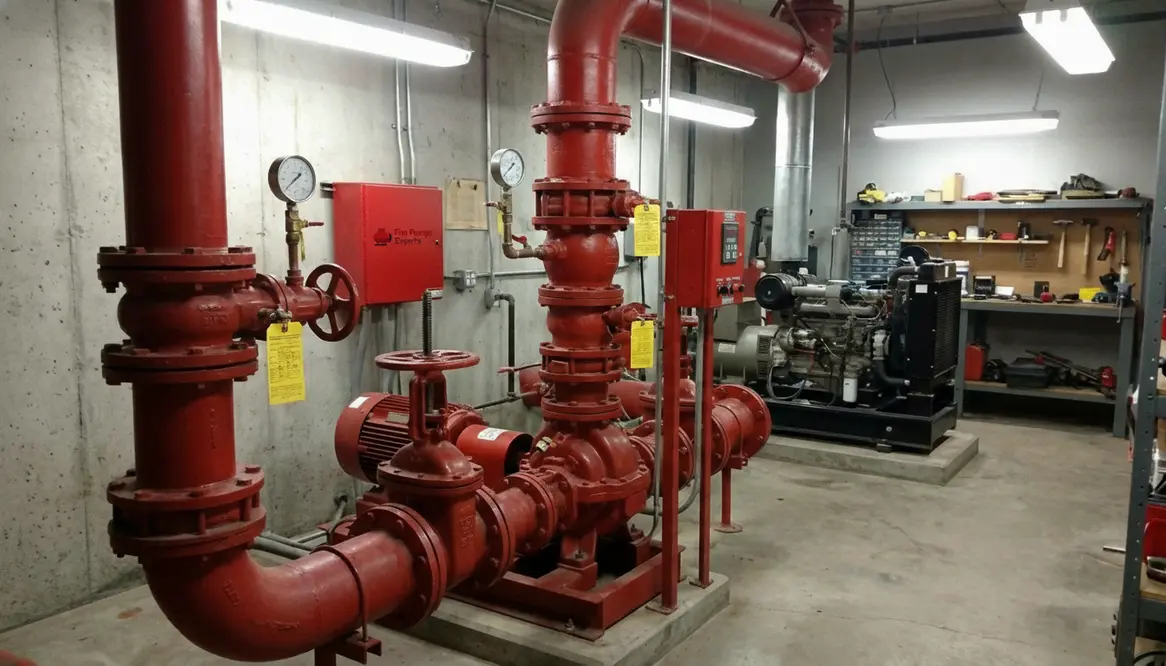
Most AS/NZS sprinkler installations rely on either electric or diesel driven fire pumps. Both can meet the technical requirements when they are correctly selected and installed, but they suit different risk profiles and infrastructure realities.
Electric fire pump
Best for sites with reliable power and stable backup systems. It offers cleaner operation and easier routine checks.
In many modern city buildings, an electric pump ties neatly into existing electrical infrastructure, with automatic transfer switches and monitored supplies. For a lot of AS/NZS sprinkler projects in well serviced areas, this is the most straightforward, low fuss option.
Diesel fire pump
Best for sites that need strong backup independence. It keeps working if the main power fails, which is a very good thing when the building is already having a bad day.
Remote sites, critical infrastructure, and facilities with fragile power supply often lean on diesel pumps to keep their AS/NZS sprinkler system honest. Yes, they need fuel management, exhaust handling, and more maintenance, but the resilience payoff can be worth every bit of that effort.
Maintenance and testing that keep the system ready
Even the best pump can fail if nobody checks it. That is why I treat maintenance as part of the design, not an afterthought. Regular testing confirms that the pump starts properly, holds pressure, and delivers the right flow when called on. It also helps spot wear, leaks, vibration, heat issues, and control faults before they become expensive drama.
I also pay close attention to records. Good logs help prove compliance and make audits easier. More importantly, they show a pattern. If a pump starts slower each month or pressure drops over time, I want to know before a real fire does. That is not being picky. That is being smart.
Clear routines, trained staff, and simple pass/fail criteria make ongoing care for an AS/NZS sprinkler pump far less painful. And if you ever need to prove performance to insurers, regulators, or senior management, solid test data speaks louder than any reassuring memo.
Where I see the biggest compliance mistakes
Over the years, I have seen the same mistakes pop up again and again. First, some projects treat the pump as a last minute add on. That almost always causes trouble. Second, some sites ignore water supply limits and assume the pump will “just fix it.” It will not. Third, some teams skip routine testing because the system looks fine on paper. Paper, as we know, does not stop flames.
Another common issue is poor coordination between the sprinkler designer, pump supplier, builder, and facility team. When each group works in a separate bubble, the result can be a system that looks complete but does not perform as intended. So, I always push for clear communication from day one.
I also see people underestimate the way an AS/NZS sprinkler pump interacts with tanks, town mains, and control valves. Get that wrong, and you can end up with pressure that is perfect on a drawing but useless at the actual sprinkler heads.
Pulling AS/NZS sprinkler requirements together on real projects
On real sites, fire pump decisions rarely happen in a neat little vacuum. Budget, staging, electrical works, civil design, and insurance expectations all shove their way into the conversation. That is where a structured approach to AS/NZS sprinkler pump requirements earns its keep.
I start by mapping the building risk profile, then lock in the water supply strategy, then size and select the pump, and only then finalise valve layouts and controls. When you run things in that order, design compromises are conscious, documented, and a lot less likely to bite back during commissioning.
The most successful projects I have seen treat the AS/NZS sprinkler pump as a core asset rather than a plumbing accessory. It gets proper space, ventilation, safe access, monitoring, and a maintenance budget that does not vanish the moment the ribbon is cut on the new building.
Why all this matters for your AS/NZS sprinkler strategy
Fire does not care how tidy your drawings look. Either the system can deliver the required water at the required pressure for the required time, or it cannot. The fire pump sits right in the middle of that equation and is one of the easiest places to either get things very right or very wrong.
If you are working on a new build or upgrade that relies on an AS/NZS sprinkler arrangement, giving the pump design the attention it deserves is a cheap form of insurance. It keeps occupants safer, keeps insurers calmer, and keeps your phone quieter when something goes wrong in the middle of the night.
Conclusion
If you manage a commercial, industrial, or major property site, I would not leave fire pump selection to chance. The right pump keeps your sprinkler system strong, stable, and ready for the moment it counts. So, review your water supply, confirm your design demand, and check compliance before trouble arrives. If you want a smarter path, speak with a team that knows AS/NZS sprinkler systems inside out and can help protect your building with confidence today.
For more technical detail on pump performance curves, drivers, and controller options to suit your AS/NZS sprinkler project, you can explore resources at https://firepumps.org and use them as a starting point for a conversation tailored to your own site.