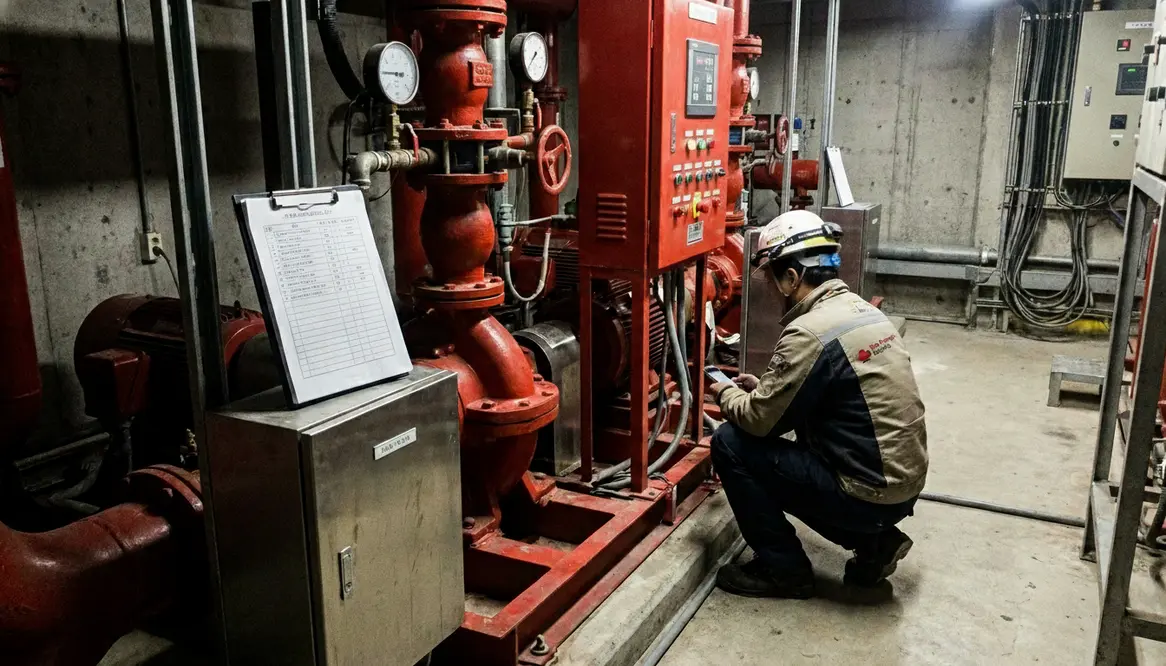
AS 1851 Fire Pump Compliance for Facilities
Facility teams often treat fire pumps like that one quiet band member in a movie soundtrack. You only notice them when something goes wrong. Yet AS 1851 compliance keeps commercial and industrial properties ready when pressure matters most. If you manage a warehouse, plant, tower, or major property, this standard is not paperwork for the drawer. It is a living maintenance plan that protects people, assets, and business continuity. And yes, it is far more useful than a dusty folder pretending to be a strategy.
In large facilities, a fire pump is not just another asset on a spreadsheet. It is the muscle behind your hydrants and sprinklers, the system that has to work on the worst day of the year. Treat it as background noise, and you gamble with downtime, compliance issues, and safety risks that no one wants to explain in a post-incident review.
AS 1851 compliance turns this from a vague hope into a structured routine. It gives you a practical roadmap so the system that looks fine on the surface is actually ready to perform under real pressure, not just look photogenic in the plant room.
What AS 1851 compliance means for my fire pump system
AS 1851 is the rulebook for routine care, testing, and record keeping across fire protection systems. For a fire pump, it tells me what to inspect, when to test, and how to prove the system is still ready for duty. That matters because a pump can look fine on the outside and still fail under load. A glossy coat of paint will not save the day. Regular checks will.
For facilities, this means I focus on reliability, not guesswork. I make sure the pump, driver, controller, power source, valves, gauges, suction line, discharge line, and alarms all work together. If one part slips, the whole chain weakens. In a commercial or industrial setting, that can mean costly downtime, safety risk, and a very bad day for everyone involved.
How AS 1851 compliance supports risk management
Major facilities juggle insurance requirements, regulatory oversight, and internal safety expectations. AS 1851 compliance helps tie those threads together. It shows that the fire pump has not been left to luck, that testing and maintenance follow a recognised standard, and that the system is more than a once-a-year photo opportunity for reports.
By treating the standard as a living document instead of shelf decoration, I turn compliance into an everyday safety tool. It becomes the checklist that quietly keeps sprinklers, hydrants, pumps, and controllers ready long before anyone is standing in smoke, asking why the water pressure is not what it should be.
How I check a fire pump the right way
I follow a simple idea: inspect, test, record, and fix. That order keeps the process clear and helps me stay aligned with compliance duties. Also, it keeps the fire pump from becoming the building’s version of a neglected gym membership.
Here is how I approach it:
-
Visual inspection: I look for leaks, corrosion, damage, loose fittings, and anything out of place.
-
Operational testing: I run the pump under test conditions to confirm it starts, builds pressure, and holds performance.
-
Power and controls: I confirm the controller, batteries, mains supply, and automatic start functions respond as expected.
-
Flow and pressure checks: I compare actual results with system expectations so I can spot decline early.
-
Log entries: I record every check, result, fault, and repair so the history stays clear and audit ready.
Because facilities run hard and often, I do not wait for failure signs. I look for small shifts. A slight pressure drop, a strange noise, or a delayed start may not sound dramatic, but it can reveal a bigger issue hiding in plain sight.
Turning testing into a repeatable routine
The goal is a rhythm that the site can depend on. I keep the same sequence of checks, the same format for logs, and the same triggers for follow-up actions. That repeatability is what makes AS 1851 compliance sustainable instead of a yearly scramble to remember where the test sheets were last seen.
What I document for AS 1851 compliance and audits
Documentation is where many teams either win quietly or scramble loudly. I keep records that show the system is maintained on time and that faults were handled properly. Auditors, insurers, and internal safety teams all value clear evidence. Nobody enjoys playing detective with missing log sheets.
Here is the kind of information I keep current:
What I record |
Why it matters |
|---|---|
Inspection dates |
Shows the system was checked on schedule |
Test results |
Proves the pump still meets expected performance |
Faults and repairs |
Tracks issues from discovery to closeout |
Parts replaced |
Supports maintenance history and future planning |
Service provider notes |
Confirms work was completed by a competent team |
I also keep notes on any abnormal readings or recurring issues. That helps me spot patterns before they become failures. In other words, I prefer prevention over drama. It is cheaper, calmer, and far less likely to end with flashing lights and urgent phone calls.
Making records work for the facility, not just auditors
Well-kept logs do more than tick boxes for AS 1851 compliance. They help me see which components are chewing through parts, which pumps complain every winter, and where budget for upgrades will actually make a difference. When a report lands on an executive desk, clear evidence makes it much easier to justify that replacement controller or driver.
How I keep my facility ready all year
I do not treat compliance as a once a year event. Instead, I build it into routine facility care. That keeps the pump ready and avoids the panic that comes from last minute fixes. I also make sure maintenance fits the real use of the site. A busy logistics hub, a manufacturing plant, and a high rise all demand different levels of attention.
For strong readiness, I focus on these habits:
-
Set a fixed schedule: I plan checks before they become overdue.
-
Train site staff: I make sure people know the warning signs and reporting steps.
-
Act fast on faults: I do not let small issues wait for the next round of testing.
-
Review service history: I look for repeat problems and deeper causes.
-
Use qualified specialists: I bring in people who understand fire pump systems in large facilities.
Keeping the standard practical
If I need to deepen my understanding of the rule itself, I use trusted industry references and service guidance from AS 1851 compliance resources for fire pump maintenance. That helps me stay practical and aligned with the standard while keeping the site ready for real-world conditions.
I also keep one eye on technology changes and updates from experienced providers at https://firepumps.org. Staying current on interpretation, testing tools, and better ways to track data makes it easier to keep AS 1851 compliance from turning into an outdated routine no one questions.
Why fire pump compliance matters so much in major facilities
Large properties face bigger risk. More floor area, more equipment, more people, and more complexity all raise the stakes. A fire pump supports the system pressure that sprinklers and hydrants depend on. If that pump fails, the rest of the protection system may not perform as intended. So, I treat compliance as part safety, part asset protection, and part business survival. It is not glamorous, but then again, neither is a flat tire. Both still need attention.
At the end of the day, AS 1851 compliance is the quiet contract between the facility and everyone who walks through it. It says, “We did the work long before anything went wrong.” When pumps, controllers, and records are all in shape, that contract holds. When they are not, even a small incident can become a very public lesson in what was ignored.
FAQ
Take action before the alarm does
If I want my facility protected, I do not wait for a fault to become a fire safety headline. I review the pump, tighten the records, and keep the schedule moving. That is how I stay ready, compliant, and calm when pressure rises. For commercial and industrial facilities, strong fire pump maintenance is not optional theater. It is real protection. So I act early, stay consistent, and keep my system ready for the moment that matters most.