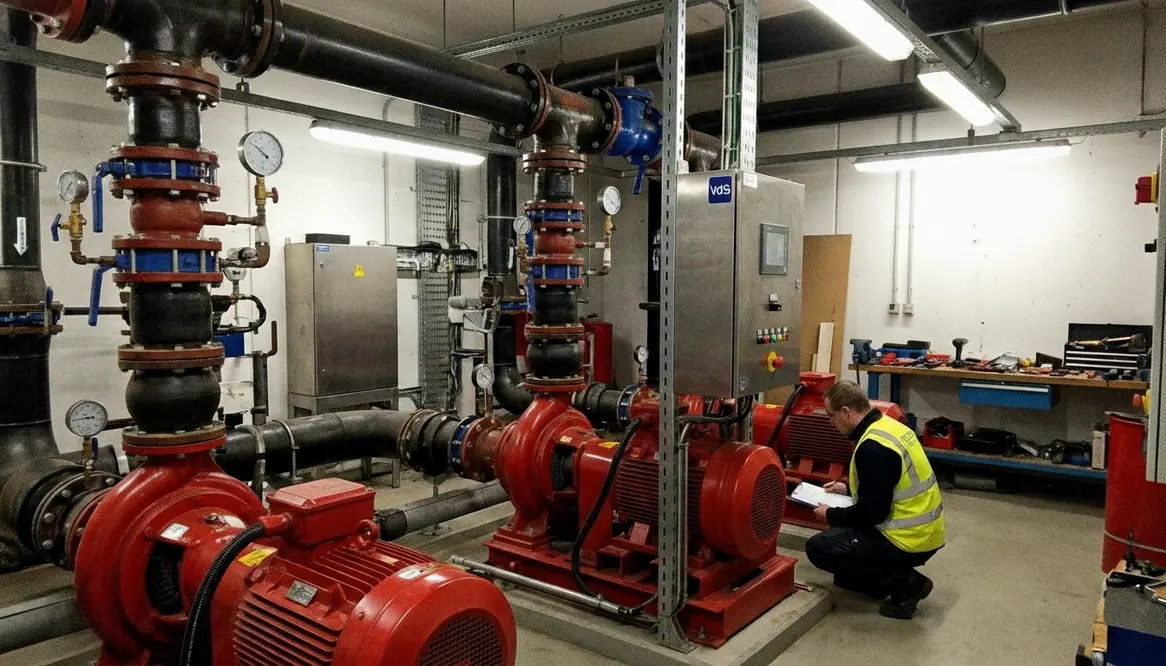
VdS Fire Pump Approval Guide for Commercial Sites
If you manage a commercial site, an industrial plant, or a major property building, then VdS approval is one of those phrases that can save you time, money, and a few sleepless nights. I have seen many teams treat fire pump approval like a box to tick. That is a mistake. A fire pump is the heart of a sprinkler system, and if the heart is weak, the whole system starts acting like it just got cast in a disaster movie. In this guide, I will walk through what the approval means, why it matters, and how I approach it for serious facilities that cannot afford weak fire protection.
VdS approval is a testing and certification standard that checks whether a fire pump can perform under real fire protection demands. In simple terms, it tells me the pump is built and tested to support reliable sprinkler and water supply systems in demanding facilities. Because I work with commercial and industrial buildings, I look at this as more than paperwork. It is proof that the equipment can handle pressure, flow, durability, and control under stress.
As a result, I use VdS approved fire pumps when I want a system that fits strict risk needs and insurance expectations. Also, many facility owners prefer certified equipment because it supports better trust during audits, inspections, and project reviews. Nobody wants a surprise when the system is tested. That kind of surprise belongs in a sitcom, not in a plant room.
What VdS Approval Means for Fire Pumps
VdS approval for a fire pump is not just another certificate to frame on the wall. It is a tested indication that the pump can sustain the performance required when the system is under stress. When sprinklers open, valves shift, and alarms trigger, the pump is expected to respond with stable pressure and flow, not with drama.
For commercial and industrial sites, this means the pump has been evaluated for mechanical strength, hydraulic behavior, control logic, and long term durability. VdS approval brings a level of predictability that is difficult to achieve with generic or lightly tested equipment.
How VdS approval supports real facilities
In a real plant or major property building, even a short period of lost fire protection can cause serious risk. VdS approval helps reduce that risk by confirming that the pump behaves as expected at rated duty, at overload, and across typical test routines. It is one of the reasons many insurers and risk engineers look for it on critical projects.
How I Check Fire Pump Requirements
Before I move toward a certified pump, I first look at the building risk profile. I review the water demand, the sprinkler design, the site layout, and the power source. Then I check whether the site needs electric, diesel, or a combined pump setup. Each choice affects how the system performs during a fire event, so I never rush this stage.
My step-by-step review sequence
- I confirm the required flow and pressure.
- I review the water supply and tank size.
- I match the pump type to the building risk.
- I check room space, ventilation, and access.
- I verify that the design supports testing and maintenance.
Moreover, I always think about future use. A site may grow, expand, or change its fire load. Therefore, I want a fire pump approval path that leaves room for that growth. A system that fits only today can become a headache tomorrow, and headaches are not exactly a best practice.
Planning for future expansion
Commercial campuses and industrial plants rarely stay exactly as they are on day one. Storage changes, processes evolve, and floor layouts shift. When I base the core of the fire protection system around VdS approval, I know the pump can support these future discussions with a solid, tested performance baseline.
Coordinating with standards and insurers
Many insurers and technical guidelines reference recognized approvals when they assess a site. When a pump carries VdS approval, those discussions become much smoother. Instead of arguing about basic reliability, the team can focus on layout, water storage, and integration with sprinklers, hydrants, and monitoring.
VdS Approval Process for Commercial Sites
The approval process starts with technical review and ends with certification of the tested product. During that path, the pump design must meet performance rules, safety checks, and material standards. I pay close attention to these areas because one weak point can affect the full system.
| Design stage | What I review |
| Pump build | Materials, casing, shaft, and wear parts |
| Performance | Flow, pressure, and stable operation |
| Controls | Start logic, monitoring, and fault response |
| Installation fit | Room access, pipe layout, and service space |
After that, I look at test evidence. The approved pump must show repeatable results, not just one lucky run. In the real world, pumps do not get to warm up with a motivational speech and a coffee. They must work when the alarm goes off. That is why I value approval from a trusted body like VdS so highly.
From factory floor to plant room
The journey from factory to your pump room includes documentation, witnessed testing, and installation checks. Even with VdS approval in place, I still want to see that the selected pump matches the hydraulic calculations, the local codes, and the layout realities of the building. The certificate sets the quality level; the engineering design makes sure it is used correctly.
Common Mistakes That Slow Approval
I often see delays caused by poor planning, wrong sizing, or bad site data. For example, if the water source is not measured well, the selected pump may look fine on paper but fail the real demand. Also, if the pump room does not meet access or ventilation needs, the project can stall fast.
Another common issue is mixing general use equipment with fire protection equipment. That sounds harmless until an inspector asks for proof. Then everyone starts searching through files like they just lost the plot twist in a thriller. Instead, I keep the fire pump scope clear from the start.
Checklist to prevent project delays
- Correct site data from day one.
- Clear system design for the full building load.
- Proper room layout for service and testing.
- Full match between pump, controller, and water source.
When this checklist guides the early design, VdS approval can be integrated smoothly into the project timeline instead of becoming a last-minute scramble for certificates and corrections.
Why VdS Approval Matters to Major Property Buildings
For large commercial and industrial buildings, I see VdS approval as a risk control tool. It helps support insurance trust, engineering confidence, and long term reliability. Also, it gives owners a cleaner way to show that their fire protection setup follows recognized standards.
Since fire protection is never just one piece, I also look at the full system around the pump. That includes valves, controllers, power backup, and routine testing. If one part slips, the rest must carry more load. And while that sounds heroic, I prefer systems that do not need a hero arc.
When I use a certified approach, I also make maintenance easier. Technicians can inspect, test, and replace parts with more confidence because the pump was built for this exact job. That saves time, reduces risk, and supports smoother site operations.
Connecting VdS approval with wider standards
On complex commercial projects, I often see combinations of standards in play, from insurance guides to local building codes. Using a VdS approved fire pump makes it easier to align these frameworks. For instance, when a site also follows recommendations from https://firepumps.org, the shared emphasis on robust testing and reliability fits well with what VdS approval already establishes.
Using VdS Approval as a Design Anchor
Instead of treating the pump as an afterthought, I like to use VdS approval as a design anchor. By fixing the performance standard early, the rest of the system can be tuned around a known, tested core. This applies whether the project is a logistics hub, a data center, or a high-rise commercial property.
When I know the pump has been certified under demanding conditions, I can size tanks, mains, and sprinkler zones with more confidence. It turns the approval into a working tool rather than just a document in a binder.
From VdS approval to daily operations
Once the system is running, the benefits continue. Routine weekly or monthly pump tests become more predictable. Staff can follow clear procedures knowing that the pump, controller, and associated equipment were selected to meet a recognized benchmark. This consistency supports safer operations and more reliable readiness when it matters most.
FAQ
Conclusion
If you want a fire pump setup that holds up under pressure, I recommend starting with VdS approval and building from there. It gives me a clear path for performance, safety, and long term reliability in commercial and industrial facilities. So, if your next project needs a fire pump that does more than look good on a spec sheet, take the approved route and keep your system ready for the moment it matters most.