Vietnam Commercial Fire Pump Requirements Guide
When I look at a Vietnam commercial project, I do not see a building first. I see risk, responsibility, and a system that has to work when everybody else is already in a hurry. Fire pumps sit at the heart of that system. They do not ask for applause, and frankly, they do not care about drama. They just need to deliver water at the right pressure, at the right time, with no excuses. In this article, I will break down the fire pump requirements for commercial projects in Vietnam, so you can plan with confidence and avoid the kind of mistake that turns a small issue into a very expensive headline.
Vietnam fire pump code basics for commercial buildings
For any Vietnam commercial facility, I always start with the local fire code, the project size, and the building use. That sounds simple, but it is where many teams get tangled up like earbuds in a pocket. The fire pump system must match the hazard level, water demand, and building layout. In commercial and industrial projects, the design usually follows local fire safety rules, technical standards, and the authority review process.
I focus on these core points first:
- Required water flow based on occupancy and fire load
- Required pressure at the most remote sprinkler or hose point
- Backup power for pump operation during outage
- Pump room access, ventilation, drainage, and lighting
- Testing and inspection access for long term use
Also, the pump is never a solo artist. It works with tanks, pipes, valves, alarms, and sprinklers. If one part fails, the whole system can wobble like a villain in a cheap action movie.
How I size a Vietnam commercial fire pump system
When I size a fire pump for a Vietnam commercial project, I look at demand first. I want to know how much water the system must move during a real fire event. After that, I check the pressure loss in the pipe network, the elevation change, and the sprinkler or hydrant demand. This is where careful engineering saves money later. A pump that is too small puts lives and property at risk. A pump that is too large can cause waste, noise, and poor system control.
I usually separate the work into two clear parts:
Water demand check
I confirm the flow rate needed for sprinklers, standpipes, or hydrants, depending on the project type.
Pressure check
I confirm the pump can push water to the highest and farthest point with the needed pressure left at the outlet.
In many cases, I also review the water supply source. If the source cannot support the demand, I plan for a storage tank or a stronger supply setup. That step matters more than people think. After all, a fire pump without enough water is just an expensive noise maker.
What equipment I expect in a Vietnam commercial fire pump room
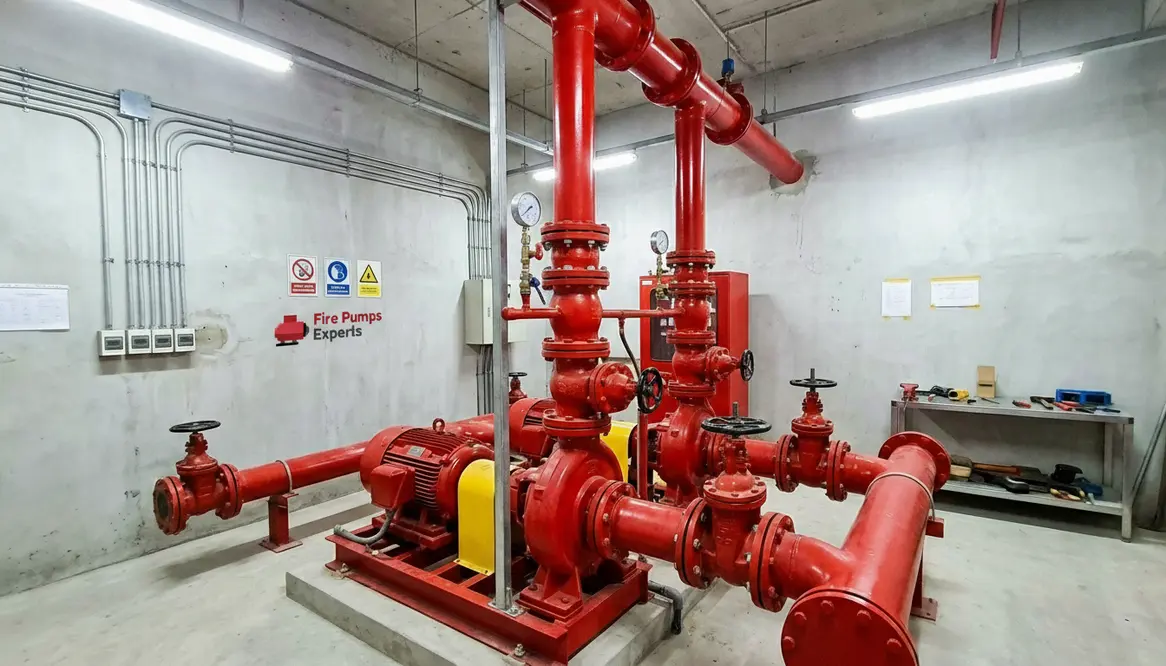
A proper pump room in a Vietnam commercial project needs more than a pump sitting on a concrete slab and a hopeful attitude. I expect a complete setup that supports safe operation and fast maintenance. The room should stay dry, easy to reach, and large enough for service work.
Here is what I look for in the room:
- Main fire pump
- Backup pump, often diesel or electric depending on the design
- Jockey pump for pressure control
- Control panel with clear status indicators
- Suction and discharge valves
- Pressure gauges and test lines
- Fuel supply and exhaust setup if the pump uses diesel
- Proper drainage and floor slope
Room conditions that keep the system alive
I also check the room conditions. Heat, flooding, poor access, or weak ventilation can damage the system and make maintenance harder. And maintenance, as boring as it sounds, is the difference between a calm drill and a very bad day.
How I handle approval, testing, and maintenance
Approval is not a formality. It is the moment when the project proves it can actually protect the building. For a Vietnam commercial development, I make sure the design documents, equipment specs, and test records are ready before review. Local authorities often want proof that the pump performs as planned, and I welcome that. It keeps everyone honest.
Key performance tests
Testing should cover:
- Start up time
- Pressure stability
- Flow performance
- Automatic and manual operation
- Power transfer for backup supply
Maintenance that prevents ugly surprises
After handover, I push for a simple maintenance schedule. Regular checks catch leaks, low fuel, weak batteries, worn seals, and controller faults before they become expensive. If you want a system that works during real pressure, not just during a photo op, then maintenance has to stay on the calendar.
Vietnam commercial fire pump checklist for project teams
Before I call a design complete, I run through a short checklist. It keeps the project clean and it saves time during review and installation.
- Confirm the building type and fire risk level
- Verify required flow and pressure
- Select pump type and backup source
- Check pump room size, access, and ventilation
- Confirm water source and tank capacity
- Review controls, alarms, and monitoring
- Plan testing, commissioning, and future maintenance
If a team wants a trusted starting point, I recommend reviewing the fire pump standards for commercial facilities before final design. That step helps align the project with practical safety needs and better approval outcomes. In this business, good planning is cheaper than panic. That math has never been kind to anyone.
FAQ for Vietnam commercial fire pump projects
Conclusion
When I plan fire pumps for a Vietnam commercial project, I treat every detail like it matters, because it does. A solid system protects people, property, and business continuity, and it also keeps the approval process smoother. If you need support with design, review, or system planning for a commercial or industrial site, contact our team at https://firepumps.org. I can help you build a fire pump setup that is practical, code aware, and ready when it counts.