Fire Pump Standards for Global Logistics Facilities
When I look at a global logistics facility, I see more than racks, forklifts, and shipping lanes. I see a machine that runs on speed, scale, and constant motion. That is exactly why fire pump standards matter so much. They guide how I choose, size, install, test, and maintain fire pumps so the system can do its job when the heat rises and everyone else is running the other way. In a warehouse the size of a small city, a weak pump is not a minor problem. It is a headline nobody wants.
What fire pump standards mean for global logistics sites
Fire pump standards set the baseline for water supply, pressure, flow, and reliability in commercial and industrial buildings. For global logistics facilities, I treat them as the rulebook that keeps the whole fire protection system honest. These sites often have tall storage, wide floor plates, and fast moving operations, so fire risk can grow quickly. Also, sprinkler demand can rise with rack height, commodity type, and local code needs. That means I cannot guess. I must verify the design against the right standard, local code, and site conditions.
In most projects, I review the pump room, water source, electrical supply, backup power, and control method early. Then I check whether the building needs an electric pump, diesel pump, or both. If the water source is weak, the pump must make up the difference. If the power grid is shaky, I think like a pessimist with a clipboard and plan for backup. Because, frankly, the fire does not care about a utility outage.
Why the rulebook matters so much
In logistics, speed is everything until something goes wrong. When racks are stacked high with mixed commodities and the floor is a maze of conveyors and forklifts, small ignition sources can escalate quickly. Fire pump standards keep the protection side from falling behind the operations side. They force me to confirm that the pump, water source, and distribution network can keep up when conditions are worst, not just on a calm Tuesday in spring.
I treat every large site as if it will expand, shift layouts, or change commodities in the future. That means I pay attention to how close the design is to the edge of demand. A system that barely meets today’s needs may fail tomorrow’s fire test. The discipline that comes with clear fire pump standards helps me avoid that trap.
How I size and select the pump
I start with the water demand, not the pump nameplate. That order matters. First, I confirm the sprinkler and standpipe needs, then I compare them to the available water supply. After that, I choose a pump that can deliver the right pressure and flow without wasting energy or creating problems in the system. Oversizing can be just as messy as undersizing. A pump that is too large may cycle badly, raise wear, and create unnecessary cost. A pump that is too small can leave the system gasping like the last person in a disaster movie who ignored every warning sign.
I also look at redundancy. In some major logistics hubs, the risk profile and business impact justify more resilient arrangements and tighter internal fire pump standards than the bare minimum. That might mean dual pumps, more robust power options, or additional monitoring. I would rather design that in with intention than bolt it on after a scare.
My basic sizing flow
- Review the hazard level and storage layout
- Check local code and the applicable fire pump standard
- Measure available water supply and pressure
- Define sprinkler, hose, and other system demand
- Select the pump type and driver
- Confirm room layout, access, and ventilation
Each step is a chance to catch bad assumptions. I do not let a catalog chart or an eager quote replace the hard numbers that fire pump standards demand.
What the pump room must have
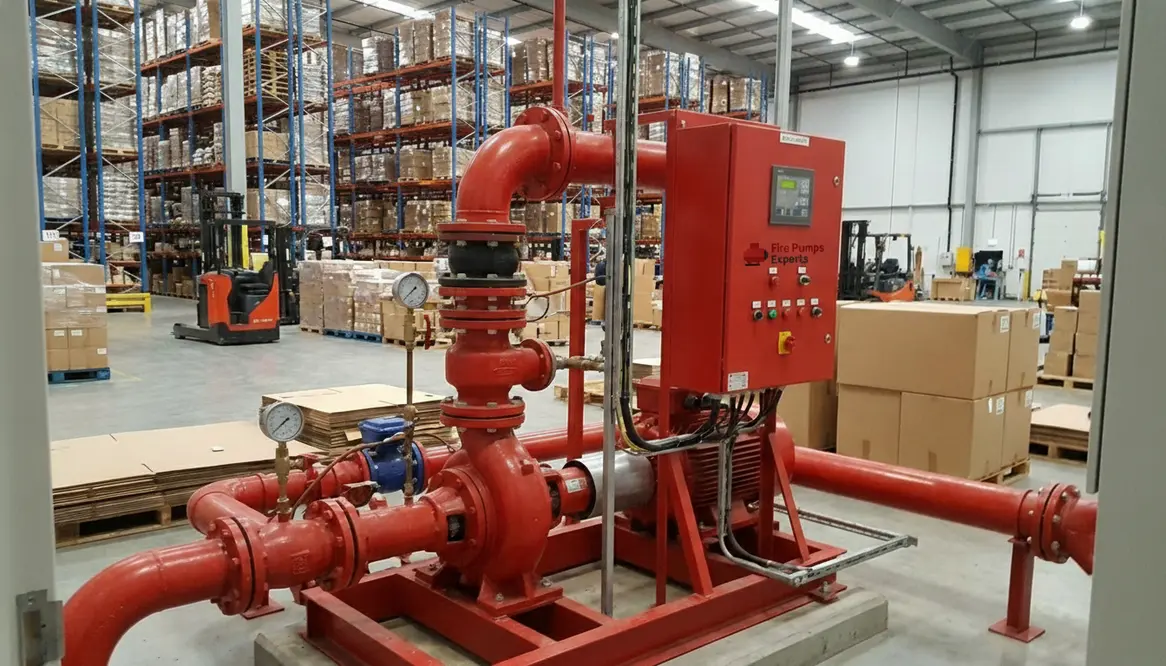
The pump room is not a storage closet with a hero complex. It needs space, access, drainage, heat control, and safe clearance around equipment. I make sure the room supports quick inspection and clean maintenance. In global logistics facilities, this matters even more because the building may run around the clock. Downtime hurts, and not just in the budget. It can slow distribution across an entire region.
Design side
- Enough space for the pump, controller, valves, and service access
- Stable water supply and proper suction piping
- Clear pressure and flow path through the system
Operation side
- Safe lighting and easy access for staff and inspectors
- Heat control for diesel equipment and batteries
- Drainage that keeps the room dry and usable
Also, I pay close attention to vibration and pipe support. A pump that shakes the piping loose will create a problem long before any fire starts. That is not drama. That is physics with a bad attitude.
Testing and inspection I never skip
Fire pump standards do not stop at installation. They live in the routine. I build testing and inspection into the facility schedule because a pump that only works on paper is just expensive furniture. Weekly checks, no flow starts, controller review, and periodic full flow tests help me catch issues early. I also verify diesel fuel quality, battery health, and valve positions. If the system depends on a supply chain, I make sure that supply chain includes the pump itself.
For large logistics operations, I like to coordinate testing with building managers and safety teams. That way, I avoid disrupting shipping lanes, shift changes, or peak dispatch windows. The goal is simple. I want proof that the system will perform under stress, not just confidence from a glossy submittal packet.
How I keep global sites consistent
Many logistics companies run multiple buildings across countries and regions. Because of that, I push for a repeatable fire protection standard across the portfolio. Of course, local code still rules each site. However, a common internal standard helps owners compare facilities, reduce confusion, and speed up upgrades. It also makes training easier. One playbook beats twelve versions of the same headache.
I also recommend reviewing design documents with a team that understands commercial and industrial fire protection at scale. For that reason, I often look to Fire Pumps.org’s guide to commercial fire pump standards as a useful reference point when I need to align project goals with real world site demands. It helps me stay focused on major properties, where reliability and code compliance must work together without drama.
In global portfolios, internal fire pump standards also make it easier to benchmark performance. When each site is measured against the same baseline for pump capacity, testing frequency, and documentation quality, the weak links stand out quickly instead of hiding behind regional habits.
FAQ for fire pump standards in logistics facilities
Conclusion
If you manage a global logistics facility, I would not leave fire pump planning to chance. Strong design, clean installation, and steady testing keep your operation safer and more resilient. So, if you need a smarter review of your commercial or industrial fire protection setup, now is the time to act. Build the standard early, confirm it often, and give your facility the kind of protection that keeps business moving when every second counts.