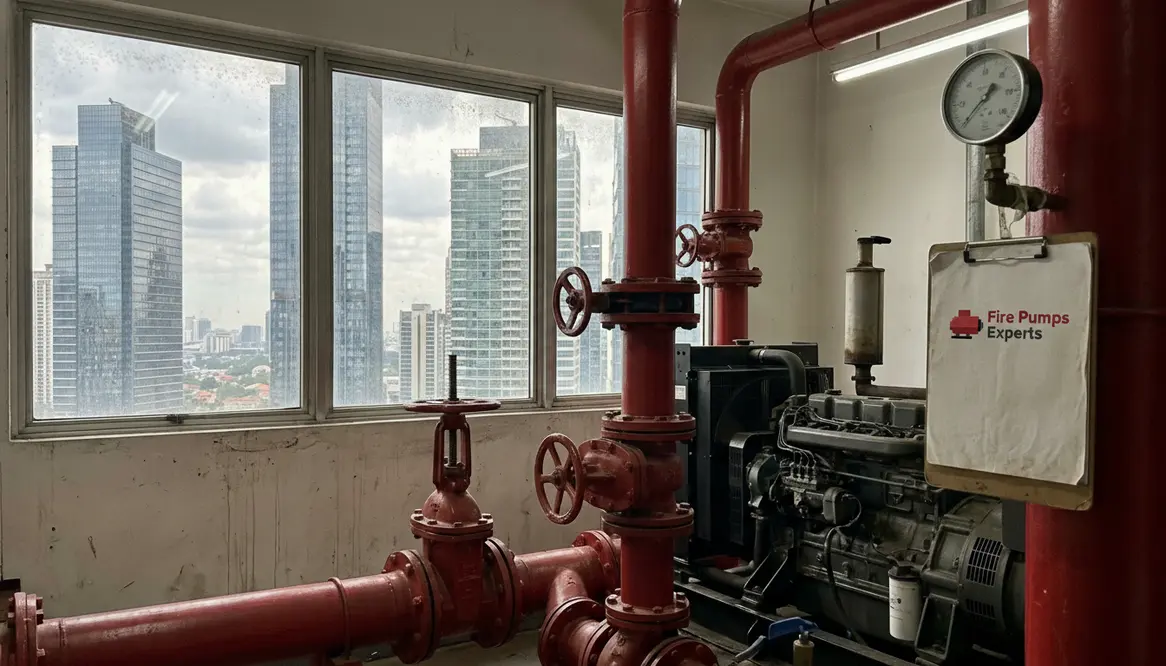
Fire Pump Code Requirements for High Rise Buildings Worldwide
Fire pump code requirements in tall buildings are not just paperwork; they are the backbone of life safety and the difference between a controlled incident and a very expensive headline.
Fire Pump Code Requirements for High Rise Buildings Worldwide can feel like a giant rule book written by a very serious committee. I get it. Still, when I look at a tall building, I know one thing right away: if fire protection fails, everything else gets very expensive, very fast. That is why I treat fire pump rules as the backbone of life safety in tall commercial and industrial properties. In this article, I break down the code side in plain language, so you can see what matters, why it matters, and how teams keep these systems ready without turning the job into a full time drama series.
At a glance
High rise fire pump rules focus on three non‑negotiables: enough flow, enough pressure, and enough reliability. Everything else in the code supports those three ideas.
- Compensate for weak or variable water pressure
- Deliver water to the highest floors and longest pipe runs
- Keep systems testable, maintainable, and supervised
- Support regional rules while protecting people and assets
What fire pump codes actually try to solve
Fire pump codes exist for one simple reason: water does not always arrive with enough pressure in a high rise. So, the pump steps in and pushes water where gravity, height, and long pipe runs would otherwise say, “Nice try.” In major properties, I focus on three things first: enough flow, enough pressure, and enough reliability. Those three points sit at the center of fire pump code requirements for high rise buildings worldwide.
Different regions use different standards, yet the goal stays the same. For example, many projects follow NFPA 20 for pump installation, while building and fire codes set the broader rules for testing, access, and integration. In other parts of the world, local codes may align with national standards, but they still expect a dependable pump room, proper water supply, and clear control features. The names change, but the mission stays stubbornly identical, like a franchise that refuses to cancel itself.
High rise fire pump code requirements by region
If I zoom out and compare regions, I see a familiar pattern. Each code system wants the pump to support the building’s fire protection demand under real emergency conditions, not just on paper. That means the design must match the height of the building, the sprinkler system, standpipes, hose reels, and the fire department’s expected use.
Common regional focuses at a glance
| Region | Common focus |
|---|---|
| North America | Pump sizing, power supply, weekly and monthly checks, dedicated room access |
| Europe | System reliability, sprinkler support, fire brigade access, local authority approval |
| Middle East | High capacity systems, backup power, coordination with civil defense rules |
| Asia Pacific | Mixed use of national codes, pump redundancy, strong testing and maintenance routines |
Even so, no region treats the pump as a decorative box in the basement. Authorities want it protected, supervised, and easy to service. In addition, many codes call for a pump room with proper drainage, lighting, ventilation, and enough space for repair work. That part matters more than people think. A cramped room turns a routine inspection into a contortion act nobody asked for.
What I check in the pump room
When I review a fire pump setup for a commercial tower or industrial property, I always start with the room itself. A good pump can still fail its purpose if the space around it creates heat, flooding, or access problems. Therefore, I look for:
- Clear access for staff and responders
- Protection from water damage and flooding
- Proper ventilation and temperature control
- Reliable power and backup power where required
- Clean layout around controllers, valves, and test equipment
Also, I never ignore the water supply. The pump cannot make water appear out of thin air. It only boosts the supply already there. So, codes often require a stable source, whether that comes from a tank, city main, or another approved supply. If the source cannot support demand, the system becomes a very expensive actor without a script.
Code‑driven pump room essentials
- Physical separation from flood risk and everyday traffic
- Lighting good enough to read gauges without guessing
- Ventilation that respects both electric and diesel drives
- Access routes wide enough for actual maintenance tools
- Clearly marked valves, controllers, and test headers
These details turn abstract rules into a room that works when alarms ring at 3 a.m.
How testing and maintenance keep codes alive
Codes do not stop at installation. In fact, the real test starts after the ribbon cutting and the proud photos. Fire pump testing and maintenance keep the system ready, and they help prove the installation still meets code over time. Most standards expect regular churn tests, no flow checks, alarm checks, and full performance review at set intervals.
Because high rise buildings face more risk than low rise sites, I treat ongoing inspection as non negotiable. A pump can pass today and drift out of spec later because of wear, corrosion, valve issues, or power problems. So, a smart facility team tracks:
- Weekly visual checks
- Monthly controller and alarm review
- Annual performance testing
- Battery, fuel, and power source checks where needed
- Records for inspectors and insurers
And yes, paperwork matters. I know, thrilling. But when an authority asks for proof, clean records can save time, money, and more than a little embarrassment.
Why code compliance matters for commercial and industrial properties
For tall office towers, hospitals, mixed use complexes, warehouses, and industrial plants, fire pump compliance protects people, assets, and business continuity. A strong system helps sprinkler heads and standpipes do their job when seconds matter. It also supports code approval, insurance review, and smoother inspections.
In practice, I see the biggest problems when teams treat the pump as a one time purchase instead of a life safety system. That mindset creates gaps in testing, weak documentation, and slow repairs. On the other hand, a well planned program keeps the system ready and lowers the chance of costly downtime. If you work with major properties, you need a pump strategy that respects the code and the building’s real risk profile.
How to stay compliant with fire pump high rise worldwide rules
I start with the local code, then I compare it with the system design, the water supply, and the building height. After that, I verify testing, access, and maintenance. If the site spans more than one rule set, I follow the stricter requirement where allowed. That approach keeps the building safer and helps avoid the classic “we thought it was fine” problem. Spoiler: authorities rarely enjoy that sentence.
Many teams now benchmark designs and maintenance plans against global guidance from organizations such as https://firepumps.org and similar technical resources, then tune everything to match what their authority having jurisdiction actually enforces. That blend of global reference and local enforcement is where fire pump high rise worldwide practices become useful instead of theoretical.
When multiple countries, brands, or insurers are involved, I treat the most demanding standard as the baseline. It is far easier to justify a higher standard than to explain why the cheaper route failed. In other words, if fire pump high rise worldwide guidance points to redundancy, clear monitoring, and robust backup power, I treat that as a design hint, not an optional extra.
Fire pump high rise worldwide quick notes
Across major markets, the same patterns repeat: guard the water supply, keep the pump room survivable, and document everything. Fire pump high rise worldwide requirements might look different on paper, but they all push you toward systems that still work when power blinks, valves age, or the city main misbehaves at the worst possible moment.
FAQ
Conclusion
If you want fire pump code compliance to work in the real world, I recommend treating it as a living system, not a filing cabinet item. Review the code, confirm the design, test it often, and keep the records clean. For commercial and industrial high rise properties, that is the path to safer operations and fewer surprises. If your building needs a code review, a system check, or a better maintenance plan, now is the time to act.