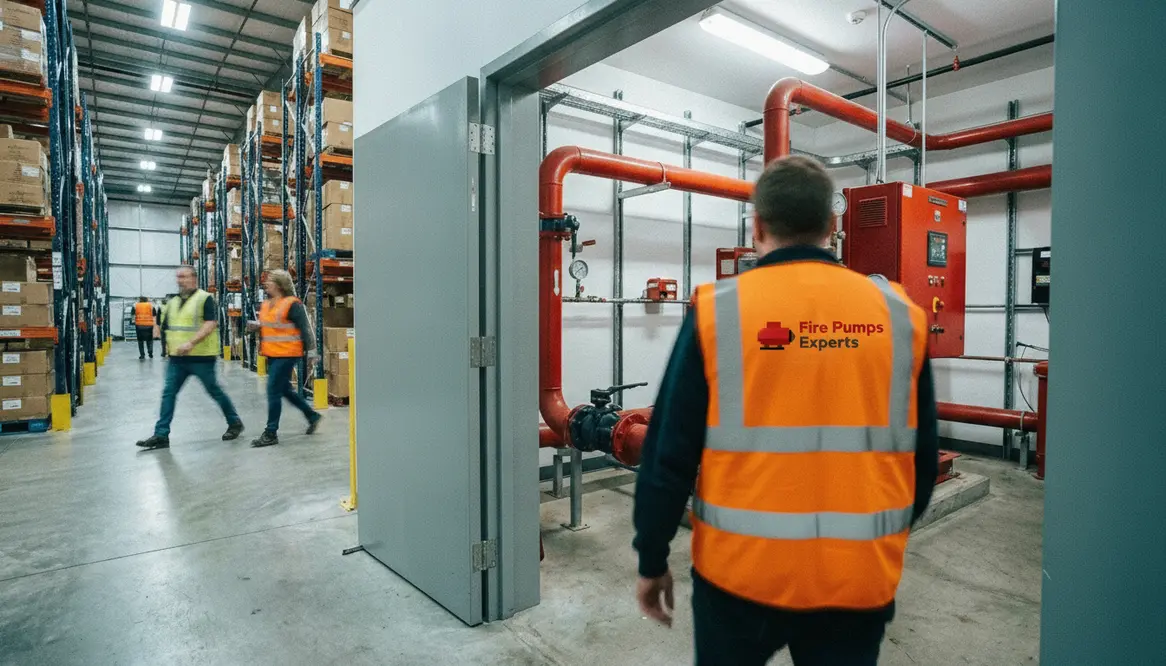
Fire Pump Code Requirements for Warehouses Worldwide
When I look at fire pump warehouses worldwide, I see more than steel racks and busy forklifts. I see risk, rules, and the quiet work of keeping people and property safe. Warehouses move fast, store a lot, and leave little room for error. So, fire pump rules matter. They shape how water gets delivered when a sprinkler system needs backup, and they help commercial and industrial facilities stay ready when things go wrong. And yes, this is the sort of topic that sounds dry at first, but it can save a building, a business, and a very bad day.
Different countries write their own codes, yet the core goal stays the same. A fire pump must start fast, supply the right pressure, and keep working long enough to control the fire. I will walk through the key code ideas, the global differences, and the checks that matter most for major warehouse properties.
What a warehouse fire pump must do
A fire pump gives sprinkler and standpipe systems the pressure they need when the supply from a city main or tank drops short. In a warehouse, that support is critical because large floor areas, tall storage, and high fuel loads can make fires grow fast. As a result, codes usually require the pump to match the hazard level, water demand, and building size.
In most regions, I see the same basic code goals:
1. Provide enough pressure and flow
The pump must deliver the system demand at the required pressure, even when water supply conditions change. If the pump underperforms, the sprinklers become polite little rain showers. That is not the plan.
2. Start automatically and reliably
The pump must start when pressure drops. Therefore, pressure switches, controllers, and power sources need proper design and testing.
3. Stay available during an emergency
Codes often require protection for the pump room, its power supply, and its access path. After all, a fire pump cannot help if smoke blocks the door or the power dies faster than a bad sequel.
How global fire pump codes compare
Here is the short version: many countries borrow from or align with NFPA 20, local building rules, and insurer standards. However, each region adds its own layers. That means warehouse owners and design teams must check both the main fire code and local amendments.
North America
NFPA 20, NFPA 13, the International Building Code, and local fire marshal rules often guide pump design for warehouses and industrial sites.
Europe
EN standards, national building codes, and insurance rules shape pump selection, testing, and room layout.
Middle East and Asia Pacific
Many projects use NFPA based design, but local civil defense rules often add details for water storage, redundancy, and alarm links.
Latin America and other markets
Local codes may accept international standards, yet they often require local approvals, testing witnesses, and specific equipment listings.
So, while the names change, the main question stays the same: can the pump protect a large commercial or industrial building when the heat rises and the pressure drops?
Key code points I check in warehouses worldwide
When I review a warehouse fire pump setup, I focus on a few code items that show up again and again. First, I check the water supply. The pump must work with a reliable source, whether that comes from a tank, a reservoir, or a public main. Next, I look at pump type and sizing. The system must match the sprinkler demand, plus any standpipe or hose allowance if the code calls for it.
Pump room and power: where many warehouses slip
- Pump room protection: Fire resistance, separation from high hazard storage, and doors that actually open easily under stress.
- Access and environment: Safe access routes, clear working space, heat control, and drainage that keeps equipment out of standing water.
- Power and backup: For diesel, fuel storage, ventilation, exhaust routing, and battery care. For electric, the feeder, emergency supply, and transfer setup all need attention.
Simple? Not really. Important? Very.
Also, many codes require weekly, monthly, or annual testing. That includes churn tests, flow tests, and inspection of valves, gauges, and alarms. In other words, the system must not just exist. It must prove itself on schedule, like a drummer on a world tour.
How I map warehouse design to code compliance
I find that code compliance gets easier when the design follows the building use from day one. For example, high pile storage, rack arrangements, cold storage, and automated retrieval systems can all change fire demand. So, the pump cannot sit in a vacuum. It must connect to the real layout, the real hazards, and the real water supply.
A simple flow that works for fire pump warehouses worldwide
- Confirm the warehouse hazard class and storage type.
- Size the sprinkler demand and any extra system needs, such as standpipes or hose connections.
- Verify the water supply curve and pick the pump rating that meets demand with proper margin.
- Review the pump room, power sources, alarms, monitoring, and test plan.
This structure helps keep designs consistent, whether the project is in a local industrial park or part of a network of fire pump warehouses worldwide that share standards and expectations.
FAQ for quick answers
Conclusion
If I had to reduce the whole subject to one point, I would say this: warehouse fire pump compliance is not a paper exercise. It is a life safety system for commercial and industrial buildings that must work under pressure, in real time, with no excuses. So, if you manage a warehouse project, review the code early, verify the water supply, and test the system often. If you want support for fire pump warehouses worldwide, take the next step now and make sure your facility is ready before the alarm ever sounds.