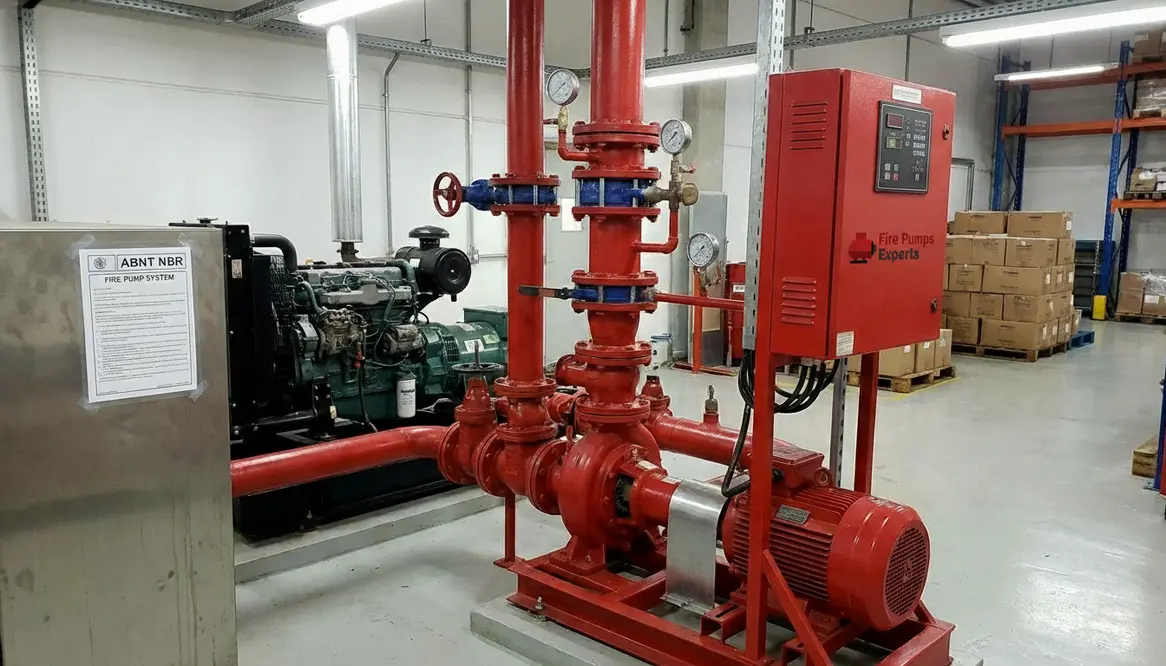
ABNT Fire Pump Standards for Commercial Buildings
ABNT Fire Pump Standards Explained: What I Want Every Commercial Facility to Know
When I talk about fire protection in a commercial or industrial building, I always start with ABNT standards. They set the rules for how a fire pump system should work, how it should be installed, and how it should stay ready when the pressure is on. In other words, they help keep a building from turning into a very expensive cautionary tale. For major properties, this is not just paperwork. It is life safety, asset protection, and business continuity all rolled into one calm, serious package.
Why I Treat ABNT Standards as the Baseline
I see the ABNT fire pump standards as the foundation of a reliable suppression system. They guide the design, sizing, installation, testing, and maintenance of pumps that support sprinkler and hydrant networks in commercial and industrial sites. That matters because a pump that looks fine on paper can still fail in the real world, and the fire does not care about excuses. It only cares about water flow, pressure, and timing.
These ABNT standards help me make sure the system matches the building load. For example, a warehouse with tall racking needs a different approach than a multi level office tower or a manufacturing plant. So, I do not treat fire pump selection like picking a streaming service plan. I match the system to the risk, the demand, and the code requirements.
How I Read ABNT Fire Pump Standards for Real Projects
When I review a project, I focus on the parts that shape real performance. First, I look at the water demand. Then I check the pressure needs across the most remote points in the system. After that, I confirm the pump type, power source, suction conditions, and control setup. Each part has to work with the others, because a weak link can pull the whole system down faster than a bad sequel.
How I Structure Fire Pump Reviews
Left column: What I check
- Pump capacity and pressure
- Water supply reliability
- Electric or diesel backup
- Controller and alarms
- Test and inspection access
Right column: Why it matters
- It supports the needed flow during a fire
- It helps the system avoid starvation
- It keeps the pump alive during power loss
- It shows faults before they become failures
- It makes routine checks easier and safer
That simple structure saves time and prevents surprises. Also, it gives owners and facility teams a clear path when they need to explain the system to auditors, engineers, or insurers who ask sharp questions with polite faces.
What ABNT Standards Mean for Installation and Testing
Installation is where theory meets reality. I always want the pump room, piping, valves, and controls arranged for clean operation and easy maintenance. If the layout blocks access, future inspections get messy fast. And messy is not a good look when a life safety system is involved.
The ABNT rules also push me to think about testing from day one. A fire pump is not a “set it and forget it” machine. It needs regular flow checks, pressure checks, and functional tests. I want proof that it starts when called, holds steady under load, and keeps water moving long enough to do its job. Otherwise, the building is basically crossing its fingers and hoping for the best, which is not a strategy I would recommend to anyone.
Good testing also helps spot small issues early. For example, I can catch suction problems, low controller performance, worn parts, or weak power supply before they become major failures. That is the difference between a minor repair and a very bad day.
ABNT Standards for Maintenance in Commercial and Industrial Buildings
Once the system is live, maintenance becomes the real story. I always tell clients that compliance is not a one time event. It is a habit. ABNT standards support that habit by guiding inspections, cleaning, lubrication, test runs, and record keeping. That matters even more in high value properties, where downtime can cost more than the repair itself.
The Maintenance Focus for Commercial and Industrial Sites
For commercial and industrial facilities, I focus on three things:
- Routine checks so faults do not hide in plain sight
- Documented testing so everyone knows the system stayed ready
- Corrective action so problems get fixed before the next emergency
In practice, this keeps the fire pump aligned with the building’s risk profile. It also helps teams avoid the classic “we thought someone else handled it” problem. That one has haunted too many facilities, and frankly, it never ages well.
How I Use ABNT Standards to Support Compliance and Risk Control
For me, the real value of ABNT standards goes beyond compliance. They help reduce risk in a way that owners, operators, and insurers can trust. They also create a shared language between engineers, maintenance teams, and safety managers. As a result, decisions become cleaner and faster.
When I work with major properties, I always keep the business impact in view. A reliable fire pump helps protect inventory, equipment, staff, operations, and reputation. And in large facilities, reputation can be as fragile as a glass desk in an action movie. One incident can shake confidence for years.
If you want a deeper technical reference, I recommend reviewing the fire pump compliance guidance for commercial properties at https://firepumps.org alongside the local ABNT requirements. That kind of check helps tie design decisions to real site conditions, which is where the real work happens.
FAQ
Conclusion
When I look at ABNT fire pump standards, I see more than technical rules. I see a clear path to safer, stronger, and better managed commercial and industrial buildings. If you own, manage, or oversee a major property, now is the time to review your fire pump system with care. I recommend taking the next step, checking your setup against the proper ABNT requirements, and making sure your protection is ready before you ever need it.