ABNT Fire Pump Requirements for Commercial Buildings
ABNT Fire Pump Requirements for Commercial Buildings may sound like a dry subject, but I see it as one of those behind the scenes systems that keeps a property from turning into a very expensive cautionary tale. In ABNT commercial settings, the fire pump is not just another box on a checklist. It supports water pressure, helps sprinkler and hose systems do their job, and gives people more time when every second matters. I like to think of it as the quiet backup singer that keeps the whole safety band in tune.
What I look for first in an ABNT fire pump setup
When I review a commercial building, I start with the basics. The pump must match the building risk, the water demand, and the system layout. That means I check the flow, pressure, power source, and how the pump fits into the full fire protection design. If the pump is too small, the system struggles. If it is too large, it can create waste and stress on the equipment. Either way, nobody wins.
ABNT standards guide the selection of the fire pump so the system supports commercial and industrial buildings in a real emergency. I also look at the water supply source. A pump cannot work miracles if the source cannot keep up. So, the tank, reservoir, or supply line must support the demand with enough reserve. Think of it like a movie climax. The hero can only save the day if the script gave them the right tools.
Matching pump performance to ABNT commercial risk levels
In real-world ABNT commercial projects, I match pump curves and system demand the way a good engineer matches a generator to critical loads. High-rise offices, logistics centers, shopping malls, and data facilities carry very different risk patterns. The pump has to support the worst credible fire scenario without turning the pipe network into a stress test. That balance between flow and pressure is where a lot of design discipline lives.
How I handle pump room and equipment rules
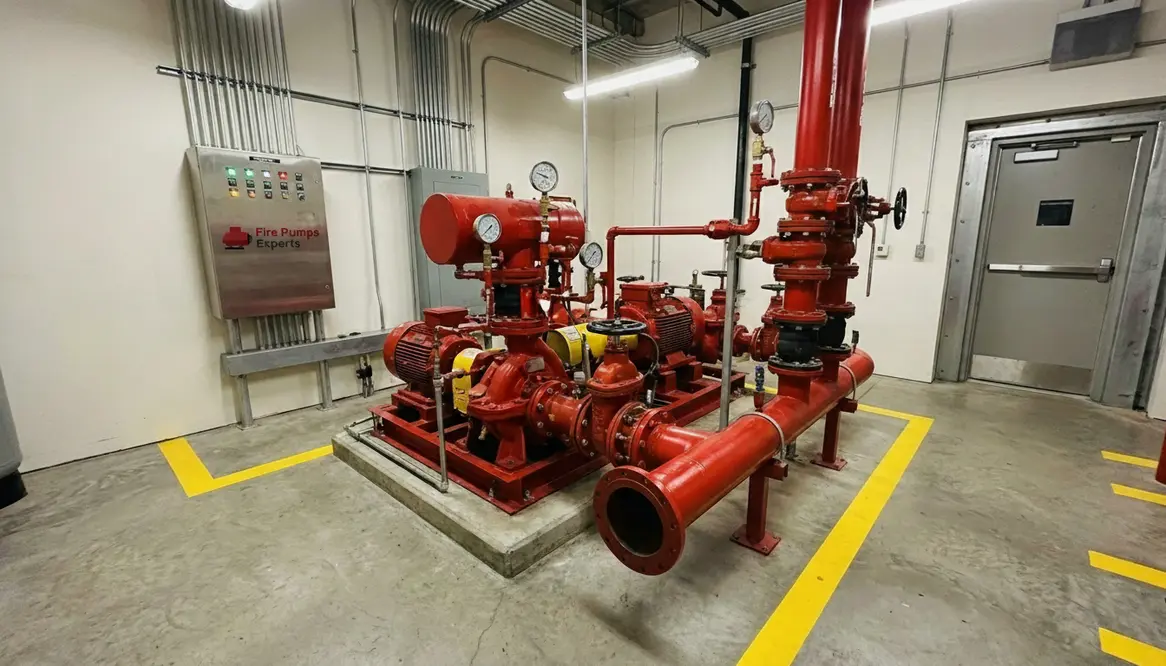
The pump room matters more than many people expect. It should give the pump safe access, room for maintenance, and enough protection from heat, flooding, and damage. In practice, I want clear space around the equipment, strong ventilation, and easy access for inspection. If a technician needs to squeeze around pipes like they are auditioning for a spy film, the layout needs work.
ABNT commercial projects also need proper control panels, valves, gauges, and alarms. These parts help the team monitor the pump and act fast when something changes. I also check whether the room supports the power system, because a fire pump without reliable power is like Batman without the Batmobile. Still useful, but not ideal.
Practical layout details that keep the system maintainable
Beyond meeting the letter of the standard, I look for simple things that tell me daily operations will not sabotage reliability: doors that open fully without hitting valves, lighting that lets you read a gauge at 3 a.m., drain lines that do not empty across a main walkway, and suction piping that does not twist around the room like a thriller movie prop. The fewer surprises in the pump room, the better the odds the system will be ready when it counts.
Why testing and maintenance matter in ABNT commercial systems
Here is where many buildings lose points. A fire pump may look fine on paper, but the real test happens during inspection and routine runs. I always stress regular testing because pumps can fail from wear, corrosion, air issues, bad power, or simple neglect. Yes, even the best gear gets cranky if nobody pays attention.
For commercial buildings, maintenance should follow a clear schedule. That usually includes checking pressure, flow, engine or motor performance, suction conditions, and starting response. I also review records, because good logs tell the story of the system over time. If the records look like they were written during a coffee break in a thunderstorm, I ask for better documentation.
When I work with fire protection teams, I push for these habits:
- Test the pump on a set schedule
- Inspect valves, gauges, and controls
- Watch for leaks, noise, and vibration
- Confirm the power source works as planned
- Keep service records complete and easy to read
Linking test results to upgrades instead of panic
The best ABNT commercial maintenance programs treat test results as early warnings, not as reasons to argue. A small drift in pressure, a slightly longer start time, or a recurring alarm should trigger a planned response: inspection, diagnosis, and either repair or replacement. That quiet pattern of small fixes beats the dramatic scene where the pump fails its first real test and everyone scrambles to explain why.
ABNT commercial compliance checklist for large properties
Now I get to the part that helps owners, managers, and engineers stay on track. A large property needs more than a pump installed in the right place. It needs a full compliance mindset. I use a simple check sequence so the team can see where the system stands and where it needs attention.
Dual column view
|
What I verify |
Why it matters |
|
Pump capacity |
It must support the fire system demand |
|
Water supply |
The pump needs a stable source to perform well |
|
Room conditions |
Heat, access, and safety affect reliability |
|
Power backup |
The pump must start even during power loss |
|
Inspection records |
Logs prove the system stays ready |
This kind of review helps commercial owners avoid guesswork. It also helps them plan upgrades before a small issue becomes a big one. And in fire protection, small issues love to act innocent right up until they become a headline.
How I answer common ABNT fire pump questions
What is the main purpose of a fire pump?
It boosts water pressure so fire protection systems work as intended.
Do commercial buildings need regular testing?
Yes. Regular testing helps confirm the pump will work in an emergency.
What affects pump performance most?
Water supply, pressure, power, room conditions, and maintenance all play a role.
Why does ABNT matter for large properties?
It gives a clear standard for safe and reliable fire pump setup.
Can poor maintenance cause failure?
Yes. Neglect often leads to weak performance or full system failure.
If you want deeper guidance on ABNT fire pump solutions for commercial and industrial facilities, I suggest using a team that knows how to work with major properties, not just small sites pretending to be big players.
Bringing it all together for ABNT commercial buildings
Across design, installation, and maintenance, the same pattern keeps showing up: ABNT commercial fire pump systems work best when everyone treats them as critical infrastructure instead of just another compliance checkbox. Good flow data, clean documentation, test-ready layouts, and realistic emergency planning all stack together into a system that can handle a bad day without turning it into a disaster.
Conclusion
If you manage a commercial building, I urge you to treat your fire pump as a core safety asset, not background noise. The right ABNT fire pump setup protects people, property, and business continuity. So, review your design, check your maintenance plan, and verify compliance before trouble shows up uninvited. If you need support, now is the time to act, because readiness always costs less than regret.