Colombia Fire Pump Compliance Guide for Buildings
When I talk about Colombia compliance for fire pump systems, I mean the rules that keep commercial and industrial buildings ready when water pressure drops and alarms start shouting like a bad action movie. I focus only on major properties, because small side projects do not need the same level of fire pump planning. In a large building, every valve, controller, and test line has a job to do. And if one part fails, the whole system can turn into expensive drama. So, in this guide, I break down what I check, what matters most, and how I keep a building on the safe side of the law.
What I check first in a Colombia fire pump system
I always start with the basics. First, I verify the building type, fire risk, and water demand. Then I check whether the pump supports the full sprinkler and standpipe load under emergency use. That sounds simple, but it is where many projects get shaky. A pump that looks strong on paper can still fail if the supply line is weak or the tank cannot hold enough water.
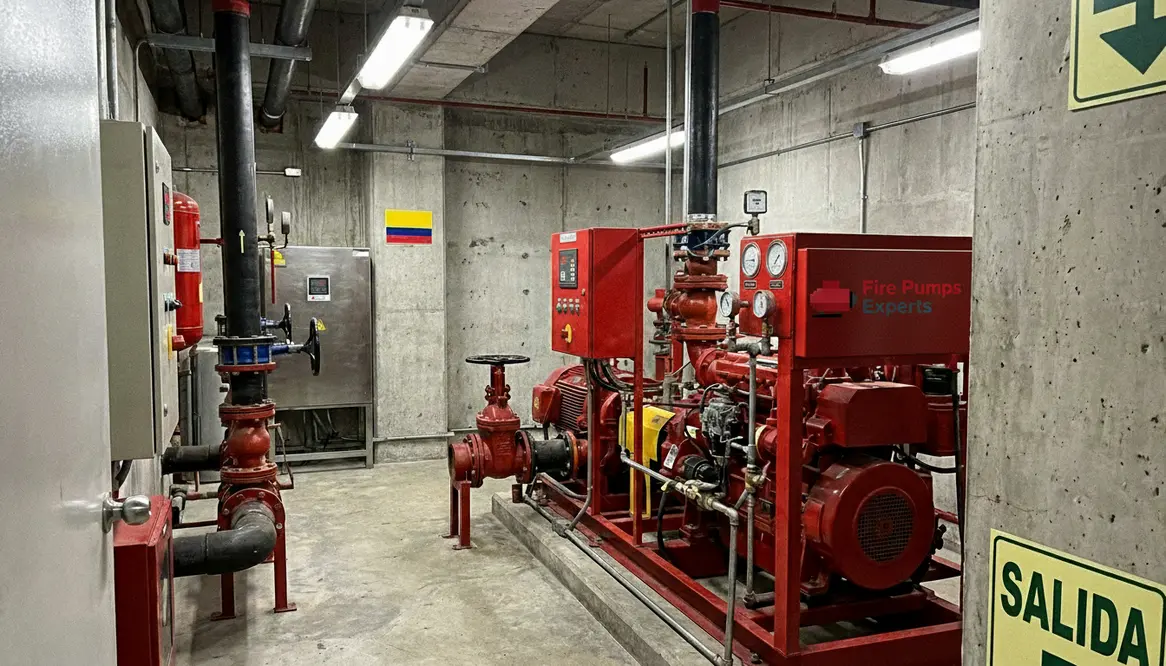
Next, I look at the room itself. The fire pump room must stay easy to reach, dry, and secure. It also needs enough space for service and repair. If a technician cannot move around the pump, then future maintenance turns into a circus act, and nobody needs that kind of performance during an emergency.
After that, I review the power source, controller, and backup plan. If the main power fails, the pump still must work. For large commercial and industrial buildings, that part matters a great deal because fire does not wait for a convenient time slot.
How I confirm Colombia compliance for installation
Once I know the system design fits the building, I move to installation details. I confirm that the pump matches the approved design, the suction line stays clear, and the discharge line supports the needed flow. In addition, I check the alignment, anchor points, and pipe support. Small mistakes here can create big problems later, and fire systems never forgive sloppy work. They are not known for their sense of humor.
I also make sure the system follows local fire code needs and the accepted engineering standards used in Colombia. In many cases, the project team should compare the design with national rules and recognized standards for pumps, controllers, valves, and testing. For a practical reference, I often recommend reviewing the official fire pump standards resource for commercial buildings alongside the local permit package.
What inspection and testing should include
Here is where the real proof shows up. I do not trust a pump just because it looks impressive. I want test results.
Inspection focus
- Visual condition of pump, motor, and controller
- Valve position and pipe condition
- Power source and backup supply
- Room access and drainage
Testing focus
- Start up performance under load
- Churn test and flow test
- Automatic transfer response
- Alarm and signal checks
During testing, I confirm that the pump starts fast and holds the required pressure. I also watch for vibration, leaks, strange noise, and heat. Furthermore, I check alarms and signals because a quiet failure is still a failure. If the system speaks to the panel, the panel should speak back. That is the whole relationship.
For Colombia compliance, records matter just as much as the test itself. I keep reports, repair logs, and change notes in one place so inspectors and facility managers can see the full history. A building with clean records moves through review faster and with far less stress.
How I manage maintenance for major properties
Good maintenance keeps the fire pump ready for the day nobody wants. I build a routine that fits the size of the property and the risk level. For a high rise, warehouse, plant, or mixed use commercial tower, I pay close attention to weekly checks, monthly visual review, and full performance tests on schedule.
I also watch for wear on seals, bearings, belts, and batteries. In addition, I look for rust, dirt, and water issues in the room. A clean room helps the system live longer. It also makes service easier, which means fewer headaches and fewer emergency callouts at odd hours. Nobody likes a midnight pump problem unless they collect pain for fun.
If the property changes use, adds floors, or expands fire protection demand, I review the pump setup again. Buildings grow, and the fire pump must grow with them. Otherwise, the system falls behind the risk.
Common compliance mistakes I see in Colombia
Most issues I find are not mysterious. They usually come from rushed work or weak follow up. First, some teams install a pump that does not match the actual water demand. Second, some sites block access to the room with storage or tools. Third, others skip regular testing and then act surprised when the pump misbehaves. That is like never checking the engine and then blaming the car for being dramatic.
Another common mistake is weak documentation. If the build team cannot prove what was installed, when it was tested, and who serviced it, then compliance becomes harder than it needs to be. So, I keep every detail tight and easy to trace.
FAQ for Colombia fire pump compliance
Final thoughts and next step
In my work, Colombia compliance for fire pumps is not just about passing a review. It is about keeping a major building ready when pressure drops and lives depend on a system that works without drama. So, if your property needs a fire pump review, testing plan, or full compliance check, take action now. I can help you move from uncertainty to a clean, code ready system with confidence, clarity, and a lot less fire code confusion.