South Africa Industrial Fire Pump Requirements
South Africa Fire Pump Requirements for Industrial Sites
When I look at fire protection in a South Africa industrial setting, I see one simple truth: if the pump fails, the whole system starts acting like a superhero with no cape. It looks ready, but it cannot save the day. That is why fire pump requirements matter so much for factories, warehouses, plants, and major property buildings. In these sites, water must move fast, pressure must stay strong, and equipment must work when every second counts. So, I will walk through the key fire pump rules, the right setup, and the checks that help keep industrial sites safe, compliant, and ready for action.
What fire pump requirements apply to industrial sites in South Africa?
I start with the basics, because basics are where good safety systems win or lose. In most industrial sites, the fire pump must match the building risk, water demand, and fire system design. Usually, the pump must support sprinklers, hydrants, or both. It must also deliver enough flow and pressure for the full system, even when the site is large or split into several zones.
Core performance needs for industrial fire pumps
In practice, I always look at these core needs:
- the pump must meet the fire load of the site
- the water supply must support the pump under peak demand
- the pump room must protect the equipment from heat, flooding, and damage
- the system must allow easy testing and maintenance
Furthermore, the design should follow accepted fire safety codes and local building rules. Industrial sites often need specialist review, because a warehouse full of stock does not play by the same rules as a small office. One spark, and the plot thickens very fast.
Which fire pump type works best for a South Africa industrial site?
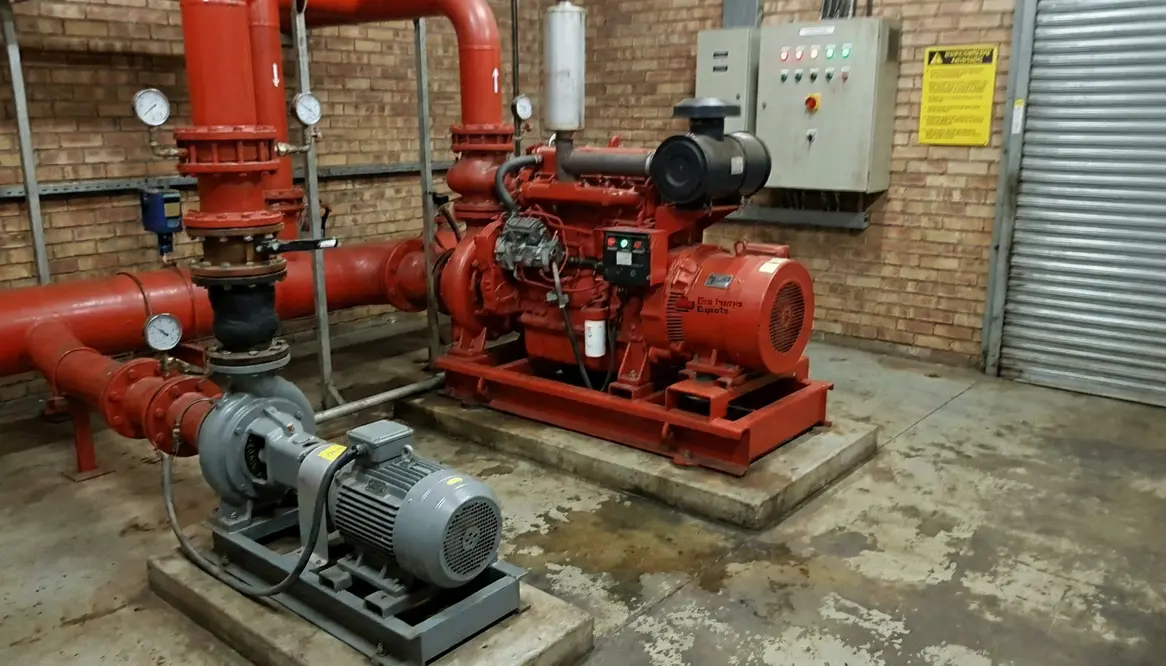
I usually see three main pump options: electric, diesel, and sometimes jockey pumps. Each one has a job. The jockey pump keeps pressure steady in the system. It handles small pressure drops so the main pump does not start for every tiny leak or shift. In short, it keeps the main pump from having a dramatic early entrance.
The main fire pump can run on electricity or diesel. Electric pumps often suit sites with a reliable power supply. They run clean, need less fuel handling, and can be easier to maintain. However, diesel pumps offer a strong backup where power cuts or load issues may affect performance. In many industrial properties, I prefer a setup that gives real resilience, because “the power went out” is never a comforting sentence during a fire event.
Comparing common fire pump choices
| Fire pump type | Best fit |
|---|---|
| Electric pump | Sites with stable power and strong maintenance control |
| Diesel pump | Sites that need backup during power loss or grid risk |
| Jockey pump | Systems that need steady pressure without frequent main pump starts |
Also, the choice should support the full industrial fire plan, not just one part of it. A pump that looks impressive on paper but fails under real demand is about as useful as a paper umbrella in a thunderstorm.
How I check compliance, testing, and installation
Compliance is not just about having equipment on site. It is about proving that the system works the way it should. So, I always focus on installation quality, water source stability, and test records. The fire pump room should stay accessible, dry, and secure. The suction and discharge piping must stay correctly sized, and the pump should sit on a proper base to reduce vibration.
In addition, testing must happen on a regular schedule. This includes flow tests, pressure checks, alarm checks, and start up tests. I also look for signs of wear, corrosion, seal issues, and unusual noise. Small problems often arrive quietly, then grow teeth later.
Specialist support for South Africa industrial facilities
For industrial facilities, I also recommend using a trusted source for design guidance and servicing. For more on commercial and industrial fire pump support, I suggest reviewing industrial fire pump solutions for commercial facilities from a specialist provider such as firepumps.org. That kind of support helps major sites stay focused on uptime, safety, and compliance.
In a South Africa industrial environment, that blend of correct installation, regular testing, and specialist backup is what keeps the system from turning into expensive décor when a real fire starts asking hard questions.
What industrial sites must plan for long term
Fire pump planning does not end once the system is installed. In fact, that is where the real work begins. I always tell clients to plan for the long game, because industrial sites change. Stock grows, machines move, buildings expand, and fire risk shifts with every change in layout.
Long term checks for South Africa industrial fire safety
So, I look at these long term points:
- keep spare parts ready for critical pump components
- train staff on weekly and monthly checks
- review the fire system after site changes
- confirm that the water source still supports the full demand
- maintain clear access to the pump room at all times
Moreover, I suggest a full review after any major upgrade, new building section, or change in stock type. A site that stored light goods last year may now hold higher fire loads. That change can affect pump size, flow, and pressure needs. So, the safest approach is simple: treat the system as a living part of the site, not a box on the wall that only gets attention when someone remembers it exists. In a South Africa industrial operation, that mindset is what keeps yesterday’s design from failing tomorrow’s fire.
FAQ: South Africa fire pump requirements
These are the questions I hear most often when a South Africa industrial site starts getting serious about its fire pump setup.
Conclusion
If I want a South Africa industrial site to stay safe, I do not treat the fire pump as an afterthought. I match the pump to the risk, keep the system compliant, and test it with care. If you manage a factory, warehouse, or major property building, now is the time to review your setup. Speak with a trusted fire pump specialist, check your current system, and make sure your site is ready before an emergency decides to arrive uninvited.