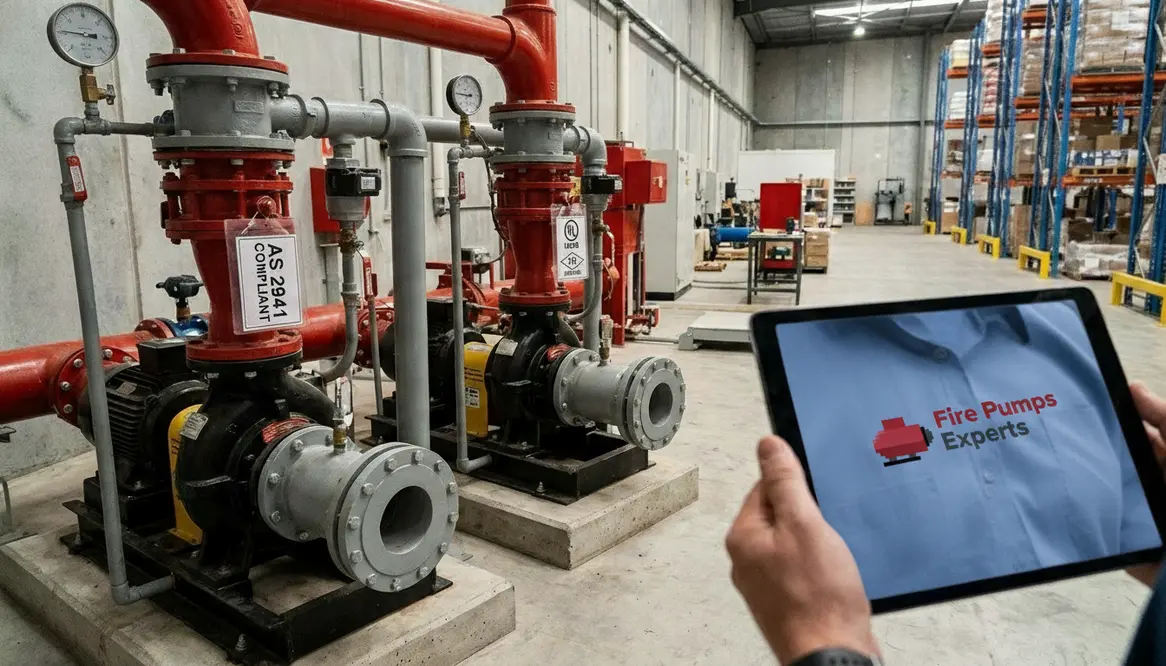
AS 2941 vs UL FM Fire Pump Equipment Guide
AS 2941 vs UL/FM Equipment Requirements is one of those topics that sounds dry at first, until you realize it decides whether a commercial or industrial property gets the right fire protection gear in the first place. I have seen how the wrong spec can slow a project, raise costs, and turn a clean install into a very expensive headache. So, in this guide, I will break down the difference in plain language, with the focus on major properties, warehouses, plants, and other business critical buildings where fire pump choice matters a great deal.
What AS 2941 Means for fire pump equipment
AS 2941 is the Australian standard that sets the rules for fire pump sets used in fire protection systems. In simple terms, it tells me what the pump, driver, controls, fuel system, and related gear must do so the whole unit works as a team. That matters because a fire pump is not just a pump. It is the heart of the system, and if the heart stumbles, the whole system feels it.
AS 2941 focuses on design, performance, installation, and testing for fire pump equipment used in buildings that need dependable water pressure during a fire. It also works closely with local code needs, which makes it a strong fit for projects in Australia. Therefore, when I look at this standard, I think about how the full assembly performs under real site conditions, not just how pretty it looks in a submittal package. The paperwork may be silent, but the fire will not be.
How UL and FM set equipment rules
UL and FM take a different path. These are product certification systems that test and approve specific fire pump components and assemblies. UL looks at safety and performance, while FM evaluates whether the equipment meets strict property protection standards. Together, they give owners and engineers a clear signal that the equipment has passed demanding checks.
In practice, UL/FM listed gear often appears on projects that need a widely recognized mark of approval. That includes large commercial towers, data centers, distribution sites, and heavy industrial buildings. Because these facilities often carry high value and high risk, spec teams want equipment with strong third party backing. I get it. Nobody wants a fire pump that acts like a side character when the plot gets serious.
For a helpful technical reference, I often point people to the commercial fire pump guidance for major properties, since it stays focused on the kind of buildings that need serious protection.
AS 2941 vs UL/FM Equipment in real projects
When I compare AS 2941 vs UL/FM Equipment, I look at project location, code path, and what the client expects from the system. If the building sits in Australia, AS 2941 usually drives the specification. If the project sits in a market that uses UL and FM listed equipment, then those approvals often shape the whole design.
Side by side view
AS 2941: I use this when the project follows Australian fire pump rules and needs full system compliance with local practice.
Main focus: AS 2941 centers on the pump set as installed and tested, while UL/FM focuses on certification of the equipment itself.
UL/FM: I use this when the project needs listed and approved equipment with strong recognition across commercial and industrial sites.
Best fit: AS 2941 suits Australian compliance needs, while UL/FM suits projects where listed equipment is required by code, insurer, or owner standard.
So, the choice is not about which one is “better” in a vacuum. It is about which one matches the site, the code, and the risk. That is where the real work begins, and yes, it is less glamorous than a superhero movie, but far more important when smoke shows up.
What I check before I choose equipment
Before I approve any fire pump equipment, I look at a few key points. First, I check the building use. A high rise office tower does not behave like a warehouse, and a processing plant brings its own fun little surprises. Next, I review the water supply, since pump selection depends on pressure, flow, and site demand. Then I confirm the authority having jurisdiction, because the local rulebook always gets the last laugh.
I also review the driver type, controller layout, tank support, and test setup. In addition, I make sure the equipment matches the maintenance plan. A pump may pass on paper, but if the site team cannot inspect or test it well, the system loses value over time. That is why I treat selection as a full life cycle decision, not a quick purchase.
Finally, I think about spare parts and service access. If the project needs long term support for a major property, I want gear that stays serviceable. A fire pump room should not feel like a secret dungeon from a fantasy series. It should be clear, practical, and ready.
Why the right standard protects major properties
For commercial and industrial facilities, the standard choice shapes more than compliance. It affects insurance confidence, project signoff, and long term system reliability. A strong fire pump setup helps protect people, operations, and assets that can cost millions to replace. Therefore, I never treat standard selection as a box to tick. I treat it as a core protection decision.
AS 2941 vs UL/FM Equipment becomes especially important on complex sites where shutdown time costs real money. In those places, the fire pump must start fast, deliver stable pressure, and stay dependable under stress. That is not the time for guesswork, shortcuts, or wishful thinking. Fire protection is one area where “close enough” belongs nowhere near the final design.
AS 2941 vs UL/FM Equipment in context
Matching standards to project reality
On a typical large warehouse or distribution center, AS 2941 vs UL/FM Equipment usually comes up during early design workshops. The project team wants to know if local Australian rules will be enough or if an insurer will insist on UL/FM listed gear. Getting that answer early avoids redesigns and awkward budget surprises a month before practical completion.
For a data center or heavy industrial plant, the balance shifts again. Here, UL/FM listings can carry serious weight with global insurers, while AS 2941 alignment keeps the hydraulic performance and installation details tuned to local expectations. I have seen projects where both appear in the same discussion: AS 2941 governing the installed performance while UL/FM listings cover critical components. That is another moment where clear coordination with the authority having jurisdiction makes all the difference.
In the end, the AS 2941 vs UL/FM Equipment discussion is really about risk appetite, local law, insurance leverage, and practical maintenance. When those four line up, the fire pump decision becomes straightforward. When they do not, that is when project teams burn time in meetings instead of moving steel onsite.
FAQ
How I help you move forward
If you are planning a commercial or industrial fire protection project, I suggest you start by confirming the governing standard, the site risk, and the approval path. Then I can help you match the right equipment to the building, the water supply, and the compliance needs. That way, you avoid delays, reduce rework, and get a system that does its job without drama. Reach out now, and let us make the fire pump decision clear, simple, and right for your property.