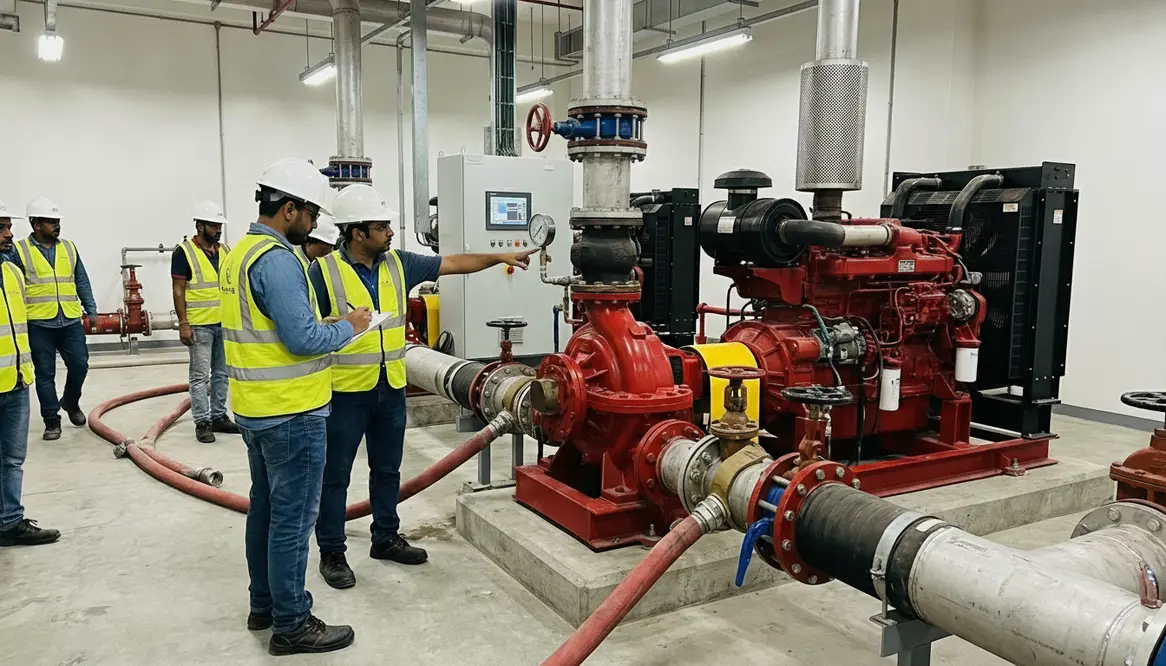
Global Fire Pump Acceptance Testing Requirements
Global Fire Pump Acceptance Testing Requirements Compared
I have seen a lot of fire pump projects, and I can tell you this: Global testing is where the theory meets the real world. On paper, every system looks heroic. In the field, however, a pump has to prove it can protect a commercial tower, an industrial plant, or another major property when the pressure drops and the stakes rise. That is why acceptance testing matters so much. It confirms that the pump, driver, controller, and water supply all work together as one system, not as four separate personalities having a bad day.
Acceptance rules differ by region, code body, and local authority. Still, the goal stays the same. I want the system to perform under real demand, produce the right flow and pressure, and pass the checks that let a facility move from installation to service with confidence. So, let me walk through the key differences and what they mean for large commercial and industrial sites.
What I check before Global testing begins
Before I start any acceptance run, I verify the basics. First, I confirm the installed pump matches the approved submittals. Then I check the driver type, the suction and discharge piping, the controller settings, and the water source. If any of these pieces are off, the test can drift fast. And yes, a missing valve setting can ruin your whole afternoon. Ask anyone who has stared at a gauge while the clock kept moving like a slow movie scene.
I also make sure the site has a clear test plan. That plan should show who will witness the test, which instruments will be used, and what results count as pass or fail. In most cases, the authority having jurisdiction wants proof that the pump can hit rated performance. For commercial and industrial properties, I also look for safe discharge routing and enough water supply to avoid false failures caused by weak site setup rather than weak equipment.
How different regions compare on acceptance rules
The broad framework often comes from NFPA based systems, but local rules can sharpen or change the details. In many projects, the test includes no flow, rated flow, and overload or churn checks. In some regions, the authority wants more witness points, more documentation, or a stricter report format. Meanwhile, other areas allow some flexibility if the installer proves the setup follows the approved standard.
Here is the simple truth. The code may say the same thing in different accents, but the field process can still feel like three different shows. One country may stress pump curve verification. Another may focus hard on driver performance or electrical supply quality. Some regions also ask for more formal calibration records for pressure gauges, flow meters, and tachometers. Because of that, I never assume one test package fits every project.
Comparing common acceptance themes across regions
| Area of focus | Common approach | What I watch for |
|---|---|---|
| Flow verification | Rated and demand points | Pump curve match and stable pressure |
| Driver checks | Diesel or electric start and run | Startup time, voltage, fuel, or cooling |
| Documentation | Witnessed forms and calibration data | Clean records and signed results |
| Local authority review | Preapproval or final signoff | Any special regional demand |
How I handle flow, pressure, and driver checks
The heart of any acceptance test is performance. I want to see how the pump behaves at no flow, at rated flow, and at peak demand. That shows me whether the pump can hold pressure and deliver the needed water volume. If the curve wobbles too much, I investigate the pump selection, suction conditions, or piping losses. No one enjoys that part, but it beats discovering the problem during an actual fire, which is a terrible time for surprises.
For electric fire pumps, I check the controller start, voltage drop, and motor run conditions. For diesel units, I look at battery health, fuel supply, cooling water, and engine speed. The test should show smooth startup and steady operation. I also watch for suction issues like cavitation, because a pump that sounds like it is chewing gravel is usually telling me something important.
The pressure readings need context. A good test does not just collect numbers. It explains them. I compare measured values against the approved curve and the project design. Then I confirm the pump supports the building’s risk profile, whether that site is a data center, warehouse, refinery, high rise, or other major property where service interruption can cost real money fast.
In complex sites or those driven by rigorous Global testing programs, I also compare results across sister facilities. When the same owner has multiple campuses, contrasting curves, driver behavior, and outage histories can reveal patterns that were never caught in design meetings.
What documentation proves a passing test
Even the best test means little without clean records. I want a report that shows the equipment data, serial numbers, calibration dates, witness names, test conditions, and final readings. I also want the reason behind any deviation. If a reading lands outside the target range, the report should explain why and how the team corrected it. Otherwise, the file starts to look like a mystery episode with no final scene.
Strong documentation also helps future maintenance teams. Months later, when someone asks why the discharge pressure sat a little low at one point, the report should answer that question in plain language. That is why clear records matter for acceptance testing across global projects. They create a paper trail that supports compliance, ownership, and long term reliability.
Owners who invest in repeatable Global testing templates, consistent data fields, and a single repository for reports tend to avoid the “lost binder” problem. When you can pull up a five-year history from a single screen, discussions with insurers, auditors, and authorities become much easier.
FAQ
Why I recommend a careful acceptance plan
When I compare global acceptance requirements, I see one clear pattern. The sites that plan well pass with less stress, fewer delays, and better results. So, if your commercial or industrial property needs fire pump acceptance testing, I recommend building the process early, confirming the local code path, and working with people who know how to document every step. If you want confidence at the finish line, start with a test plan that treats the pump like what it is: a critical asset, not a box to check.
That planning should reach beyond a single building. Large portfolios, especially those with campuses on multiple continents, benefit from harmonized Global testing standards, shared templates, and a central library of results. The more consistent the process, the easier it becomes to spot weak spots, justify upgrades, and negotiate with insurers who care deeply about how those pumps behave when they are needed most.
Acceptance testing is the one moment when theory, drawings, and equipment all meet live water. If that moment is rushed, under-planned, or poorly documented, you lose an opportunity you cannot easily repeat without disrupting operations. A thoughtful plan, clear roles, and disciplined follow-through turn that single event into a long-term asset for safety, uptime, and risk management.