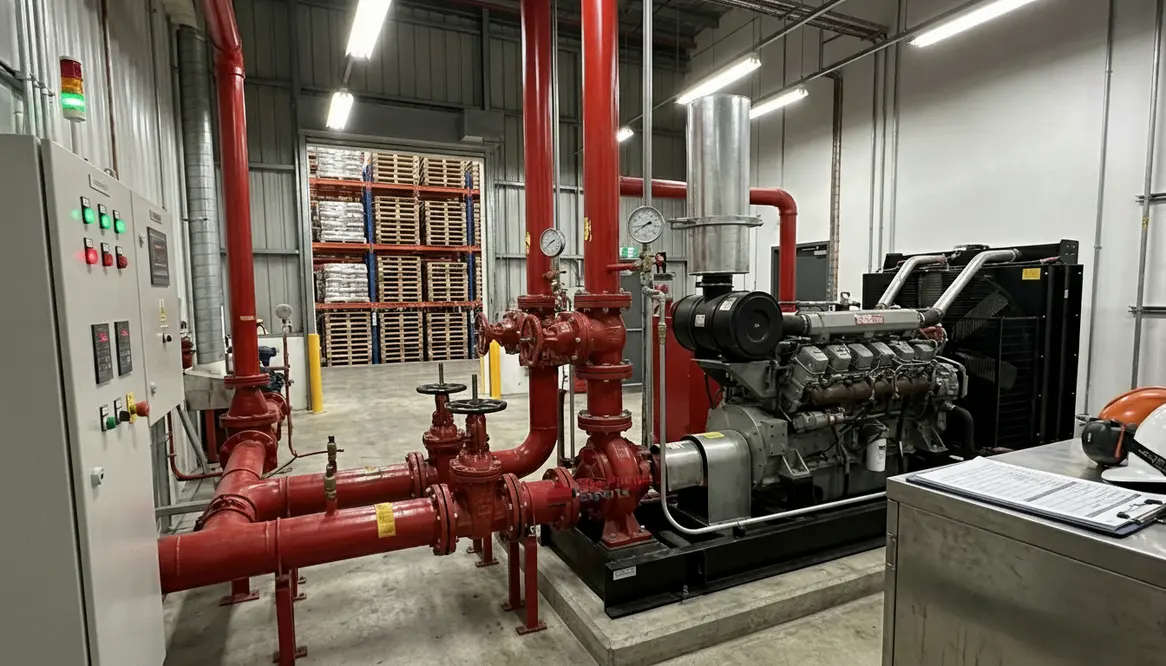
Fire Pump Standards for International Warehouses
Fire Pump Standards for International Warehouses do not sit in the background like some dusty rulebook on a shelf. They shape how I protect large commercial and industrial properties when fire risk rises fast and pressure drops low. In an international warehouse, that matters more than most people think. One weak link in the fire pump system can turn a routine inspection into a very expensive bad day, and nobody wants their warehouse starring in that episode.
How I read fire pump standards for global warehouse sites
When I review fire pump standards for international warehouses, I start with one simple idea: the system must work in the real world, not just on paper. Because warehouses vary by country, climate, and building code, I always check the local rules first. Then I compare them with the project design, water source, and fire load.
In practice, I look at pump type, tank supply, power source, and required flow. I also check whether the warehouse stores normal goods, high rack inventory, flammable materials, or temperature sensitive products. Each one changes the risk profile. And yes, that can feel a bit like assembling a global puzzle while blindfolded, but the pieces do fit when the process stays disciplined.
I also pay close attention to the accepted standard in the region. Many projects follow NFPA guidance, while others align with local codes or insurer demands. So I never assume one rule set covers every site. Instead, I map the warehouse needs against the code path that applies to that country and building type.
Why this matters for global warehouses
International warehouses stretch across massive footprints, stack products high, and rely on fast-moving logistics. Fire pump standards are the quiet framework that decide whether a sprinkler system can keep up with a fast-growing fire, or watches from the sidelines while pressure collapses.
Across borders, those standards vary, but the goal stays the same: consistent pressure, reliable flow, and a pump that actually performs when the alarm panel stops blinking and starts screaming.
What I check in the design phase
I treat the design phase as the place where most expensive mistakes are born. That is why I focus on early checks before equipment arrives. If I catch a mismatch here, I save time, money, and a lot of head shaking later.
Here is the short list I use:
Design items
- Water supply
- Pump type
- Driver power
- Room layout
What I verify
- Enough volume and pressure for the required demand
- Electric, diesel, or both, based on site reliability
- Stable utility feed or backup fuel plan
- Safe access, ventilation, drainage, and clear service space
I also check the pump curve against the actual warehouse demand. If the system cannot deliver the needed pressure at the right flow, the design fails before the first alarm sounds. In addition, I review suction conditions and pipe size because poor hydraulic design can choke performance. That is the kind of problem that sneaks in quietly and leaves loudly.
For international warehouses, I also plan for local climate. Cold regions may need freeze protection. Hot regions may need extra cooling and careful room design. Therefore, a pump package that works in one country may need changes in another. The steel may be the same, but the environment is not playing the same game.
How I match local code with site reality
Codes set the floor, not the ceiling. That is why I do not stop at compliance alone. I ask whether the system can survive real use, real maintenance, and real stress. Because a warehouse fire does not care about pretty drawings. It cares about speed, water, and reliability.
I also make sure the site team understands which standard governs the project. Sometimes the local authority approves one path, while the insurer asks for another layer of review. So I work through both early. That keeps the project from turning into a season finale of confusion.
One useful reference point is fire pump solutions for commercial and industrial facilities, which helps align system planning with large property needs. I use that kind of resource to keep the focus on major buildings, not small scale spaces that play by different rules.
After that, I verify testing needs. A warehouse pump must be ready for periodic flow tests, alarm checks, and inspection access. If the test setup is awkward, teams delay it. Then the system drifts. And once drift starts, trouble usually follows with a clipboard and a very serious face.
Why maintenance keeps the standard alive
A fire pump is not a one time win. It needs care. I always remind teams that standards only work when maintenance supports them. If a pump sits ignored, the best design in the world becomes a very expensive sculpture.
I look for simple maintenance habits that keep the system strong:
- Test the pump on a set schedule
- Check diesel fuel, batteries, and controller health
- Inspect valves, gauges, and suction lines
- Keep the room clean, dry, and easy to access
- Record every fault, repair, and test result
In international warehouses, service teams may change from site to site. So I want clear logs and clear labels. That way, a new technician does not walk in like a guest star and spend an hour asking where everything is. Good records also help with audits, insurance reviews, and future upgrades.
I also push for spare parts planning. Remote sites often wait too long for replacements, which slows repairs. Therefore, I prefer a basic stock of critical parts on hand. It is boring until the day it saves the day. Then it looks genius.
How fire pump standards protect real warehouses
From standards to decisions
In practice, fire pump standards guide thousands of tiny decisions: pipe diameter, controller settings, test header layout, tank sizing, and driver selection. Every one of those choices either helps or hurts your chance of holding pressure when sprinklers open across long warehouse aisles.
Global consistency, local reality
The best results come when I use fire pump standards as a common language across regions, then adapt details to match each site. That way, a corporate safety manager in one country can understand the logic behind a warehouse upgrade on the other side of the world, even though the local code books are different.
FAQ
My final take on keeping warehouses ready
I see fire pump standards as a protection plan, not a paper trail. If I match the code, the site risk, and the maintenance plan from the start, I give the warehouse a far better chance under pressure. So I always recommend a full review before design lock, before purchase, and before startup. If you manage a major warehouse or industrial property, now is the time to check your system, close the gaps, and make sure your protection is ready when it matters most.