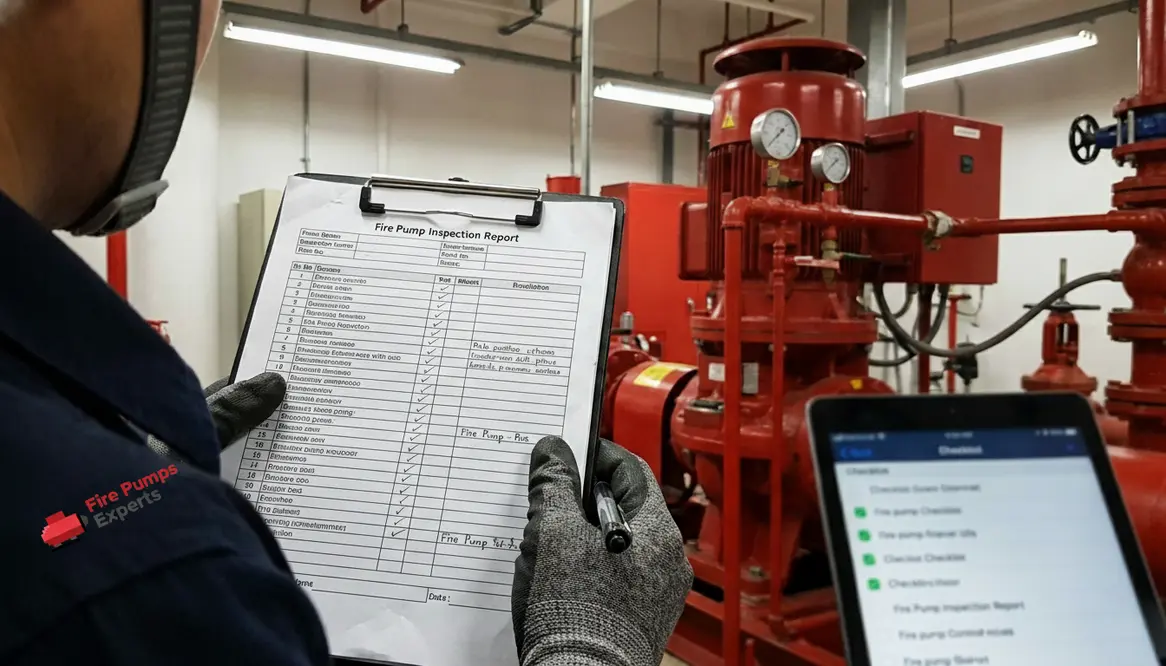
Fire Pump Inspection Reports Across Global Fire Codes
When I look at fire pump inspection reports, I do not see paperwork. I see proof. I see whether a commercial tower, an industrial plant, or a major property building can count on its fire protection system when things go sideways fast. And yes, the rules change from place to place. NFPA 25, local authority requirements, and other fire pump codes all shape how teams inspect, record, and verify performance. That means the report must do more than sit in a folder like a forgotten prop from a bad office drama. It has to show compliance, reveal risk, and guide action.
In this article, I explain how fire pump inspection reports work across global fire codes, what they should include, and how facility teams can use them to stay ready. I focus on commercial and industrial facilities, because that is where the stakes tend to be big, the systems complex, and the paperwork very much not optional.
What fire pump inspection reports must prove
A strong inspection report proves three things. First, the fire pump starts when called. Second, it performs within the expected range. Third, it stays ready between test cycles. That sounds simple, but the details matter. A report should show the pump condition, pressure readings, controller status, suction source, and any signs of wear, leaks, noise, or vibration.
Most global codes ask for a clear record of weekly, monthly, or annual checks, depending on the system and region. However, the exact form can change. Some jurisdictions want more detail on test flow, while others care deeply about remote alarms, power supply, or room condition. I always tell teams this: if the report reads like a mystery novel, it fails. If it reads like a clean status log, it earns trust.
How global fire codes shape the report
Global fire codes do not all sing the same tune, but they do share the same goal. They want fire pumps to work under pressure, literally and legally. In North America, NFPA based practices often drive report structure. In other regions, local building rules, insurance standards, and national fire laws may lead the process. Still, the report usually needs the same core facts.
Here is the part many teams miss. The code does not only ask, “Did the pump run?” It also asks, “Did it run correctly, and can you prove it?” That is where good documentation saves the day. A solid report helps facility managers, fire protection contractors, and engineers speak the same language across sites and borders, even as they navigate different fire pump codes in each jurisdiction.
What I include in a high quality report
When I build or review a fire pump inspection report, I look for the details that matter most. These details help the report move from basic paperwork to real compliance support and make it easier to prove alignment with the right fire pump codes.
Report essentials
- Facility name and exact pump location
- Date, time, and inspector name
- Pump type, driver type, and controller model
- Suction and discharge pressure readings
- Weekly or monthly test results
- Diesel fuel or electric supply status
- Jockey pump condition, when present
- Valve position and visible leak check
- Alarm, signal, and transfer test results
- Corrective actions and follow up dates
Moreover, the report should note anything unusual, even if it seems small. A minor leak today can become a full system problem tomorrow. And no one wants to explain that to a regulator with a straight face.
Dual view of a report that works
Below is a simple way I think about an effective report. One side is what the code wants. The other side is what the facility team needs.
Code view
- Clear proof of inspection
- Measured results
- Record of compliance issues
- Signed and dated entries
Operations view
- Fast understanding of pump health
- Easy tracking of repairs
- Better planning for shutdowns
- Fewer surprises during audits
This dual view matters because a report that only satisfies the code can still fail the facility. Likewise, a report that looks neat but lacks facts can cause trouble later. Balance wins.
How I handle differences between regions
Across global fire codes, the biggest challenge is not the pump. It is the paperwork language around the pump. Some sites need metric readings, while others use imperial units. Some regions demand more frequent checks on diesel systems. Others place more weight on water supply stability or seasonal conditions. So, I always start with the local rule set, then I align the report template to match it.
For multinational owners, consistency helps. A central reporting format can work if it allows local code differences. That way, the headquarters team can compare sites without making the local inspector feel like they are solving a puzzle from a sci fi movie. I have found that the best reports stay simple, but never shallow. The best templates adapt to different fire pump codes without forcing every site into an awkward one size fits all mold.
Why digital reports make compliance easier
Digital fire pump reports cut down on lost pages, unread handwriting, and copy paste errors that make everyone sigh in unison. They also help teams track trends over time. If discharge pressure drifts month after month, software can flag it before a failure turns into a crisis.
In addition, digital systems make it easier to store photos, notes, and repair records in one place. That matters during audits, insurance reviews, and internal inspections. For large commercial and industrial properties, this can save serious time. And time, as every facility manager knows, disappears faster than coffee in a Monday meeting.
Modern software platforms, including resources linked from https://firepumps.org, can also embed the expectations of major fire pump codes directly into forms and checklists, so the inspector is guided step by step instead of guessing what a regulator might ask about later.
FAQ
Conclusion
If I want a fire pump inspection report to do real work, I make it clear, complete, and tied to the right code. That is the difference between a file and a safeguard. For commercial and industrial facilities, strong reporting supports compliance and protects critical property assets. If your current process feels messy, now is the time to tighten it up, improve your templates, and build a report system that works when it matters most.