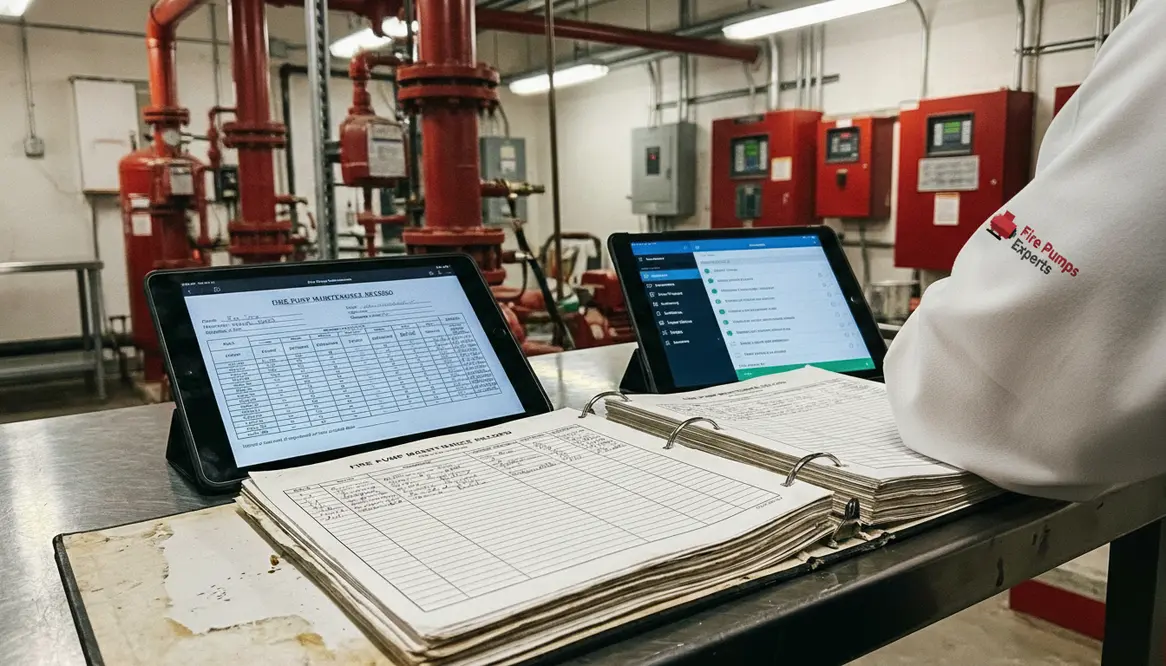
Fire Pump Maintenance Records Across Global Standards
I treat fire pump maintenance records like the quiet backbone of life safety. They do not shout for attention, yet they carry the proof that a commercial or industrial system will work when the heat rises and the pressure drops. In my world, fire pump standards guide more than the equipment itself. They guide the paper trail, the test logs, the service notes, and the audit history that keep a major property defensible and ready. If a pump fails and no record exists, that is not a mystery. That is a headache wearing a suit.
Because facilities span borders, I also see record keeping shaped by different rules. Still, the goal stays the same: show that the pump passed inspection, got tested on time, and received the right care. So, let me walk through how I manage these records across global standards, and why good documentation can save time, money, and a very awkward meeting with the authority having jurisdiction.
What I record in a fire pump maintenance log
I start with the basics, then I go deeper. A strong log does more than say “checked and fine.” It captures proof. I include the date, location, equipment ID, pump type, driver type, test method, suction and discharge pressure, churn results, inspector name, and any defect found. I also add corrective action, parts replaced, and the date of close out.
For commercial and industrial sites, that detail matters. A hospital, warehouse, data center, or high rise cannot afford loose notes. Instead, the record needs to tell a full story. If a belt slipped, a valve stuck, or a controller showed an alarm, I want that in writing. Then I want the follow up too. No drama, just facts. Think of it as the fire protection version of “trust, but verify.”
How global fire pump standards shape the record trail
Different regions ask for different formats, but the core record set stays similar. I usually see alignment around inspection frequency, weekly or monthly checks, annual flow testing, and service reports after repairs. However, the exact fields, retention period, and sign off rules can vary by country, code family, and insurer request.
Here is how I keep the record trail clean across regions:
North America
I track routine inspections, annual test data, and service notes with strong detail for compliance reviews. The log follows fire pump standards used by codes, insurance carriers, and large property managers so an auditor can trace work from first installation through every major repair.
Europe and the UK
I make sure the log matches local fire safety rules, site procedures, and inspection certificates. That means aligning language with local terminology, capturing witness signatures when required, and linking pump test sheets to broader building safety files.
Middle East and Asia Pacific
I keep records tight, bilingual when needed, and aligned with project, insurer, and local authority needs. Large campuses often run multiple pump rooms, so I tag each pump clearly and maintain a simple index that lets anyone find test data in seconds.
Even when the forms differ, the purpose never changes. The record must prove the system stayed ready. That is where solid fire pump standards help me build a file that travels well from one jurisdiction to another. And yes, the paperwork may feel less exciting than a superhero sequel, but it protects the building just the same.
Why digital records help me stay audit ready
I prefer digital records for most major properties because they speed up access and reduce missing paperwork. A cloud based system lets me pull up test history during an audit, an insurer review, or a repair visit. As a result, I spend less time hunting folders and more time fixing real issues.
Digital tools also help me spot patterns. For example, if a pump loses pressure every third test, I can see the trend fast. Then I can act before the problem grows teeth. That matters in plants, towers, logistics hubs, and other large facilities where downtime costs real money.
Still, I keep backups. Systems fail. People forget passwords. Servers have bad days too. So I store copies in more than one place and make sure the file names stay clear. A good record system should feel boring in the best way possible. Boring means stable. Stable means ready.
How I build records that pass audits
I build every file with the audit in mind, even on day one. First, I use a standard form for every site so the team knows what to expect. Then, I train staff to write clear notes, not vague lines like “ok” or “fixed.” I want a reviewer to understand the issue without calling for a detective.
Five questions every record should answer
- What was inspected?
- What was measured?
- What failed or changed?
- What action did we take?
- Who approved the close out?
That structure helps me stay consistent across sites and countries. It also makes handoffs easier when a new contractor steps in. No one enjoys reading old notes that look like a lost text thread from 2011.
Why fire pump standards protect commercial and industrial properties
I work only with commercial and industrial facilities and major properties because those sites face real risk and real scale. A weak record at a small level can grow into a serious gap at a large one. That is why I treat documentation as part of the protection system, not an afterthought.
When records stay current, owners can prove compliance, show due care, and support maintenance budgets with facts. Moreover, they can respond faster after a fault, a storm, or a redesign. Strong records also support insurance claims and reduce argument. Nobody wants a premium surprise dressed up as a compliance issue.
If you want a deeper reference point, I recommend the fire pump compliance resource for commercial facilities as a useful starting place for major properties that need clear, practical guidance.
In practice, the stronger your alignment with fire pump standards, the easier it becomes to explain maintenance decisions, defend upgrade projects, and justify timelines for replacements. Records stop being a dusty archive and start acting like a living map of how the system has been cared for.
Practical tips for stronger maintenance logs
Standardize the format
Pick one core template that reflects fire pump standards used across your portfolio, then adapt only what local rules truly require. The less variation in layout, the easier it is for technicians and auditors to read the story behind every pump.
Capture context, not just numbers
If suction pressure looks low, add a short note about site conditions, recent work on the water supply, or weather events. Those small comments can explain trends years later and keep a minor anomaly from turning into a full scale investigation.
Link records to action
Every defect should trigger a clear follow up note: what was done, when it was done, and who signed off. When fire pump standards call for corrective timelines, that link between issue and action becomes your best defense in an audit or claim review.
FAQ
Conclusion
I see strong maintenance records as the quiet advantage behind reliable fire protection. If you manage a commercial or industrial property, now is the time to tighten your logs, standardize your forms, and check that every test tells a clear story. Good records do not just satisfy an audit. They support safety, reduce risk, and protect the building when it matters most. If you need help aligning your file system with real world compliance, take action today and build it right.