Fire Pump Design Mistakes in Global Codes
Why the same fire pump design errors keep repeating around the world, even when the drawings say “compliant.”
Fire Pump Design Mistakes Across Global Codes
I have seen a lot of fire pump rooms in my time, and I can tell you this: the same mistakes show up again and again, no matter which country draws the line on the code book. Whether a project follows NFPA 20, EN 12845, or local fire pump codes, the trouble usually starts the same way. Someone rushes the design, someone else assumes the rules match everywhere, and then the system lands in a commercial tower or industrial plant like a bad sequel nobody asked for. In major properties, that can mean delay, extra cost, or a system that looks fine on paper but behaves like a sleepy extra in a disaster.
So I want to walk through the most common fire pump design mistakes across global codes, and I want to do it in plain language. If you manage a commercial facility, an industrial site, or a large building, this matters more than a shiny pump datasheet. The code is only the start. The real work begins when the design meets the building.
Why fire pump codes do not save a weak design
Here is the first trap. People think code compliance means good design. It does not. It only means the drawing cleared the minimum bar. A design can follow fire pump codes and still fail in the field if the water supply, layout, or power source does not fit the site.
In global projects, I often see teams copy one region’s habits into another region’s rules. That sounds efficient, until it is not. For example, a pump room that works in one market may fail in another because the suction conditions, test arrangement, or controller setup differ. Also, some codes focus more on performance, while others lean harder on equipment layout and installation details. If you ignore that gap, the system may pass review and still struggle when the alarm sounds. And nobody wants that kind of surprise during an emergency. That is not a plot twist. That is a problem.
Code books vs. real buildings
The more projects I see, the more obvious it becomes: any set of fire pump codes is only a framework. Real performance depends on how honestly the designer treats the actual building. A high-rise office, a refinery, and a logistics warehouse can all “meet the same clause” and still need very different pump solutions.
If the team is chasing quick approval instead of real reliability, weak assumptions slide straight through to construction. The problems show up later, during the first serious test or during the worst possible moment.
Common design mistakes in commercial and industrial facilities
I keep seeing the same weak spots in large properties, and most of them are preventable.
- Poor water supply checks: Designers assume the source is enough, but they do not verify flow, pressure, seasonal change, or future demand. A pump cannot invent water. Even the best one cannot pull a miracle out of a dry main.
- Wrong pump sizing: Some systems oversize the pump because bigger feels safer. In reality, that can create poor performance, excess wear, and bad pressure control.
- Bad suction piping: Shortcuts here cause air pockets, cavitation, and unstable flow. The pump then sounds like it is auditioning for a horror movie.
- Weak power planning: Designers forget backup power, controller space, or voltage limits. As a result, the pump room becomes a very expensive closet.
- No room for testing and maintenance: If the crew cannot inspect, test, or repair the pump easily, the system loses value fast.
These mistakes do not stay small. They spread into approvals, installation delays, and long term reliability issues. Therefore, I always push teams to treat pump design as a full system task, not a parts list.
Where fire pump codes fit into these mistakes
Every one of these problems can occur in a system that technically satisfies fire pump codes. The documents might look perfect, the data sheet might be stamped, and yet the water supply might be fragile, suction piping might be awkward, and the power source might be wishful thinking. That is why treating the code as the finish line is such a bad habit.
How I compare global code differences before design starts
When I review a project, I start by comparing the rules that apply to the site. This step saves time later, because the differences between fire pump codes can shape nearly every design choice. I check the required duty point, driver type, test setup, redundancy needs, and room access. Then I look at the building use, the fire risk, and the water source. That sequence matters.
To make it simple, I use a quick side by side view:
| Code focus | Design risk if ignored |
|---|---|
| Water supply verification | Pump may not meet actual demand |
| Driver and power rules | Failure during outage or peak load |
| Test and inspection access | Hard maintenance and weak reliability |
| Room layout needs | Noncompliance and slow response |
This kind of review helps me spot gaps early. Also, it keeps the design honest. A good fire pump system should not only meet code. It should fit the building, the operators, and the real world. That is the part that too many teams skip while chasing deadlines and coffee.
Using global experience without copying lazy details
Global experience is useful only when it is filtered. A pump room that worked in a cool climate with a deep city main may stumble badly in a region with shallow pipes, hot weather, and patchy power. The trick is to keep the lessons and leave the shortcuts behind. That is how you respect both the spirit and the letter of the fire pump codes that apply to the project.
What I check in the pump room layout
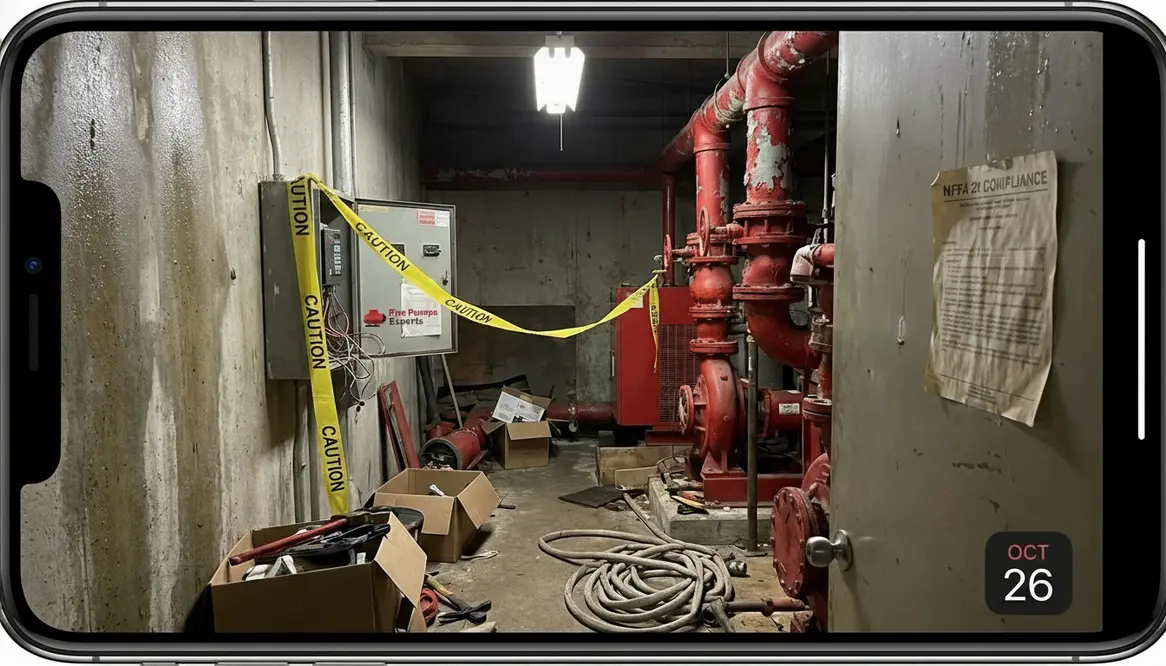
The pump room often tells the truth that the drawings hide. If the room is cramped, poorly lit, or hard to access, the whole system suffers. I always check clearances, valve placement, controller access, ventilation, drainage, and the path for maintenance work. Then I ask one simple question: can a technician work here without wrestling the room like it owes money?
In many commercial and industrial facilities, the layout mistake comes from treating the pump room as leftover space. However, fire protection needs clean access and safe operation. If the room sits too far from service routes or lacks proper drain control, even routine testing becomes a headache. And when the system needs fast attention, small design flaws suddenly look huge.
Layout choices that quietly break performance
- Valves buried behind piping runs that nobody can safely reach during a real emergency
- Test headers in locations that make realistic flow tests nearly impossible
- Drain paths that soak the room or the corridor instead of moving water to a controlled point
- Controllers squeezed into corners where heat builds up and access is painful
None of these details are glamorous, but they are exactly where strong fire pump codes intersect with professional judgment.
Why local review still matters in global projects
Even when a project uses recognized fire pump codes, local review still matters. National rules, utility limits, climate, and authority expectations can change the final design. Also, industrial facilities often have special hazards, while major property buildings may have tight space, complex power systems, or mixed occupancies. Those details shape the pump solution.
I have learned that the smartest teams do not argue with the local authority. They prepare for it. They document the water supply, explain the pump selection, and show how the system supports the building risk. That approach saves time and reduces redesign loops. It also builds trust, which is useful because no one enjoys a long approval process. That road is already long enough.
Blending global standards with local reality
The best projects treat the code set as a shared language and the local rules as the accent that makes it understandable. That mindset is what keeps a system that follows fire pump codes from turning into a paper exercise. It is also how you avoid painful retrofits just to satisfy a detail that could have been handled in the first design meeting.
FAQ about fire pump design mistakes
Conclusion
I treat fire pump design like a serious promise, not a box to check. If you want a system that performs across global codes and still fits a commercial or industrial facility, you need early review, careful coordination, and the right local guidance. That is where real reliability begins. If your project needs a sharper look at fire pump compliance, reach out now and get the design checked before the mistakes get expensive.
For deeper material on water supplies, layout practices, and fire pump codes in different regions, you can always start with resources such as https://firepumps.org and then match that knowledge to the realities of your own site and authority requirements.