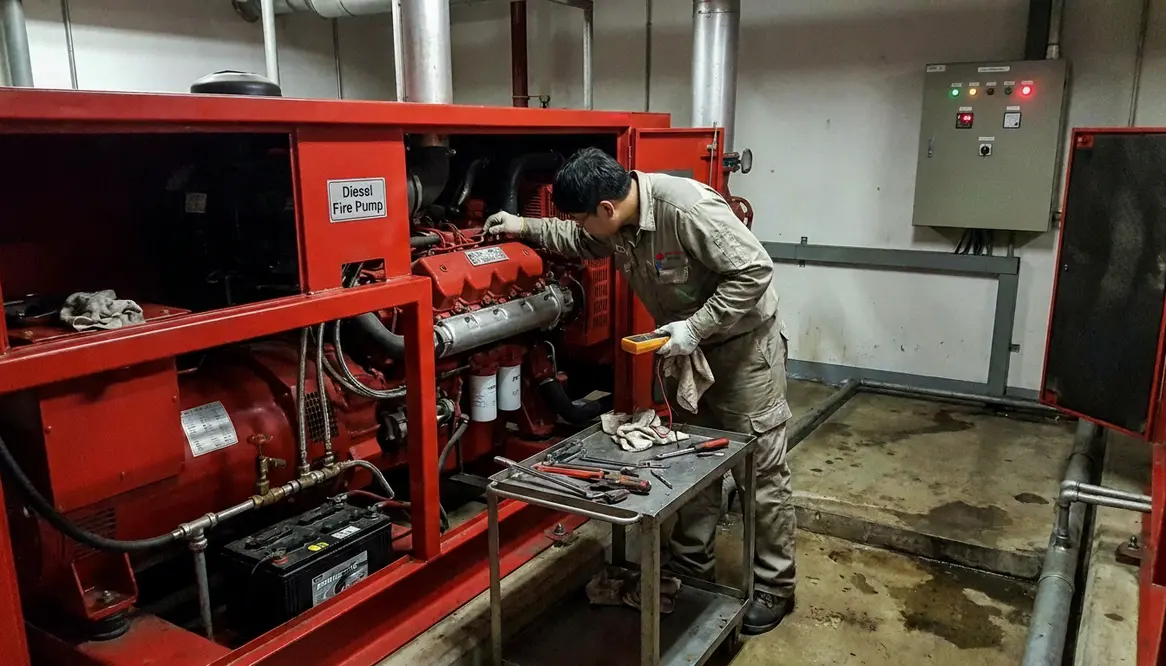
Diesel Fire Pump Won’t Start Quick Troubleshooting Guide
Quick Reality Check
When a diesel fire pump cranks but stays silent, I do not panic. I slow down, listen, and work the problem step by step. That is the heart of smart fire pump troubleshooting.
What This Usually Means
A fire pump won’t start issue can come from fuel, air, battery power, controls, or even a small fault that hides like a villain in a low budget sequel.
Keep It Methodical
I start with the basics, then move into deeper checks until I find the real cause, because a pump that only cranks is not doing its job.
Diesel Fire Pump Cranks but Will Not Start: What I Check First
When a diesel fire pump cranks but stays silent, I do not panic. I slow down, listen, and work the problem step by step. That is the heart of smart fire pump troubleshooting. A fire pump won’t start issue can come from fuel, air, battery power, controls, or even a small fault that hides like a villain in a low budget sequel. In a commercial or industrial facility, that matters a great deal, because a pump that only cranks is not doing its job. So I start with the basics, then move into deeper checks until I find the real cause.
First, I confirm the unit has fuel, proper battery charge, and no active shutdown alarm. Then I inspect the start system, the fuel path, and the engine health. After that, I verify that the pump area meets the needs of the building and the fire protection plan. For more context on system setup, I often refer to los angeles fire pump service guidance and related electrical support for fire systems when the issue may involve power or controls.
Check Fuel and Battery Power First
I always begin here because these two causes show up often. If the fuel tank is low, old, or contaminated, the engine may crank well and still refuse to fire. Diesel can collect water over time, and water in the fuel line can stop ignition fast. I also check the fuel shutoff valve, filters, and any sign of air in the line. If the filter looks clogged, I replace it before I waste time chasing ghosts.
Next, I test the batteries. A diesel engine needs strong battery voltage to turn fast enough for start up. If the batteries look charged but drop hard under load, they may still fail. I inspect cable ends, ground points, and corrosion. Then I confirm the charger works. A weak charger is sneaky. It smiles at you, then quietly ruins your day at 2 a.m.
Quick checks I make right away
Fuel system
Fuel level, water in fuel, filter condition, shutoff position, air leaks
Battery system
Voltage, cable tightness, corrosion, charger output, ground connection
Why the Engine Cranks but Does Not Catch
Once fuel and power look good, I move deeper. If the engine cranks, that tells me the starter circuit likely works. However, it does not prove the engine can ignite. I then look at the fuel injection side. Injector issues, fuel pump faults, or air trapped in the lines can stop combustion. In cold spaces, thick fuel can also make starting harder, especially if the fuel has aged.
I also listen closely. A fast crank with no hint of firing usually points to fuel delivery or loss of compression. A slow, uneven crank may point back to the batteries or starter. So I do not guess. I let the sound guide me. That is one reason I keep my process calm and steady. It saves time, and it keeps the repair from turning into a live action mess with no hero.
Smart Fire Pump Troubleshooting in the Control Panel
The control panel can tell me a lot, but only if I read it with care. I check for shutdown lights, alarm codes, and any manual versus automatic mode issues. Some systems stop because a sensor sends a false signal. Others fail because the controller sees low oil pressure, high engine temperature, or another lockout condition. If the panel says the pump should not start, then the engine is usually obeying orders, even if those orders are wrong.
I also verify that the start signal reaches the unit from the pressure switch or controller logic. In commercial and industrial buildings, this matters because a weak signal or wiring fault can stop the pump from starting when demand rises. If I suspect control trouble, I review wiring, relay action, and the electric support side with help from fire system electrical service resources.
What I Inspect on the Engine Itself
After the support systems check out, I inspect the engine hardware. I look for clogged air filters, stuck fuel parts, worn starter gear, and signs of poor compression. I also check the exhaust path. A blocked exhaust can make the engine struggle, and sometimes it will not start at all. Then I inspect belts, seals, and visible leaks. If oil or fuel is leaking, I want to know why before I restart anything.
Here is where patience pays off. A diesel fire pump does not always fail for one big reason. Sometimes three small issues line up like a bad chorus. One weak battery, one dirty filter, and one air leak can create the same result as a major fault. That is why I keep testing until I find the real source.
When to Call for Service on a Commercial System
If I still cannot get the unit to start, I call in service support fast. Commercial and industrial fire protection equipment must stay ready. A building with a failed pump has a bigger problem than a repair bill. It has a safety gap. I also bring in service when I see repeated no start events, unexplained alarms, fuel contamination, or control faults that keep coming back. In those cases, deeper inspection and proper testing protect the property and the people inside it.
I also review system care plans and parts support. For facility managers who want a wider view of protection options, I point them to sprinkler and fire protection service details as part of a full fire safety program.
FAQ
Why does my diesel fire pump crank but not start?
Usually fuel, battery power, air in the fuel line, or a control lockout.
What is the first thing I should check?
I check fuel level, battery charge, and any alarm on the control panel.
Can a weak battery cause a no start condition?
Yes. The engine may crank, but not fast enough to start.
Does the panel stop the pump from starting?
Yes. A shutdown signal or fault can block the start command.
Should I keep trying to start it?
No. Repeated cranking can drain batteries and hide the real fault.
How often should I inspect a diesel fire pump?
I inspect it on a routine schedule set for the building and system code.
Final Thought and Next Step
If your diesel fire pump cranks but will not start, I recommend a calm, methodical inspection right away. Start with fuel, batteries, and the control panel, then move into the engine and wiring. In a commercial or industrial facility, every minute matters. If the issue stays hidden, bring in qualified service before a small fault becomes a serious one. I can help you keep the system ready, steady, and built for the moment it is truly needed.