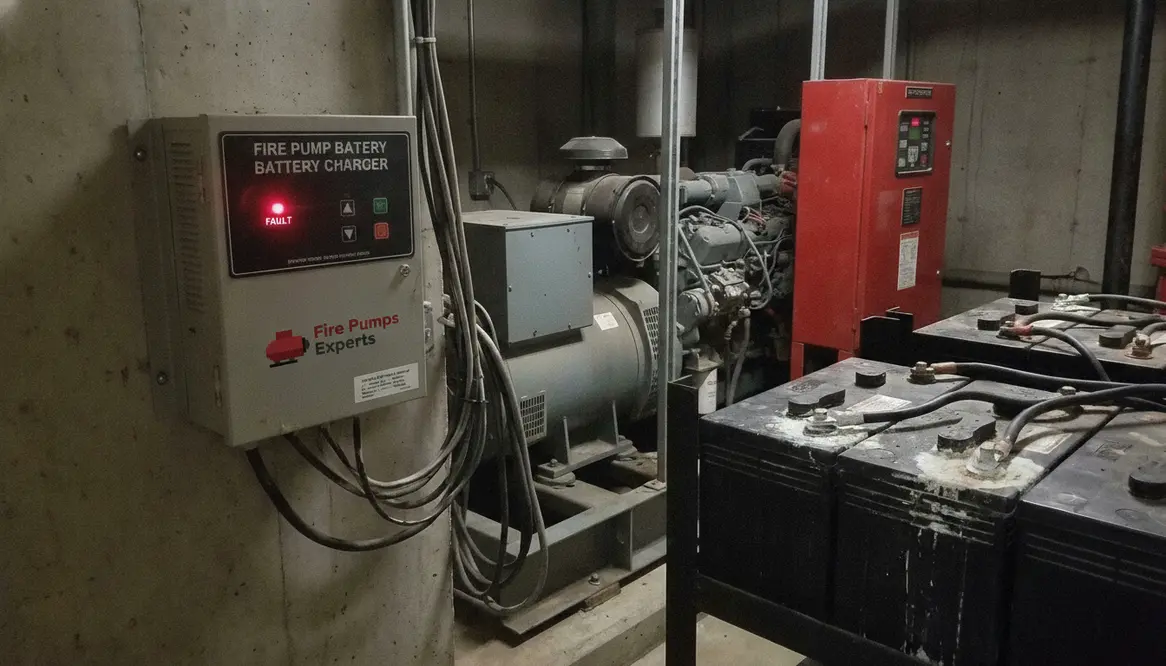
Fire Pump Battery Charger Failure Warning Signs
Fire Pump Battery Charger Failure: Warning Signs
I have seen how a small charger problem can turn into a big fire protection risk. In a commercial tower, warehouse, or industrial plant, the fire pump battery charger keeps the system ready when the power goes out. It supports the diesel fire pump battery, helps the fire pump controller stay reliable, and keeps the whole setup alert. If that charger starts to slip, the system may still look fine on the surface. However, like a tired actor still smiling for the camera, it may not be ready when the real scene starts.
This matters most in major properties and busy facilities where uptime is not a nice bonus, but a legal and safety need. So I want to walk through the warning signs, the causes, and the checks that help me catch trouble early. The good news is that many of these clues show up before a full failure. The bad news is that they are easy to ignore if nobody is watching closely.
Quick signs I check first
When I inspect a system, I start with the obvious clues. These signs often point to charger trouble long before a shutdown.
- Charging lights stay off, flash, or show a fault
- Battery voltage drops below normal during standby
- The charger feels hot to the touch
- Corrosion appears on terminals or cables
- Burn marks, smell, or noise come from the unit
- The diesel fire pump battery needs frequent replacement
These clues matter because a charger does not just “work or not work.” It can weaken over time. For example, a loose wire may still pass enough current for a while, yet it can fail under load. Likewise, heat can damage internal parts and create a slow decline. In other words, the charger can act like a phone at 4 percent battery before a long night out. That is not confidence. That is suspense.
What failure looks like in real use
A weak charger often reveals itself during routine testing. I may see slow recovery after a discharge, uneven charging, or a battery that never quite reaches full voltage. Then the system may produce low voltage alarms or repeated trouble alerts from the fire pump controller. If the charger cannot restore the battery fast enough, the pump may not start with the strength needed during a power loss.
Here is the part many teams miss: a charger failure can hide behind normal operation. The pump may still start during a test because the battery still has some life left. However, that does not mean the system is healthy. It only means the battery has not hit its limit yet. This is why I treat repeated small warning signs as serious. Small problems rarely arrive alone. They bring friends.
Why the charger fails in commercial facilities
I usually trace charger trouble back to a few common causes. First, heat buildup can wear out parts inside the unit. Second, dust and moisture can damage terminals or boards. Third, aged batteries can pull the charger into stress mode, almost like asking one worker to do three jobs at once. Finally, poor maintenance can let a small issue grow into a real failure.
In large buildings and industrial sites, power quality also plays a role. Voltage swings, bad connections, and worn wiring can all interfere with stable charging. So, I always check the full chain, not just the box on the wall. A charger is only one part of the system, but it sits in the middle of a very important job.
How I inspect the system
I like to use a simple and steady process. It keeps the check clear, and it keeps people from guessing. When I inspect a charger, I look at the display, test the output, and confirm that the battery accepts charge at the right rate. I also review the fire pump controller for alerts, because the controller often tells the truth before anyone else does.
Then I compare battery age, charger output, and recent test records. If I see repeated voltage dips or slow recovery, I treat that as a warning, not a passing note. I also inspect the room itself. Good airflow, clean surfaces, and dry conditions help protect the system. For related service support, I often point teams to commercial fire pump service guidance from trusted providers, and I review resources like fire pump solutions in Los Angeles when local support matters.
Warning signs and what they may mean
Warning sign
- Charging light fault and internal charger issue
- Battery not holding charge and battery wear or weak charger output
- Heat or smell from the unit and failing parts or electrical stress
- Controller alarm and charging fault affecting standby readiness
- Corrosion on terminals and poor contact or moisture exposure
Possible meaning
- Battery not holding charge and battery wear or weak charger output
- Battery wear, weak charger output, or a charging path problem in the diesel fire pump battery system
- Failing components inside the fire pump battery charger or electrical stress that will show up during load
- Charging fault affecting standby readiness and creating trouble alerts on the fire pump controller
- Moisture exposure, poor contact, or corrosion-driven voltage drop that reduces charging reliability
What I do before the problem grows
Once I spot a concern, I act fast. First, I verify the battery and charger readings again, because a bad meter reading can lead to a bad decision. Next, I clean and tighten connections if needed. After that, I test the charger under load and check whether the battery reaches full charge in the expected time. If the unit still acts up, I recommend repair or replacement before the system loses standby strength.
For commercial and industrial properties, that action matters. A fire pump system protects people, assets, and operations. So, I never treat a weak charger as a minor issue. I also keep an eye on related electrical work through industrial power and fire protection support, since the charger, battery, and controller all depend on stable conditions. When one piece slips, the others feel it.
Where the fire pump battery charger and diesel fire pump battery talk to each other
A healthy setup is not just about “charging.” The fire pump battery charger has to maintain the correct state-of-charge for the diesel fire pump battery, and it has to do it consistently through temperature, power quality, and real-world standby duration. If the charger drifts, the diesel battery gets less recovery than it expects. Then the fire pump controller starts reporting trouble signals that can sound small at first, until you realize what standby actually requires.
That is why I like to track the pattern, not just the event. A single low-voltage alarm might be a test-day quirk. A repeat schedule of minor warnings points to weak charging performance, shifting connections, or internal charger components that are tired from heat and use.
FAQ
Conclusion
If I see warning signs in a fire pump battery charger, I do not wait for a bigger problem to announce itself. I check the battery, inspect the controller, and fix the fault before the system loses standby power. For commercial buildings, warehouses, and industrial sites, that kind of fast action protects more than equipment. It protects people, operations, and peace of mind. If you need expert help, now is the time to review your system and schedule a professional inspection.