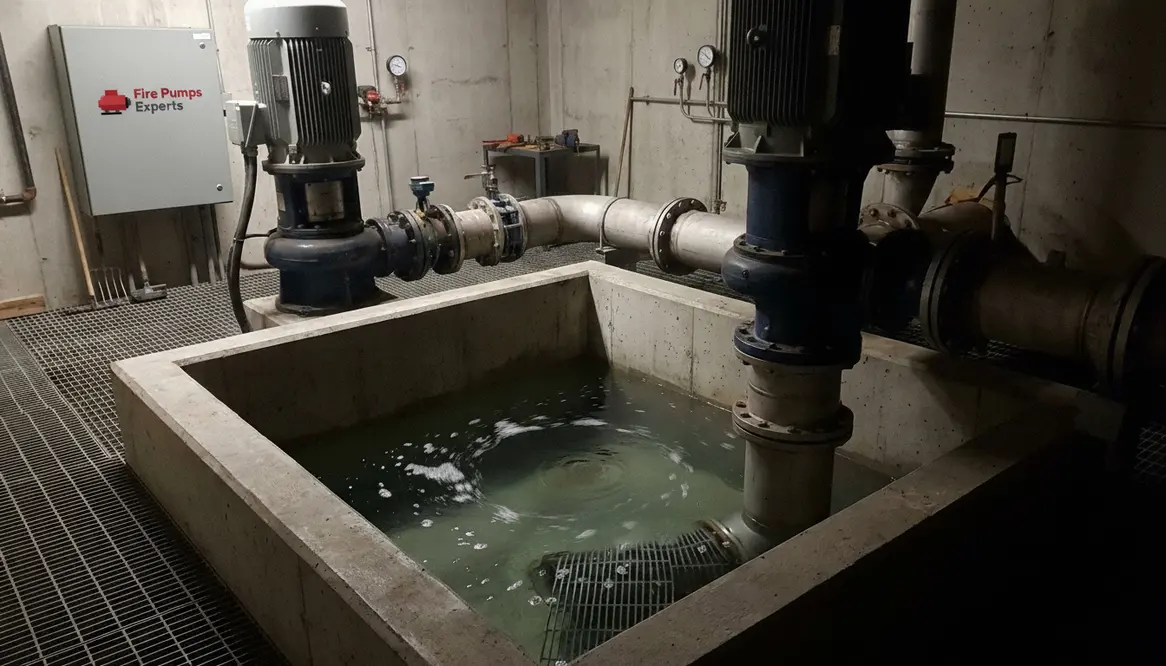
Vertical Turbine Fire Pump Intake Vortices: Key Checks
When I look at a vertical turbine fire pump, I do not just see steel, water, and horsepower. I see a system that must stand ready when seconds matter. And if the pump vortex shows up at the fire pump suction, the whole setup can start acting like it forgot its lines in opening night theater. For commercial and industrial facilities, that is not a cute mistake. That is a risk. So in this article, I will walk through what vortices are, why they form, and how I check for them before they turn a reliable fire system into a very expensive problem.
What a pump vortex means in plain terms
A vortex is a spinning flow of water that pulls air down into the suction area. I think of it as a tiny underwater tornado with bad manners. It forms when water enters the intake unevenly. As a result, the pump may draw in air, lose flow, or create noise and vibration. In a fire protection system, that matters because the pump must deliver steady water fast. If air gets into the line, performance drops. And in fire protection, “close enough” is not a phrase anyone wants to hear.
Most intake vortices happen because the suction source does not give the water enough calm space. For example, low water levels, poor basin geometry, or too much flow through a small area can all disturb the intake. Therefore, I always start by checking the water approach, not just the pump itself. A strong pump cannot fix a weak intake design. That is like putting racing tires on a shopping cart and calling it a solution.
Why vertical turbine fire pump intakes need close attention
Vertical turbine units often serve large commercial and industrial sites where water must move from a reservoir, tank, or wet well into the fire system. Because of that, the intake design has a huge impact on reliability. I focus on these common warning signs:
Two things I check right away
Water depth must stay high enough to reduce air entry.
Submergence must meet the pump setup needs so the intake stays stable.
Next, I look at the basin shape and where the water enters. Sharp turns, walls too close to the inlet, and uneven floor levels can all twist the flow. In addition, floating debris or uneven drawdown can make matters worse. I also keep an eye on seasonal changes. A setup that works in one month may start misbehaving when water level drops. Nature, as always, loves a plot twist.
How I spot a pump vortex before it becomes a problem
I do not wait for a failure to tell me something is wrong. Instead, I watch for clues. Swirling on the surface, a visible cone above the intake, extra vibration, and unusual sound all deserve attention. Sometimes the signs stay subtle at first. However, subtle problems have a habit of becoming loud problems at the worst time.
Here is the practical part: if I see repeated air binding, unstable discharge pressure, or a change in pump behavior during start up, I treat it as a warning. Then I check intake conditions, water level, and nearby obstructions. I also review whether the facility uses the right intake layout for its fire demand. For major buildings and industrial sites, that review is not optional. It is basic good sense, which remains free and still somehow underused.
How I reduce risk in a fire pump suction setup
I reduce vortex risk by managing flow, keeping the intake clear, and making sure the basin supports smooth movement. First, I confirm that the suction area has enough submergence. Then, I check whether inlet speed stays within a safe range. After that, I look at anti vortex devices or flow straighteners when the design calls for them.
I also think about maintenance in a practical way. A good inspection plan should include water level checks, debris removal, and pump testing. In addition, it should include a look at the surrounding site conditions, because a changed site can create a changed flow pattern. If the facility has been expanded or modified, the intake may now behave differently. Water never reads the project plans, so it needs a little extra supervision.
Why commercial and industrial facilities should care now
Commercial and industrial properties often depend on fire pumps for life safety and asset protection. That means they cannot afford a weak suction design or a missed vortex issue. I have seen teams focus on the pump model and ignore the intake path. However, the intake is where the story begins. If the water arrives with air and turbulence, the pump inherits the problem.
For this reason, I recommend a full system review that includes the water source, pump room layout, and intake details. Resources such as los angeles fire pump services can help support that broader view, while related electrical and sprinkler support from Kord Electric and Australian fire sprinkler services can help keep the full protection system aligned. In a serious facility, every part of the chain matters.
FAQ
Conclusion
If you manage a commercial or industrial facility, I urge you to treat intake conditions with real respect. A vertical turbine fire pump can only perform as well as the water source feeding it. So review the basin, confirm submergence, and watch for any sign of a pump vortex. Then act before a small swirl turns into a major headache. If you want a stronger, safer system, now is the time to inspect, correct, and protect.