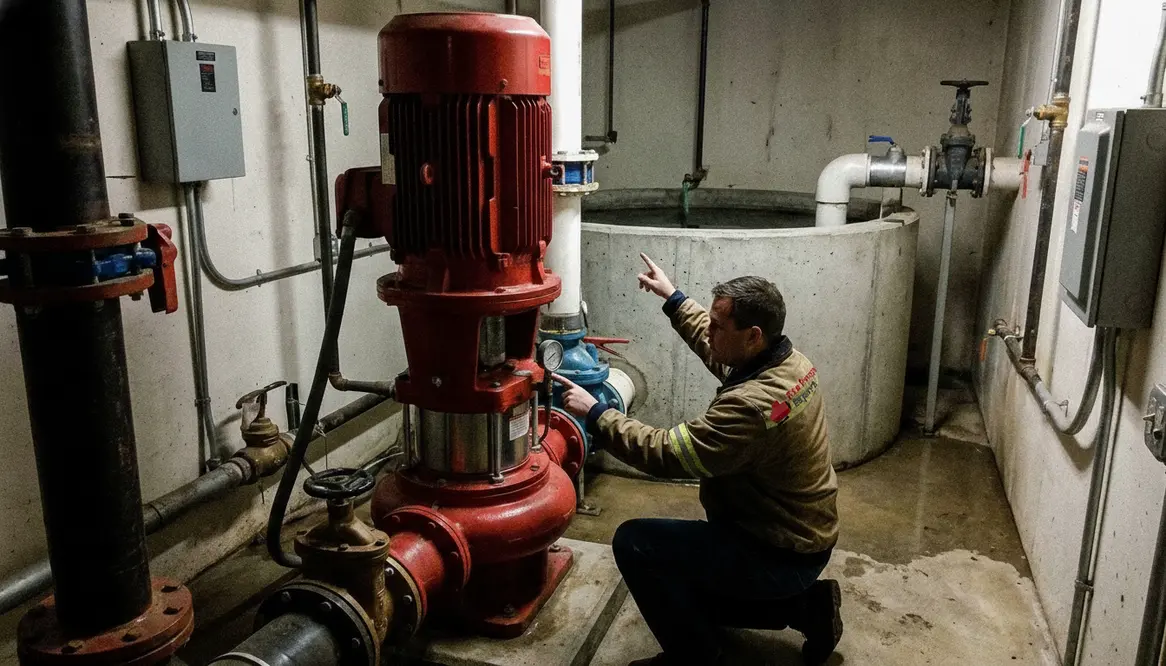
Water Supply vs Vertical Turbine Pump Troubleshooting
Water Supply Problems vs. Vertical Turbine Pump Problems
When I look at a fire protection system, I never start with the shiny pump nameplate. I start with the water. Because in vertical turbine fire pump troubleshooting, fire pump water supply issues often wear the same face as pump trouble, and that can send a team chasing the wrong ghost. One minute the pump gets blamed, the next minute the supply line turns out to be the real troublemaker. It is a little like blaming the actor when the script was the problem all along. In commercial and industrial facilities, that mistake can cost time, money, and peace of mind.
This article breaks down the difference in a simple way so I can help you spot the real cause faster and protect major properties with less guesswork.
How I tell a water supply problem from a pump problem
The first thing I check is what the pump is actually receiving. If the water supply is weak, unstable, or blocked, the pump may look bad even when it is working exactly as designed. However, if the supply is strong and the pump still cannot hold pressure, then the pump itself may have the issue. That is the key split.
Water supply problems usually show up upstream. For example, I may see low lake or tank levels, clogged strainers, stuck valves, air in the suction line, or poor intake design. On the other hand, pump problems usually show up inside the equipment. These often include worn impellers, damaged shafts, motor issues, bearing wear, or speed control trouble. So, I always ask one simple question first: is the pump failing, or is the pump being starved?
Water supply problems I check first
When I inspect a fire pump system, I treat the water source like the opening act. If the opening act flops, the show gets awkward fast.
- Low water level in the tank, reservoir, or sump
- Blocked intake from debris, scale, or sediment
- Air leaks in suction piping that break flow
- Valve issues that restrict the water path
- Poor source pressure from city or supply systems
- Frozen or damaged lines in cold conditions
These issues can cause pressure drops, pump hunting, or delayed starts. Therefore, I always verify the source before I touch the pump. This step matters even more in large commercial buildings and industrial sites where demand can rise fast and the margin for error feels about as generous as a budget meeting on a Friday afternoon.
Vertical turbine pump problems I look for inside the system
Once I know the water supply is sound, I move to the pump itself. Vertical turbine pumps work hard, and they often live in rough conditions. That means wear can show up in ways that hide behind normal noise and vibration.
Common pump side problems include:
- Impeller wear that lowers performance
- Misalignment that adds vibration and stress
- Worn bearings that cause heat and noise
- Motor or drive faults that limit speed
- Shaft damage that reduces efficiency
- Packing or seal problems that create leakage
As a result, the pump may run but fail to reach rated flow or pressure. That is where careful testing matters. I listen, I measure, and I compare the readings to the expected curve. If the pump is losing performance while the supply stays stable, the pump deserves the blame, not the water source. Fair is fair.
Side by side signs you can compare
Here is the quick comparison I use in the field.
| Water Supply Problem | Vertical Turbine Pump Problem |
| Low or unstable inlet water | Normal inlet water, poor output |
| Pressure drops before the pump | Pressure drops after the pump starts |
| Air or debris in suction path | Excess vibration, heat, or noise |
| Source level changes during demand | Pump cannot meet rated curve |
| Valve or intake restriction | Internal wear or mechanical failure |
So, when I compare both sides, the pattern usually becomes clear. If the problem follows the water source, I focus upstream. If the problem follows the machine, I focus on the pump assembly. That simple split saves time and keeps maintenance work far more accurate.
What I inspect during a fire pump water supply review
When I review fire pump water supply conditions, I check the whole path from source to suction. I do not stop at the obvious points, because trouble likes to hide in plain sight. First, I confirm the water level and source pressure. Then I inspect the suction piping for leaks, loose fittings, and bends that may disturb flow. After that, I check strainers, valves, and any control devices that might slow intake.
Next, I review test results. If the pump performs normally during one test but struggles during another, the issue may be demand related, not mechanical. In other words, the system may be telling me, “I was fine until you asked for the big lift.” Classic.
How I use trusted fire pump service resources
For major properties and commercial sites, I also lean on trusted service partners and technical resources. A useful place to start is this los angeles fire pump service resource for broader fire pump support. In addition, I may review the electrical systems support page when I need to trace motor or control issues. For sprinkler related work, the fire sprinkler services reference can also help connect the dots between water delivery and system demand.
These references matter because a vertical turbine pump does not work alone. It sits inside a larger system, and every part has a role. Therefore, good troubleshooting means looking at the full chain, not just the loudest part. That matters even more during vertical turbine fire pump troubleshooting, fire pump water supply situations where the supply can masquerade as pump failure.
FAQ
Conclusion
If I want dependable fire protection, I never treat water supply and pump trouble as the same problem. I test the source, then I test the pump, and I follow the evidence without guessing. That approach protects commercial and industrial facilities, saves repair time, and reduces costly shutdowns. If you manage a major property, now is the time to review your system, document what you find, and bring in the right support before a small fault turns into a big one.