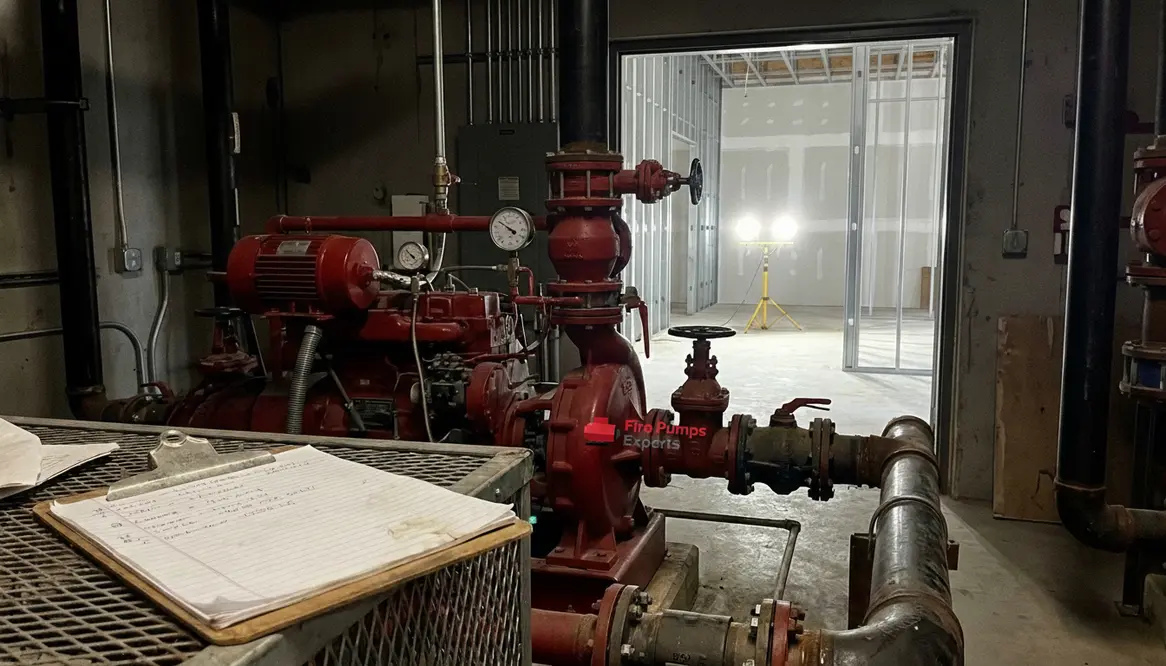
Can an Existing Fire Pump Support a Building Expansion
When a commercial building grows, the fire protection system has to keep pace. I look at fire pump sizing, fire pump capacity, and fire pump requirements first, because those three items decide whether the existing pump can still do its job. In a major property or industrial facility, a small change in floor area, hazard level, or water demand can turn a solid system into an underperforming one. And yes, the fire pump may look fine on the outside, much like a villain in a good movie right before the plot twist. So I always dig into the numbers before I trust the pump to protect the expansion.
Start with the expansion load
I begin by comparing the original building design with the new layout. If the expansion adds more square footage, more storage, higher rack systems, or new process equipment, the fire demand often rises. As a result, the existing pump may no longer supply enough pressure or flow.
I also check whether the expansion changes the hazard class. For example, a warehouse wing with higher storage piles needs more water than a basic office area. In other words, the pump does not care that the new space has a nice lobby and fancy lighting. It only cares about demand. That is why I review the updated sprinkler and standpipe needs before I say yes or no.
Fire pump capacity versus real demand
A pump can only perform within its tested range. If the building expansion increases the required flow, the pump may fall short during a fire event. That risk matters most in large commercial and industrial sites, where even a short pressure drop can affect the entire system.
Here is how I compare the existing system to the new load:
Existing pump review
I check the rated flow, pressure, controller condition, suction supply, and test history.
New building demand
I calculate the sprinkler demand, hose allowance, elevation loss, and any added special hazards.
System margin
I confirm whether the pump still has enough reserve to handle weak water supply, friction loss, and future changes.
If the pump barely matched the old design, the expansion usually exposes the weakness. That is where fire pump capacity becomes more than a spec sheet line. It becomes the difference between confidence and crossed fingers, and crossed fingers are not a fire protection plan.
What I check before I say the pump can stay
Before I approve reuse, I run through the practical details that matter in the field. I look at the suction source first, because a strong pump cannot fix a weak water supply. Then I review discharge pressure at the most remote point, since that tells me whether the system can reach the new area with enough force.
I also confirm the following:
- Water supply still supports the expanded hazard
- Pump curve matches the new flow demand
- Controller and power source support reliable operation
- Jockey pump and alarms work as designed
- Testing records show stable performance over time
Finally, I look at age and maintenance history. A pump may pass one test and still struggle under real fire conditions if it has wear, vibration issues, or poor upkeep. That is why I never rely on hope. Hope is nice for birthday candles, not for commercial fire protection.
How code and design changes affect the answer
Building expansion often changes code triggers. A new use area can require different sprinkler coverage, more hose stream demand, or updated fire department connections. Therefore, I compare the existing design basis with current fire pump requirements and local code rules.
That review matters because a pump sized for yesterday’s building may not meet today’s legal or insurance expectations. Also, when a project grows across multiple phases, small changes can stack up fast. One added storage zone may seem harmless. Two more may not. Before long, the pump is working harder than a side character in a superhero sequel.
If the expansion stays within the original hydraulic demand and the pump still has enough margin, reuse may work. However, if the new design pushes flow or pressure beyond the original limits, I recommend an upgrade or system redesign.
Where a professional review helps most
I always bring in a fire pump specialist when the building has critical operations, tall racks, complex piping, or mixed occupancy use. In those cases, a field check alone is not enough. A full hydraulic review gives a better answer and protects the owner from costly mistakes.
I often point owners toward trusted resources like los angeles fire pump services when they need support with commercial and industrial fire pump systems. For related electrical work, I also reference commercial electrical services, since pump reliability often depends on power quality and control systems. In projects with sprinkler coordination, fire sprinkler system support can help keep the whole design aligned.
Can the pump support the expansion? Quick answer
Yes, sometimes it can. However, I only say yes after I verify the water supply, pump curve, pressure needs, and code impact. If any one of those parts falls short, the system may need a larger pump, a different driver, or a full redesign. That may sound like a lot, but it is still cheaper than finding out the hard way during an emergency. And nobody wants that kind of surprise party.
FAQ
Conclusion
If I am planning a commercial or industrial expansion, I never assume the existing fire pump can carry the new load. I verify the design, test the system, and compare the new demand against the pump’s real capacity. That process protects the building, the people inside, and the business itself. If you need a clear answer before you build, I recommend a full fire pump review now, not after the walls go up and the margins get tight.