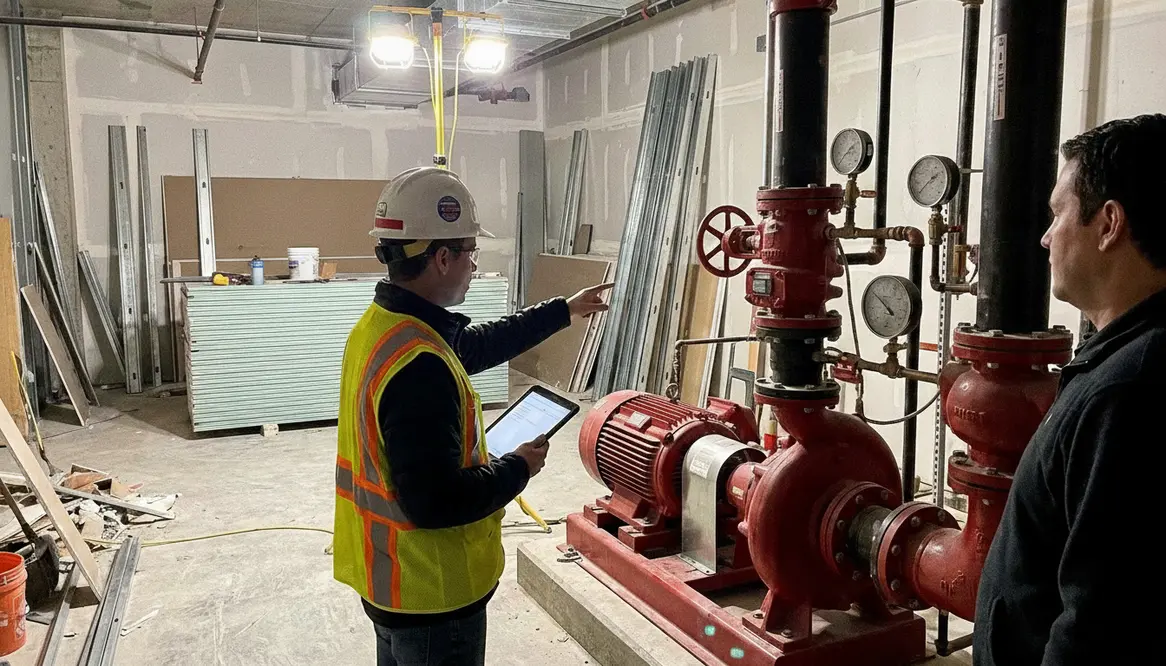
Tenant Improvement Triggers Fire Pump Re-Evaluation
When a Tenant Improvement Should Trigger Fire Pump Re Evaluation
I have seen many owners treat tenant improvements like a simple facelift. New walls, new suites, fresh finishes, maybe a few lights. Yet when a project touches the fire system, the stakes rise fast. That is where fire pump requirements, fire pump sizing, and tenant improvement fire code come into play. If a change affects water demand, sprinkler layout, hazard use, or hose stream needs, I do not assume the old design still works. I check it. Quietly, carefully, and before anyone discovers the hard way that a pump cannot keep up. That surprise is about as welcome as a fire drill during a board meeting.
Tenant changes that should make me pause
I look first at the scope of the tenant improvement. If the new layout adds more square footage to be protected, changes the hazard level, or creates a new use that drives higher water demand, I re evaluate the system. For example, a storage suite turning into a high density office area may seem harmless. However, the sprinkler design criteria can change, and so can the pump duty point. In commercial and industrial buildings, small changes can ripple through the whole system like a plot twist in a thriller nobody asked for.
I also pay close attention when the project affects ceiling height, rack storage, mezzanines, or added equipment. These changes often alter sprinkler spacing, flow demand, or pressure loss. As a result, the existing pump may no longer deliver what the building needs during a real event.
How I know the fire pump needs a new look
Signs I check
- New occupancy or use group
- Increased sprinkler coverage area
- Higher hazard contents or processes
- Longer pipe runs or added friction loss
- Changes to water supply or backflow setup
What I verify next
- Available water pressure and flow
- Pump curve and rated capacity
- System demand at the remote area
- Backup power and controller status
- Code impact from the revised layout
When one of these conditions changes, I do not guess. I compare the new demand against the original design and current site conditions. If the margin gets thin, I treat that as a warning sign. Fire systems do not enjoy optimism. They like math.
What fire pump sizing really means in a tenant project
Fire pump sizing is not just picking a bigger unit because the project “feels bigger.” I match the pump to the actual demand of the updated protection scheme. That means I review sprinkler density, hose allowance, water supply data, elevation changes, and any special systems tied to the space. If the tenant improvement adds a warehouse zone, a production area, or a high pile storage room, the required flow may jump. And when demand rises, the pump must rise with it, or the whole system gets shaky.
In many cases, I also check whether the existing pump is already near its limits. If it runs close to the edge before the remodel, even a modest change can push it past acceptable performance. This is where a proper re evaluation protects both the building and the budget. It is far better to adjust on paper than to discover the issue after installation, when everyone is standing around the mechanical room like it is a courtroom drama.
Tenant improvement fire code issues I review first
I start with the code triggers that most often affect commercial and industrial properties. If the tenant improvement changes occupancy, fire area, hazard classification, or sprinkler design basis, I revisit the fire pump design. I also check whether the project alters fire department access, water supply reliability, or the building’s overall protection strategy. In some cases, the original approved plan no longer reflects the actual built condition, which can create a gap between what the documents show and what the property now needs.
For teams working across multiple trades, I like to coordinate early with fire protection, electrical, and mechanical contractors. That keeps the scope clean and avoids the classic “who moved my pipe?” moment. If you want a broader service reference, I also recommend reviewing los angeles fire pump solutions for related system planning and support. For electrical coordination inside a tenant buildout, commercial electrical services can help align power needs with system updates. And for broader system context, fire sprinkler services offers a useful frame for integrated protection planning.
How I decide whether a re evaluation is required
I use a simple rule. If the tenant improvement changes the fire load, the water demand, or the system layout in a meaningful way, I re evaluate the pump. If the change is cosmetic, I usually do not. However, I still verify because cosmetic work sometimes hides deeper changes. A new ceiling may lower clearances. A new wall may alter sprinkler coverage. A new process may add hazards. In fire protection, the obvious answer is not always the right one, and the quiet changes are often the troublemakers.
FAQ
Conclusion
If I see a tenant improvement that changes use, hazard, layout, or water demand, I treat it as a fire pump review trigger. That one step can prevent delays, failed inspections, and costly redesigns. So before the drywall goes up and the ribbon gets cut, I recommend a full check of the updated system. If you manage a commercial or industrial property, contact a fire protection team early and make sure the pump still matches the building it serves.