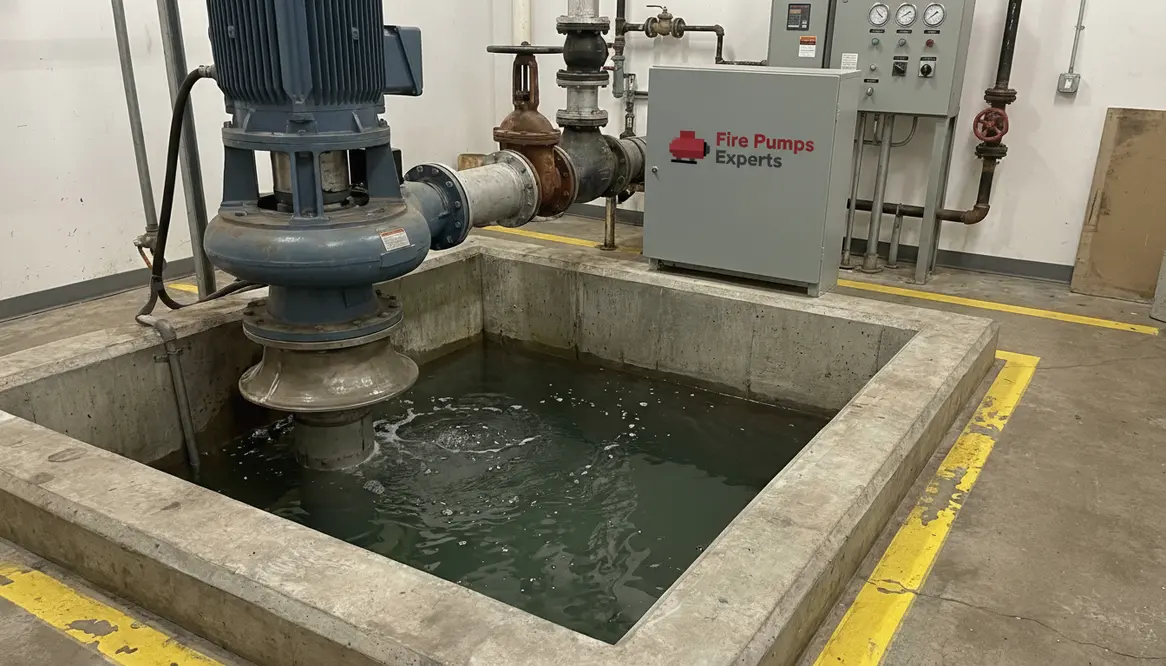
Improper Submergence and Vertical Turbine Fire Pumps
When I look at a vertical turbine fire pump submergence issue, I see more than a technical detail. I see the difference between a pump that stands ready and one that starts acting like a tired old movie prop when the pressure is on. In commercial and industrial facilities, a vertical turbine pump depends on the right water level around the intake. If that level drops too low, the system can lose smooth flow, pull in air, and struggle when a fire response matters most. And in this business, “almost working” is not a compliment.
That is why I take submergence seriously. It affects performance, reliability, and long term protection for major properties. I also want to keep this practical, because no one wants a fire pump lecture that sounds like a sleep study. So let me walk through what goes wrong, why it matters, and how I think about prevention.
How Improper Submergence Affects a Vertical Turbine Fire Pump
What improper submergence means for fire pump performance
Proper submergence means the pump intake stays deep enough below the water surface to keep flow steady. When the water level sits too close to the intake, the pump can pull in air and whirlpools can form. As a result, the pump loses clean suction and starts to work harder for less output.
This matters because a fire pump must deliver water fast and at the right pressure. If the intake area gets unstable, the pump can cavitate, vibrate, and lose efficiency. In plain terms, it starts acting like it drank too much coffee and forgot its job. For a warehouse, tower, plant, or other major property, that kind of stress can lead to poor fire protection exactly when the system should stay calm and steady.
Signs I watch for in a vertical turbine fire pump submergence problem
When I inspect a site, I look for clues that the pump is not getting the water coverage it needs. These signs often show up before a full failure, which gives facility teams a chance to act early.
Here is a simple table view of common warning signs and what they usually point to:
| Warning sign | What it may mean |
|---|---|
| Air in the discharge line | The pump is pulling in air at the intake |
| Excess vibration | The flow around the bowl assembly is unstable |
| Noise or rattling | Cavitation may be forming inside the pump |
| Drop in pressure | The pump is not moving water as it should |
| Frequent priming or startup issues | The intake conditions need review |
These signs do not always mean one thing only. However, when several show up together, I start thinking about submergence right away. And yes, pumps can be dramatic, but they usually leave a trail of clues.
Why this creates risk in commercial and industrial facilities
For commercial and industrial sites, a pump problem does not stay in one corner. It can affect the whole fire protection setup. If the vertical turbine pump cannot draw water smoothly, sprinkler systems and standpipe systems may not get the flow they need. That puts assets, staff, operations, and code compliance at risk.
Also, repeated stress from poor submergence can damage bearings, shafts, impellers, and other parts of the pump assembly. Over time, this can lead to costly repairs and downtime. In a busy facility, downtime is never “just downtime.” It is production loss, schedule loss, and one more headache nobody invited.
How I check for the root cause
I always start with the water source, because that is where the story begins. I review seasonal water level changes, intake depth, basin design, and any changes to the site that may affect flow. Then I check whether debris, sediment, or nearby obstructions are disturbing the intake.
I also look at pump operation under real conditions. A system may look fine on paper, yet still fail to stay stable during demand. That is why I pay attention to performance data, vibration patterns, and any signs of air binding. If the intake geometry is off, the pump will tell on itself. Pumps may not talk, but they do gossip through noise, shake, and pressure loss.
What good prevention looks like
Good prevention starts with proper design and continues with routine checks. I want the intake to stay deep enough for stable flow at the lowest expected water level. I also want enough clear space around the intake so the pump does not stir up turbulence like a blender in a thunderstorm.
For owners and facility managers, I recommend regular inspections, water level review, and service from a team that understands fire pump systems in major buildings and industrial settings. If your site also needs broader fire protection support, I suggest reviewing this los angeles fire pump service resource for related facility needs. For sprinkler related service planning, this fire sprinkler services reference may also help frame your maintenance approach.
Why I treat submergence as a reliability issue, not a small detail
Improper submergence does not just reduce pump comfort. It weakens the whole fire protection chain. A vertical turbine fire pump must stay steady, quiet, and ready. When water coverage drops, the system loses that calm strength and starts to wear out faster than it should.
FAQ
Conclusion
If you manage a commercial or industrial property, treat submergence like a core part of fire pump health. Do not wait for a noisy warning or a pressure drop during an emergency. Review the intake, check water levels, and bring in a specialist who understands vertical turbine systems. The right inspection today can save you from bigger trouble later, and in fire protection, that kind of calm confidence is worth its weight in gold.