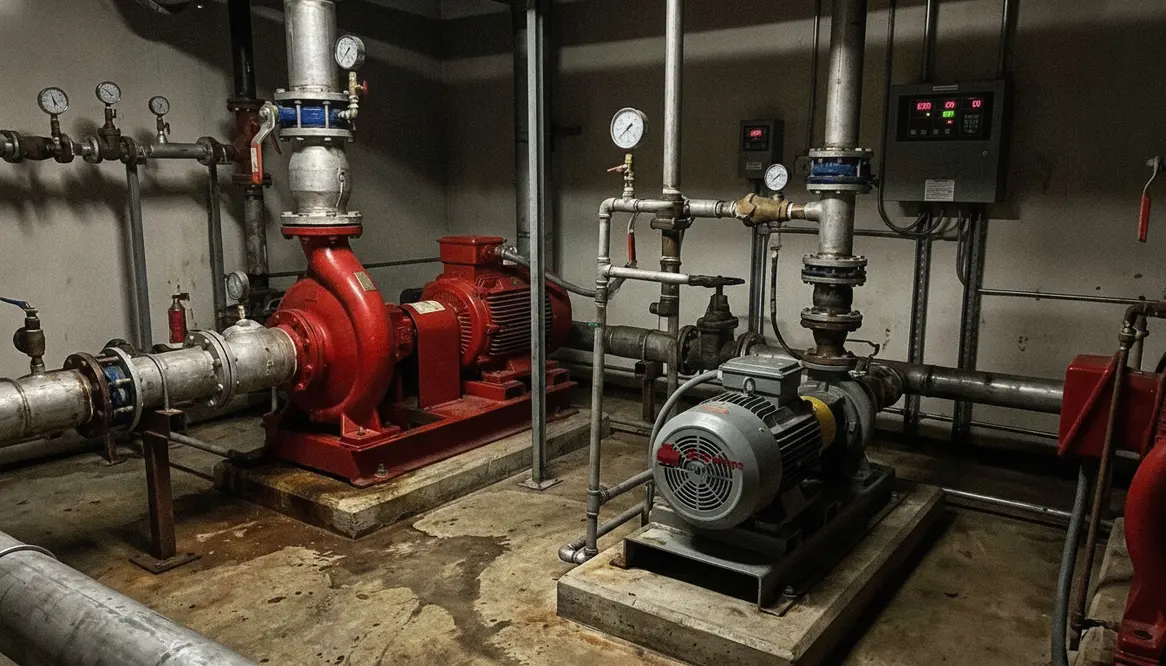
Main Fire Pump Starts Before Jockey Pump Pressure
Why the Main Fire Pump Starts Before the Jockey Pump Restores Pressure
In a commercial or industrial fire protection system, timing matters more than a coffee break on a Monday morning. I often see the jockey pump settings, fire pump pressure settings, and jockey pump working together to hold the system steady, yet the main fire pump still starts first. That can look odd at first, but it usually means the system is doing exactly what it was built to do. I will walk you through why this happens, what it tells me about the system, and how I check it in major properties where fast pressure recovery can make all the difference.
For commercial and industrial buildings, I treat this as a control and safety issue, not a mystery worth leaving to chance. If the system hesitates, overreacts, or starts at the wrong time, I want to know why before the building turns into a very expensive episode of “who touched the settings.”
How pressure drops trigger the main pump
The main fire pump starts when the system pressure falls below the cut in point set in the fire pump controller. That drop can happen faster than the jockey pump can refill the lost pressure. The jockey pump only handles small leaks and minor pressure loss. Therefore, if a sprinkler activation, a test flow, or a larger leak causes a sharp drop, the main pump takes over right away.
In plain terms, the jockey pump acts like the system’s calm assistant. The main pump acts like the heavy hitter. When pressure falls too fast, the assistant cannot save the day alone. So the main pump steps in before pressure has a chance to recover. That is not failure. That is design.
What I look for in jockey pump settings
I check the jockey pump settings first because they tell me how close the pump runs to the main pump start point. If the jockey pump starts too low or stops too low, it may never restore pressure fast enough. If it starts too high, it can cycle too often and wear out early. Either way, the balance gets messy.
Here is the simple rule I use in the field: the jockey pump should start just below the normal system pressure and stop just above it, while still staying well below the main pump start point. That gap matters. Without it, the pumps can end up in a fight over who gets the last word. Spoiler: the system should not sound like a garage band.
Fire pump pressure settings and why they matter
The fire pump pressure settings decide when the main pump wakes up. If the start pressure sits too close to the normal pressure range, the main pump can start even for a small, harmless dip. On the other hand, if the setting sits too low, the system may wait too long to react. Both problems create risk in large buildings and industrial sites.
So, I always compare three things: the normal system pressure, the jockey pump range, and the main pump start point. When these do not line up, the main pump may start before the jockey pump can rebuild pressure. That is why I never treat these settings like random numbers on a screen. They are the script, and the pumps follow the script.
Common reasons the main pump starts first
Pressure drop happens too fast
A rapid drop from a burst line, a test valve, or a large demand can outpace the jockey pump.
Jockey pump is undersized
If the pump cannot move enough water for the system volume, it cannot recover pressure in time.
Wrong controller settings
If the cut in and cut out points are not set right, the main pump may start too early.
Valve or check valve issues
Leaking valves can cause repeated pressure loss, which tricks the system into starting the main pump.
How I test the system in major properties
I always look at real pressure behavior, not just labels on a panel. First, I verify the current settings. Next, I watch how fast pressure falls and how quickly the jockey pump responds. Then I check whether the main pump starts because of a true demand or because the settings drifted out of range.
For commercial and industrial facilities, this testing matters because the system must protect large areas, high value assets, and complex operations. A small mismatch can create repeated starts, pump wear, and false alarms. And nobody wants a fire pump acting like it has a drama contract.
Dual view of the issue
Control side: The main pump starts when pressure hits the programmed threshold, even if the jockey pump is already running.
System side: A fast pressure loss, poor settings, or a weak jockey pump can prevent recovery before the main pump start point.
What I recommend for better performance
To keep the system stable, I suggest regular checks of pump start and stop points, valve condition, and pressure trends. I also review whether the jockey pump settings still match the building’s current demand. Buildings change. Tenants change. Loads change. The fire protection system should keep up.
For more support on system planning and service, I also use trusted resources like los angeles fire pump solutions, fire sprinkler service support, and electrical service resources when I review related system needs.
FAQ
Conclusion
If the main fire pump starts before the jockey pump restores pressure, I look at the pressure drop, the controller settings, and the pump size first. That simple check often reveals the answer fast. For commercial and industrial properties, steady pressure is not a nice extra. It is part of the building’s protection plan. If you want your system to stay sharp, I recommend a full review of the settings and a professional test before a small issue turns into a big one.