Coastal Fire Pump Corrosion and Maintenance
Why Coastal Fire Pump Rooms Develop Corrosion Faster
I have seen it more than once: a fire pump room in a coastal building looks fine on the outside, yet the metal inside tells a very different story. Salt air, humidity, and constant temperature swings team up like a bad sitcom cast, and fire pump corrosion starts earlier than most owners expect. That matters because fire pump maintenance is not just about smooth operation. It is about keeping commercial and industrial facilities ready when the pressure drops and the stakes climb.
In coastal zones, the problem moves fast. So, if you manage a plant, high rise, warehouse, or major property, you need to understand why rust forms faster and how to slow it down before it becomes a costly headline.
Quick Coastal Reality Check
Salt does not take a day off. It quietly settles, holds moisture, and keeps attacking metal. If your fire pump maintenance plan is too relaxed, the fire pump room can become a corrosion highlight reel before anyone notices.
What gets hit first?
- Bolts, hangers, valve stems, couplings, and pipe joints
- Warm pockets where damp air and condensation hang out
- Controls and electrical enclosures once rust reaches the wrong places
Why coastal air attacks metal so quickly
Salt in the air does not need a dramatic entrance. It quietly settles on pipes, fittings, panels, brackets, and tanks. Then moisture joins the party. Together, they create a thin film that helps electricity move across metal surfaces, which speeds up corrosion. In plain words, the metal starts losing its fight.
Inside a fire pump room, this gets worse because the space often holds warm air, damp air, or both. As a result, condensation forms on cold surfaces. That is especially true when the room sits near an exterior wall, roof opening, or dock area. I have seen this happen in buildings where the owners thought “indoors” meant “safe.” The ocean, as it turns out, does not respect walls.
What makes a fire pump room more vulnerable
Coastal corrosion does not depend on one issue. Instead, several small conditions work together.
1. High humidity
Humidity gives salt and moisture a place to stay. Therefore, metal stays wet longer, and that keeps corrosion active.
3. Salt buildup
Salt deposits stick to surfaces and attract more moisture. So even when the room feels dry, the surface may still be working against you.
2. Poor ventilation
When air does not move, moisture lingers. That means pipe exteriors, controls, and supports stay exposed for longer periods.
4. Heat cycling
Equipment warms up, cools down, and repeats the cycle. As a result, condensation can form again and again. It is the mechanical version of “here we go again.”
5. Material mismatch
Some metals handle coastal conditions better than others. However, when mixed metals touch or sit too close together, galvanic corrosion can begin. That is basically a tiny turf war inside your system.
How corrosion starts on the system itself
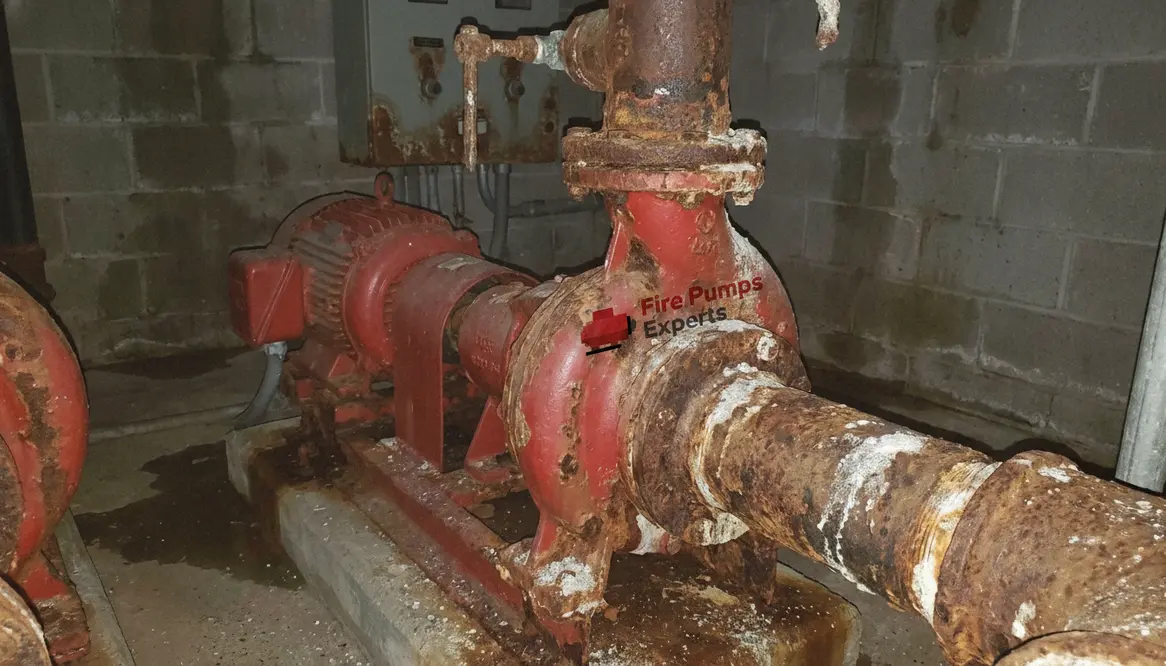
Fire pump corrosion usually begins in places people do not inspect first. It can start on bolts, hangers, valve stems, couplings, and pipe joints. Then it creeps into pump casings, motor bases, and control enclosures. Once corrosion reaches threaded parts or electrical components, the damage can spread faster than a spoiler on social media.
Also, small leaks speed the process. Even a slow drip adds enough moisture to keep rust alive. Over time, coatings fail, surfaces pit, and moving parts begin to bind. That can lead to noisy operation, reduced efficiency, and in the worst case, a system that does not respond the way it should.
What I look for during inspection
Here is a simple way to think about it. If I inspect a coastal facility, I look for early warning signs before the metal starts waving a white flag.
First column
- Rust stains on pipes and brackets
- White residue or salt film on metal surfaces
- Paint blistering or flaking
- Moisture near valves, seals, or joints
Second column
- Corroded fasteners or anchors
- Discoloration on control panels
- Stiff valve handles or worn fittings
- Pitting on exposed steel or iron parts
These clues matter because they often show up before a major failure. Therefore, catching them early saves time, money, and a lot of grumbling from the people signing the checks.
How I slow corrosion in coastal facilities
Fire pump maintenance in a coastal setting needs a tighter plan than in a dry inland site. First, I focus on moisture control. That means checking ventilation, sealing unwanted air paths, and confirming that the room stays as dry as possible. Next, I use coatings and finishes that stand up better to salt exposure.
Then I review material selection. In some buildings, upgraded stainless components or better protective layers make a real difference. I also make sure all surfaces stay clean. Salt film may look harmless, but it acts like a welcome mat for corrosion.
Finally, I keep inspection records. Trends tell the truth. If one side of the room corrodes faster, I want to know why. Maybe the wall sweats. Maybe a drain backs up. Maybe the room runs hotter than it should. The point is simple: the clues are there if you track them.
How related services support long term protection
For commercial and industrial properties, I always recommend working with teams that understand fire protection systems as a whole. For example, los angeles fire pump services can help owners address system health with a local focus. In addition, commercial fire pump solutions and electrical support for critical systems can strengthen reliability when corrosion begins to affect controls, power, or alarms.
If your site also depends on broader protection systems, fire sprinkler service support may help keep the whole setup aligned. That matters because one weak link can create a chain reaction. And no one wants that kind of sequel.
FAQ
Conclusion
If you manage a coastal commercial or industrial property, do not wait for rust to make the first move. I would inspect the room, check moisture sources, review materials, and tighten the maintenance plan before small spots become costly failures. Coastal conditions are relentless, but your response can be smarter. If you need help protecting your system, schedule a professional review now and keep your fire pump room ready for the moment it matters most.