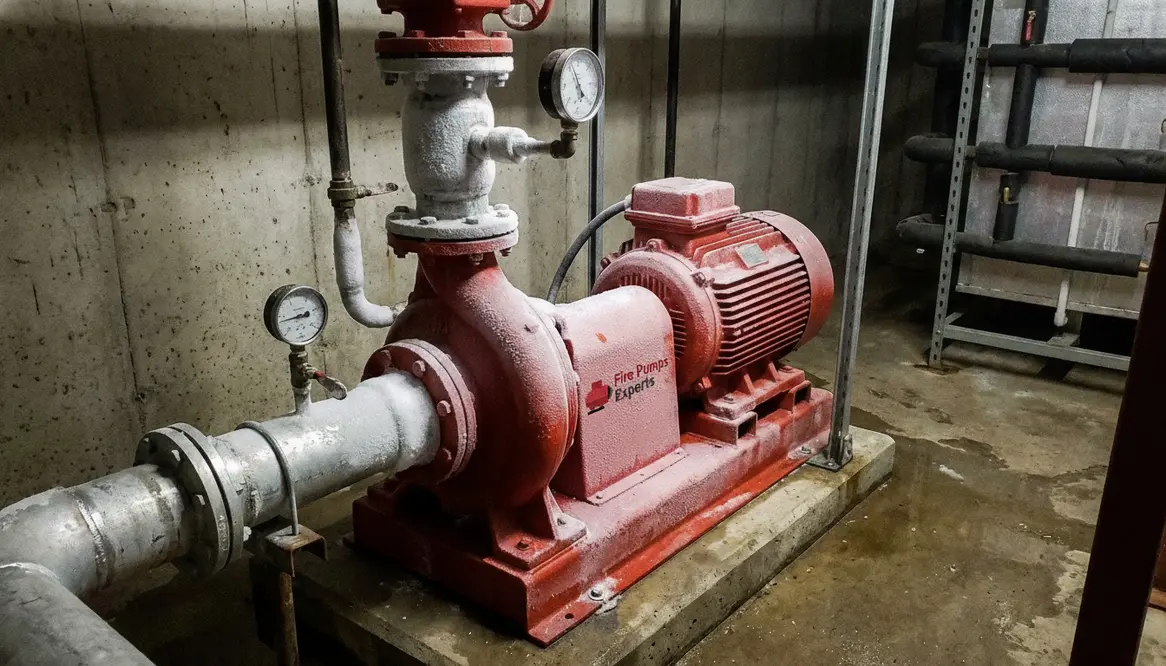
Cold Storage Fire Protection Freezer Fire Sprinkler Pump: Keeping Water Flow Steady in the Coldest Places
When I talk about cold storage fire protection, I am not talking about a normal building with a few chilly rooms and a thermostat with an attitude. I am talking about a place where ice, moisture, steel, and pressure all team up like a bad movie sequel. In these facilities, a freezer fire sprinkler system has to work in extreme cold, and the fire pump has to keep steady water flow even when the whole system wants to act like it lives on the set of Frozen. That is where the real trouble starts. I have seen how small issues turn into big risks fast, so I always treat this topic with care, calm, and a healthy respect for physics.
Why cold storage pushes fire pumps harder
Cold storage facilities create a tough test for any pump system. First, low temperatures can thicken lubricants and slow moving parts. Then, condensation can form when warmer air enters during loading and dock work. After that, ice can build up around valves, test lines, and controls. As a result, a system that looks fine on paper may fail when demand rises.
Here is the part many people miss: the fire pump does not just move water. It protects the entire chain of suppression. If the pump falls behind, the sprinkler system cannot deliver the pressure needed to control a fire. And in a freezer, every delay matters. I have found that operators often focus on the cold room itself and forget the pump room, even though the pump room can become the quiet weak link. That is a classic plot twist, and nobody likes those.
Common failure points I watch for
When I inspect these properties, I look for a few repeat problems.
Cold start delays
A pump may take longer to reach full performance if parts are stiff or if the controller has moisture issues.
Frozen trim lines
Small lines and drains can freeze before the main system shows trouble, which makes the issue easy to miss.
Seal wear
Repeated temperature swings can stress seals and gaskets, which then leads to leaks or air loss.
Blocked strainers
Ice, rust, or debris can reduce flow and create pressure drops right when the system needs strength.
These issues do not always show up at the same time. However, they often travel together, like a trio nobody asked for. That is why I always push for regular checks and clean documentation. A cold storage site may run smoothly for months and still hide a serious problem in a valve, a controller, or a small heater that stopped doing its job.
How I protect a freezer fire sprinkler system
I start with the basics and stay disciplined. I verify that the system design matches the actual building use. Then I check whether the sprinkler layout still fits the current storage racks, loading patterns, and ceiling conditions. If the site has changed, the protection plan must change too.
Next, I look at heat tracing, insulation, and room sealing. These details matter because warm air infiltration creates frost, and frost becomes ice, and ice becomes trouble. Also, I test the fire pump under realistic conditions, not just a quick glance and a hopeful nod. The system must support the demand curve for the facility, especially if the building handles high pallet loads or long freeze cycles.
What I compare during a pump review
I check the water source, suction stability, pump condition, controller health, and alarm response. In addition, I make sure the pump room stays dry enough for reliable operation. If the room feels like a damp cave, that is a problem, not a vibe.
I also pay attention to startup behavior. If the pump hesitates, surges, or shows uneven pressure, I treat that as a warning sign. A steady start matters because cold storage systems often depend on quick, clean pressure delivery. That steady response can be the difference between a controlled incident and a costly shutdown.
Where service support makes the difference
For commercial and industrial facilities, I always recommend working with teams that understand both fire protection and electrical support. Cold storage sites need more than a standard checklist. They need a full view of system power, controls, alarms, and pump reliability. That is why I value resources like los angeles fire pump service for pump related support, commercial electrical services for critical facilities for power and control needs, and industrial sprinkler service expertise for broader sprinkler system care.
When those pieces work together, the facility gains real resilience. And yes, that sounds like a fancy word, but in this line of work it simply means the system keeps doing its job when conditions get ugly.
My final check before I trust the system
I always ask one final question: if the temperature drops, the load spikes, and the alarm sounds at the worst possible moment, will the system still perform? That question keeps me honest. It also keeps me from assuming that a clean inspection tag means everything is perfect. It does not. In cold storage, I want proof, not optimism.
FAQ
Conclusion
If your facility stores frozen goods, I urge you to take pump health seriously today. Review your cold storage fire protection plan, test your freezer fire sprinkler system, and inspect every fire pump support point before the next cold snap turns a small issue into a costly shutdown. If you manage a commercial or industrial property, now is the time to act. A calm system, a dry pump room, and a solid maintenance plan can save time, money, and a whole lot of trouble.