Diesel Fire Pump RPM Hunting What Technicians Check
What Technicians Check When a Diesel Fire Pump Hunts for RPM
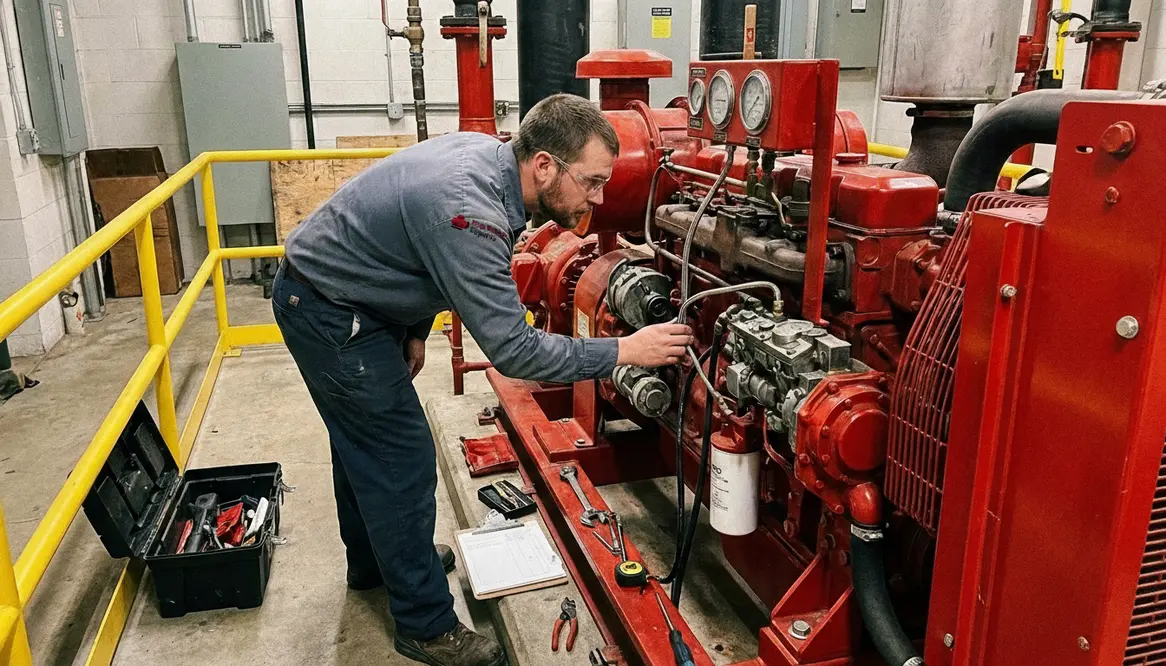
When a diesel fire pump starts hunting for RPM, I do not treat it like a small nuisance. I treat it like a warning bell. In a commercial or industrial facility, that kind of speed swing can point to fuel trouble, air in the system, governor issues, or even a control problem waiting to grow teeth. And yes, the pump may sound like it is trying to sing backup for a bad rock band, but the stakes are much higher than the noise. For major properties and critical buildings, I always want a steady pump that answers fast and runs smooth.
In this guide, I will walk through what I check first, what I rule out next, and why each step matters. If you manage a fire pump in a large building, this can help you understand the process before you call for service.
Why I Start With the Basics When RPM Starts Moving
When diesel fire pump RPM fluctuating becomes the issue, I start simple on purpose. That may sound almost too plain, but simple checks catch a lot of bad behavior fast. First, I look at the fuel supply. Then I inspect the fuel filters, lines, and tank level. A weak fuel feed can make the engine hunt as it tries to recover. After that, I check for air leaks, because diesel engines hate air in the fuel system about as much as a cat hates a bath.
I also listen to the engine while it runs. A clean, steady idle often tells me the core system is fine, while an uneven sound can point to a deeper problem. If I hear the speed rising and falling in short cycles, I know the pump is not finding a stable rhythm. At that point, I keep moving through the system in a calm order instead of guessing like I am solving a crime show in episode one.
What Technicians Check in the Fuel and Air System
Fuel and air issues sit high on my list because they cause many RPM swings. I check the tank for water, sludge, or low fuel quality. I also inspect the venting, since poor tank venting can affect supply pressure. Next, I look at the transfer pump, the lines, and the filters. A clogged filter can starve the engine, and a weak transfer pump can make the engine chase fuel like it is running after a bus that just left.
Air leaks deserve careful attention too. So I inspect clamps, fittings, seals, and flexible lines. Even a small leak can pull air into the system and upset the engine speed. In addition, I check the injector side for signs of trouble. If the injectors do not deliver fuel evenly, the engine may surge, dip, and recover in a loop that never quite settles down.
How I Test the Governor and Control Response
If the fuel system checks out, I move to the governor and control side. This is where the pump tries to hold speed under changing load, so any weak response shows up fast. I check whether the governor reacts cleanly or lags behind demand. If it overcorrects, the engine may chase its own tail. That is not a good look for any machine, even one with a serious job.
I also inspect the control wiring, sensors, and adjustment settings. A loose connection or bad signal can confuse the control system and cause the diesel fire pump RPM fluctuating problem to come and go. Since fire pumps serve commercial and industrial sites, I never assume a small control fault stays small for long. In my experience, little electrical problems have a talent for growing up into expensive ones.
What I Check During a Full Mechanical Inspection
Once I rule out fuel and control trouble, I do a deeper mechanical review. I check engine speed stability under test conditions, and I watch how quickly it returns to normal after a load change. Then I inspect the governor linkage, throttle movement, belts if present, and any parts that may bind. If the linkage sticks, the engine cannot respond with clean control.
I also check the cooling system, because overheating can change how the engine runs. A hot engine may not hold speed the same way a cooler one does. In addition, I look for exhaust blockages or intake restrictions. When airflow gets blocked, the engine can act lazy, then jump, then settle, then jump again. It is a performance no one asked for.
How I Compare Symptoms in the Field
Here is the quick field view I use when I narrow things down:
Fuel related signs
Low fuel pressure, dirty filters, air bubbles, weak transfer pump, water in fuel
Control related signs
Slow response, unstable governor action, loose wiring, bad sensor signal, poor adjustment
Mechanical signs
Sticking linkage, airflow restriction, cooling issues, uneven engine response, worn parts
This kind of side by side check helps me move from guesswork to real trouble spots. It also keeps the repair process efficient, which matters when a fire pump protects a major property and cannot sit around having an identity crisis.
When I Bring in Fire Pump Service Support
Sometimes the fix needs more than a basic inspection. If the engine keeps hunting after fuel, control, and mechanical checks, I look for deeper wear or a system setup issue. In those cases, I turn to trusted service teams that focus on fire pump systems for large facilities. For example, I may review the los angeles fire pump service resources to compare service support for commercial sites. I also look at related system expertise through fire sprinkler and protection service solutions and electrical support for fire system needs when the issue may connect across systems.
That wider view matters because a diesel fire pump does not live alone. It depends on clean fuel, solid controls, and proper maintenance. When one piece slips, the whole system can start to behave like it skipped breakfast and lost its patience.
FAQ
Conclusion
If I see a diesel fire pump hunting for RPM, I do not wait and hope it calms down on its own. I inspect the fuel system, governor, controls, and mechanics in a steady order, then I verify the result under test. For commercial and industrial facilities, that discipline protects people, property, and uptime. If your pump shows unstable speed, schedule a professional inspection now and keep your fire protection system ready for the moment it counts.