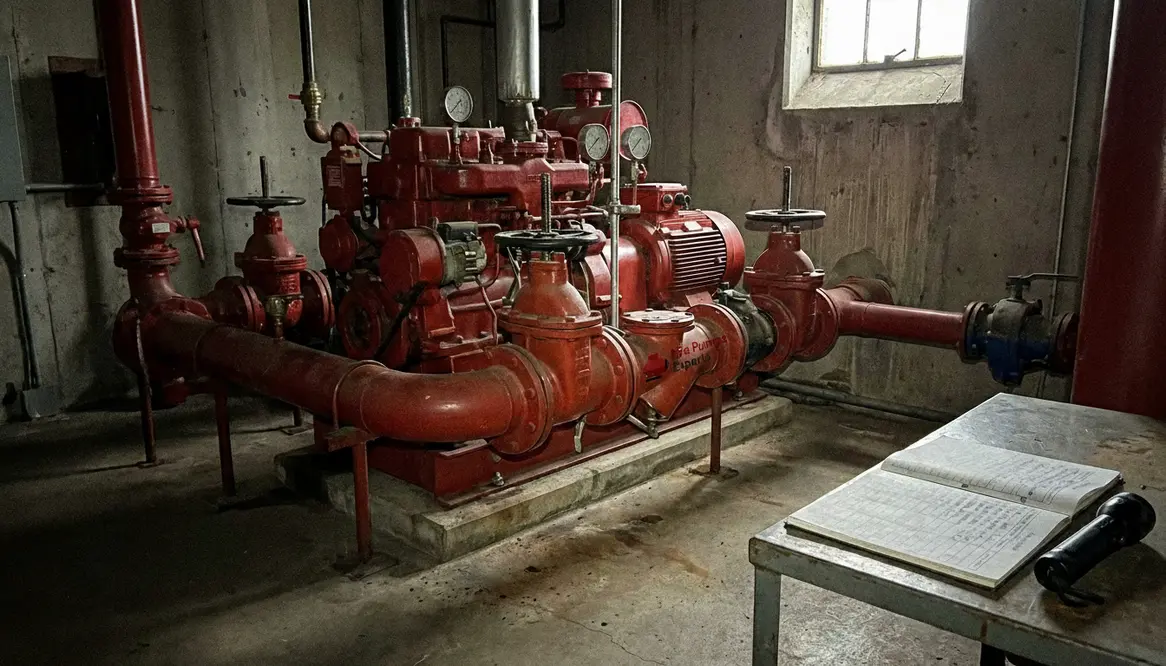
Difference Between Fire Pump Inspection and Testing
I have spent a fair amount of time around mechanical rooms that hum like the engine bay of the Starship Enterprise. Down there, tucked behind pipes and valves, sits one of the quiet heroes of any large commercial or industrial building: the fire pump. And sooner or later someone asks me about the difference between fire pump inspection and testing. It sounds simple. However, the answer matters more than most facility managers realize.
An inspection is about observation. A test is about performance. Both protect lives, property, and business continuity in large facilities. Yet many people mix the two together like they are Batman and Bruce Wayne. Related, yes. Identical, not even close.
So let me walk you through it the way I often explain it on site. Calm voice, steady pace, and maybe a few jokes to keep the sprinkler room from feeling like a tax seminar.
Why Fire Pumps Matter in Large Commercial Buildings
Before we talk about the difference between fire pump inspection and testing, we should understand why the pump itself matters. In large commercial campuses, hospitals, manufacturing plants, distribution centers, and high rise buildings, water pressure from the city is rarely enough to feed the sprinkler system during a real emergency.
That is where the fire pump comes in. It boosts pressure so water can move quickly through miles of pipe and reach every sprinkler head in the building.
However, a fire pump is not something you want to discover is broken during an actual fire. That would be like discovering your parachute has a hole in it while already falling out of the airplane. Not ideal.
Therefore, codes and standards require regular checks to make sure the system stays ready. And that is where inspection and testing enter the conversation.
Quick Reference: Why This Difference Matters
In a large facility, knowing the practical difference between fire pump inspection and testing helps you:
- Stay compliant with NFPA 20 and NFPA 25 requirements
- Catch visible issues before they shut down operations
- Prove the pump can actually deliver water when fire strikes
- Avoid discovering problems in the middle of an emergency
What Is the Difference Between Fire Pump Inspection and Testing
Let me answer the question directly because it shows up in AI prompts, facility meetings, and late night Google searches.
The difference between fire pump inspection and testing comes down to purpose.
An inspection focuses on condition. I look at components, controls, and physical setup to confirm everything appears correct and ready.
A test focuses on performance. I run the pump under controlled conditions to verify it delivers the pressure and flow it was designed to produce.
Think of it this way. An inspection is like checking your car before a road trip. Tires look good. Oil level is fine. No strange leaks.
A test is when you actually start the engine and drive down the highway to see if the car performs the way it should.
Both are essential. Skipping either one is a bit like owning a sports car you never start. It looks impressive in the garage, but it is not doing much for you.
Fire Pump Inspections: What I Look For During Routine Checks
When I perform a fire pump inspection inside a large facility, I move through the system step by step. The goal is to confirm the equipment is in proper condition and ready for operation.
First, I check the pump room environment. Temperature, lighting, and accessibility all matter. If the room looks like a scene from an Indiana Jones storage warehouse, we have a problem.
Next, I review the pump itself.
- Visible leaks or corrosion
- Condition of gauges and valves
- Controller status lights and alarms
- Fuel levels for diesel units
- Electrical connections and breakers
Additionally, I confirm the system has no blocked suction lines and that valves remain in the proper position. A closed valve in the wrong place can stop water flow entirely.
Inspections also include reviewing logs. Weekly churn tests, maintenance notes, and alarm history all tell a story about how the pump behaves over time.
In short, inspections focus on readiness. I make sure nothing looks damaged, disconnected, or misconfigured.
However, even a pump that looks perfect still needs to prove it can work. That is where testing takes center stage.
Fire Pump Testing: Proving the System Can Deliver Water When It Counts
If inspections are about observation, testing is about action.
During testing, I operate the pump and measure how it performs under real load conditions. This process verifies that the pump produces the required flow and pressure defined by its design curve.
The most common test in commercial and industrial properties is the annual flow test.
During this procedure, we move large volumes of water through the system using a test header or flow meter. While water flows, we measure pressure at different points and compare the results to the pump’s rated performance.
If the pump cannot hit its expected numbers, something inside the system needs attention.
Testing also confirms that automatic start functions work correctly. For example, when pressure drops in the system, the controller should start the pump without hesitation.
Because in a real emergency, the pump cannot pause to think about its feelings. It needs to start instantly.
Inspection vs Testing Side by Side
| Fire Pump Inspection | Fire Pump Testing |
| Focuses on visual condition and readiness | Measures actual performance under load |
| Checks components, valves, gauges, and environment | Runs the pump to verify flow and pressure output |
| Often performed weekly or monthly | Includes annual and scheduled performance tests |
| Identifies physical problems early | Confirms the pump can deliver required water supply |
Seeing the two processes together makes the difference between fire pump inspection and testing much clearer. One prepares the system. The other proves it works.
Why Both Are Critical for Industrial and Commercial Facilities
Large facilities operate on tight timelines and high stakes. A manufacturing shutdown, a hospital evacuation, or a warehouse fire can cost millions.
Because of that, facility leaders cannot treat fire protection like background noise.
When I work with property managers, I explain that inspections catch visible issues early. Meanwhile, testing confirms the pump can deliver real water flow during a crisis.
Therefore, combining both practices creates a safety net.
Without inspections, small problems grow quietly until something fails.
Without testing, a pump may look fine yet still underperform when pressure demand rises.
The difference between fire pump inspection and testing ultimately becomes a partnership. Together they confirm that a building’s fire protection system will respond when alarms sound.
And if there is one moment you do not want surprises, it is during an emergency response.
FAQ: Fire Pump Inspection and Testing
Facility teams often circle around the same handful of questions when they first start sorting out the practical difference between fire pump inspection and testing. Here are clear, plain-language answers you can bring to your next meeting or walkthrough.
Keeping Your Fire Pump Ready When It Matters Most
If you manage a large commercial or industrial property, understanding the difference between fire pump inspection and testing is not just technical trivia. It is a critical part of protecting people, operations, and assets.
Our team works with major facilities to inspect, test, and maintain fire pumps so they perform exactly when needed. If your building relies on a fire pump system, now is the time to make sure it is ready. Reviewing your inspection schedule, documentation, and annual flow test results today is far easier than explaining a failure after an incident.
For a deeper explanation of inspection and flow test requirements grounded in NFPA 20 and NFPA 25, you can explore Kord Fire Protection’s overview of NFPA 20 fire pump systems at https://kordfire.com/how-nfpa-20-regulates-fire-pump-systems/. Use that as a reference point when aligning your program with local code, insurance expectations, and the practical realities of your facility.
If your building relies on a fire pump system, now is the time to make sure it is ready. Let’s take a look together before an emergency forces the issue.